

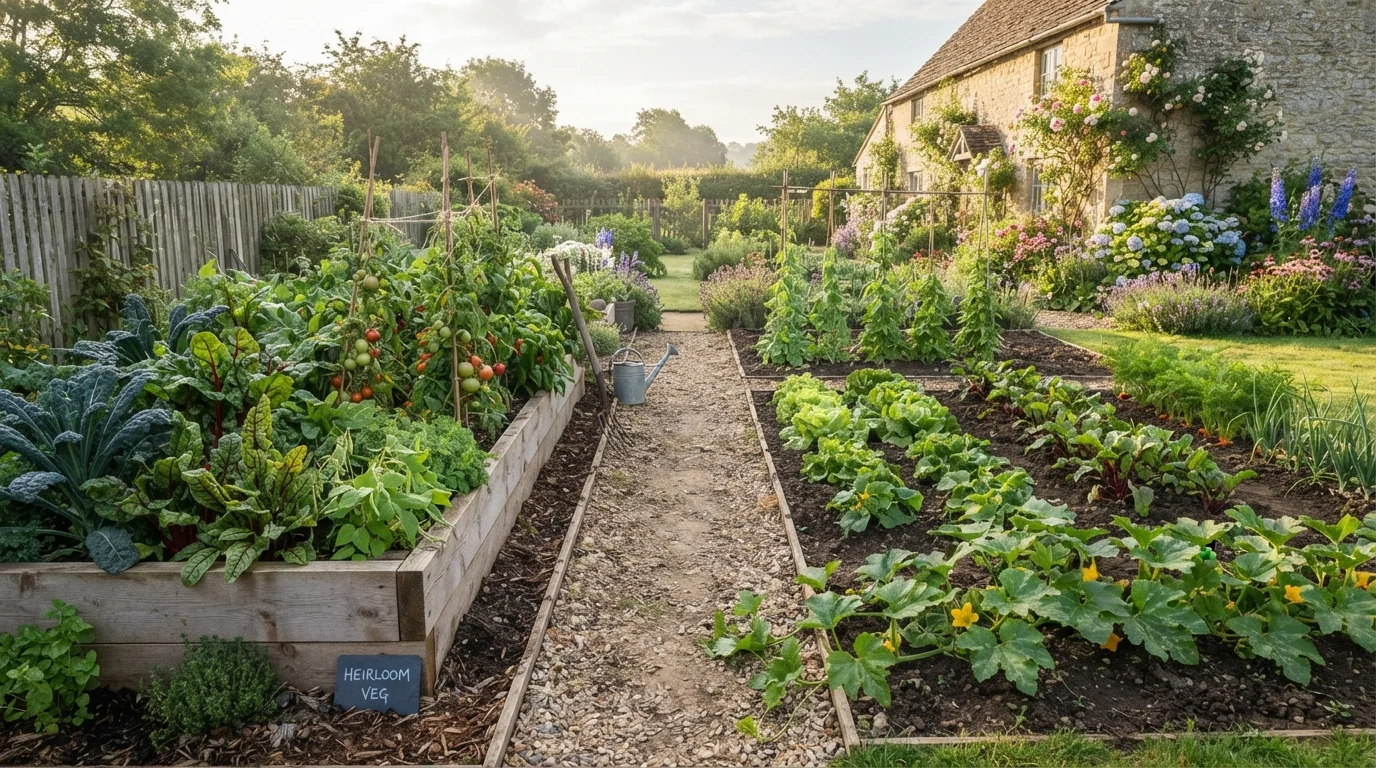
Option A
Raised Beds
The controlled, high-performance growing environment.
Best for: Gardeners dealing with poor native soil, limited mobility, or compact spaces who want precise control over growing conditions.
Option B
In-Ground Planting
The traditional, low-barrier approach to gardening.
Best for: Gardeners with adequate native soil who want to grow large volumes of plants at lower upfront cost.
The Core Difference: Soil Control vs. Scale
The fundamental tradeoff between raised beds and in-ground planting comes down to one question: how much control do you need over your soil environment, and at what cost?
Raised beds are self-contained growing boxes - typically built from wood, composite, or galvanized steel - filled with a custom growing mix you bring in yourself. That means you dictate drainage, texture, and nutrient profile from day one. In-ground planting works directly with whatever soil your yard already contains, amended over time with compost, fertilizer, or other inputs.
Neither approach is universally superior. Each solves a different set of gardening problems. If you're just starting out, our beginner's guide to vegetable gardening covers the foundations that apply to both methods.
| Criterion | Raised Beds | In-Ground Planting |
|---|---|---|
| Upfront cost | Moderate to high | Low |
| Soil control | Full - you choose the mix | Limited to amendments |
| Drainage | Excellent by default | Depends on native soil |
| Season extension | Warms faster in spring | Slower to warm |
| Weed pressure | Generally lower | Higher, especially early on |
| Root depth | Limited by bed depth | Unrestricted |
| Best crop types | Greens, herbs, root veg | Corn, squash, fruit trees |
| Accessibility | Highly adaptable to height | Requires bending/kneeling |
| Long-term soil building | Requires imported inputs | Improves with amendment over time |
Where Raised Beds Have a Clear Advantage
Raised beds shine in situations where the ground itself is the obstacle. Heavy clay soils drain poorly and suffocate roots; sandy soils drain too fast and can't hold nutrients. Contaminated urban soils may be unsuitable for edibles entirely. In all three cases, raising the growing surface above grade - and filling it with quality blended soil - sidesteps the problem entirely.
Drainage is a particular strength. Because the growing medium is elevated and typically loose, water moves through it efficiently, reducing the root rot risk common in compacted ground. Raised beds also warm up faster in spring, which can extend your growing season by two to four weeks in cooler climates - a meaningful advantage for short-season gardeners in the northern US.
Weed pressure is generally lower too. A clean fill mix introduced into a raised bed contains far fewer weed seeds than native soil, and the clearly defined borders make it easier to spot and pull what does germinate.
A Note on Raised Bed Materials
Cedar and redwood are popular choices for raised bed lumber because they're naturally rot-resistant without chemical treatment. Avoid older pressure-treated wood that may contain harmful preservatives; modern ACQ-treated lumber is generally considered safer, but many gardeners prefer untreated wood or composite alternatives for edible gardens. Always verify material safety with your local extension service if you're uncertain.
For gardeners growing edibles, understanding your soil's chemistry matters regardless of which method you choose. See our article on soil pH and plant health for a practical primer on testing and adjusting your growing medium.
Where In-Ground Planting Holds Its Own
In-ground planting remains the right choice for many gardeners - particularly those with decent native soil and room to spread out. The upfront cost is dramatically lower: no lumber, no hardware, no truckload of imported soil mix. A soil test, a bag of compost, and a tiller or garden fork are often enough to get started.
Scale is the other big advantage. Large vegetable gardens growing crops like corn, winter squash, or indeterminate tomatoes benefit from the unrestricted root depth that in-ground soil provides. Deep-rooted plants like asparagus, fruit trees, and native perennials - which can anchor themselves several feet down - are far better suited to the ground than to any raised container.
In-ground gardens are also easier to work with in terms of water retention. Native soil's mineral content and microbial life, built up over years of amendment, can hold moisture more sustainably than imported mixes in drier climates. If you're planting natives or working toward a low-maintenance naturalistic landscape, native plants often integrate best directly into the ground.
2-4 weeks
Earlier planting in raised beds vs. ground
Raised beds can warm up significantly faster in spring due to their elevated position and improved drainage, extending the effective growing season in cooler US climates.
4×8 ft
Common raised bed footprint
This standard size allows gardeners to reach the center from either side without stepping in, reducing soil compaction - a key principle endorsed by cooperative extension programs.
6-12 inches
Minimum recommended raised bed depth
Most vegetables need at least 6 inches of loose soil for roots to develop well; root crops like carrots and parsnips benefit from 12 or more inches of depth.
Cost, Maintenance, and Long-Term Considerations
Raised beds carry higher startup costs - wood, hardware cloth for pest barriers, and quality fill soil can add up quickly for even a modest 4×8-foot bed. However, ongoing weed and pest management is often reduced, which saves time each season.
In-ground gardens require more year-over-year soil investment. Annual additions of compost improve structure and fertility over time. Our guide on composting at home can help you build a steady supply of free amendment material. In-ground soil also benefits from reduced compaction when you establish permanent pathways and no-dig zones - a practice worth adopting early.
Both methods benefit from thoughtful layout. Whether you're arranging beds in a side yard or carving a plot from turf, our article on designing outdoor spaces that work offers practical principles for placement and flow.
Many experienced gardeners ultimately use both approaches: raised beds for herbs, salad greens, and high-value vegetables near the kitchen; in-ground plots for larger crops, perennials, and pollinator plantings further out in the yard. If you're deciding what to grow in either space, pairing your planting method with the right perennial or annual plant strategy makes both approaches more productive.
The content provided on our blog site traverses numerous categories, offering readers valuable and practical information. Readers can use the editorial team’s research and data to gain more insights into their topics of interest. However, they are requested not to treat the articles as conclusive. The website team cannot be held responsible for differences in data or inaccuracies found across other platforms. Please also note that the site might also miss out on various schemes and offers available that the readers may find more beneficial than the ones we cover.