

Our Verdict
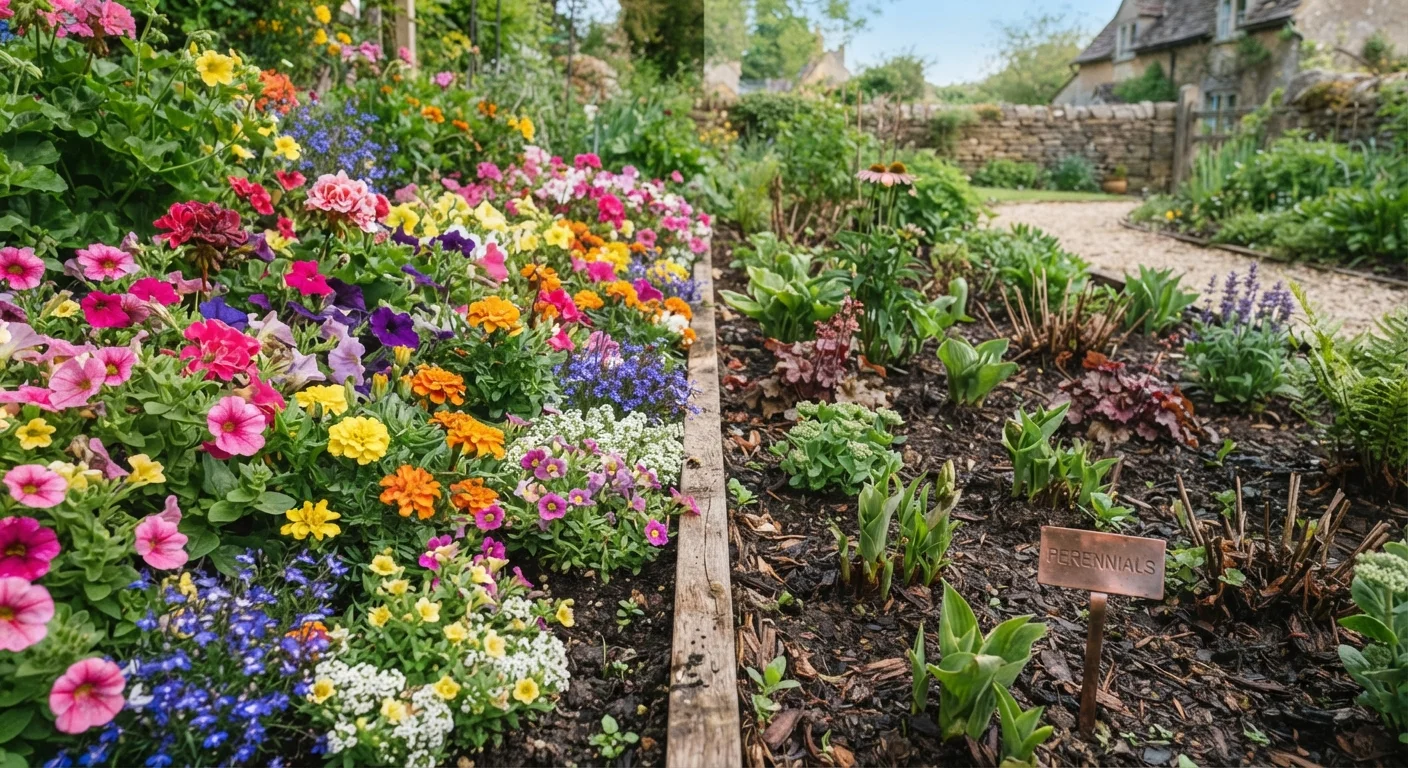
Neither perennials nor annuals are universally superior - they serve different purposes in the same garden. Perennials reward patience and reduce long-term labor; annuals deliver flexibility and season-long color. The most practical approach for most American home gardeners is a thoughtful combination of both, matched to their climate, schedule, and design goals.
| Best for | Recommended |
|---|---|
| Low-maintenance gardeners who want reliable year-after-year growth | Perennials |
| Gardeners who want bold, continuous color and flexibility to change designs seasonally | Annuals |
| Container gardens on patios and balconies with limited soil volume | Annuals |
| Those building a long-term landscape with a defined structure and pollinator support | Perennials as the backbone, annuals as accents |
What Actually Separates Perennials from Annuals
The distinction is rooted in biology, not aesthetics. Annuals - plants like marigolds, zinnias, and impatiens - germinate, flower, set seed, and die within a single growing season. They pour nearly all their energy into blooming, which is why they deliver such intense, prolonged color. Once frost hits, they're done.
Perennials - such as coneflowers, black-eyed Susans, and daylilies - survive winter by going dormant. Their root systems persist underground and send up new growth each spring. Most perennials bloom for only a few weeks per year, but they return reliably without replanting.
There's also a middle category worth knowing: biennials (like foxglove and hollyhock), which complete their life cycle over two years, blooming in year two before dying. These are less common in typical home gardens but worth recognizing when plant tags seem confusing.
Understanding this biological difference reframes how you shop. That flat of petunias delivers guaranteed summer color - but you'll buy it again next year. That clump of rudbeckia may look modest at first, but it will quietly expand and return for many seasons.
Comparing Cost, Effort, and Long-Term Value
| Perennials | Annuals | |
|---|---|---|
| Life Cycle | Return each year from roots | Complete life in one season |
| Bloom Duration | 2-4 weeks per season | Continuous until frost |
| Upfront Cost | Higher per plant | Lower per plant |
| Long-Term Cost | Lower - no replanting needed | Higher - repurchased every year |
| Maintenance Level | Division every few years | Replanting and deadheading each season |
| Design Flexibility | Fixed placement once established | Easy to change seasonally |
| Pollinator Value | Generally higher, especially natives | Varies by species |
| Best Use | Garden structure and backbone | Color gaps and containers |
Annuals are generally cheaper to purchase upfront - a six-pack of marigolds costs a few dollars - but that expense repeats every single season. Perennials cost more initially, sometimes significantly so for larger specimens, but that investment amortizes over years as plants mature and can often be divided to create new plants for free.
Labor works similarly. Annuals require replanting every year, which means repeated soil prep, planting, and often deadheading (removing spent blooms) throughout the season to maintain performance. Perennials need division every few years to stay vigorous and may require cutting back in fall or spring, but they don't demand the seasonal restart that annuals do.
For a deeper look at how planting method affects soil prep and effort, see our guide to raised beds vs. in-ground planting.
Bloom Time, Color, and Garden Design
One of the most common frustrations with perennial-only gardens is the bloom gap problem. Most perennials flower for two to four weeks, and unless you've deliberately staggered varieties for sequential bloom times, you can end up with a garden that looks sparse for much of summer. Annuals solve this elegantly - many bloom continuously from planting until the first hard frost.
A well-designed mixed garden uses perennials to provide structure, texture, and timed blooms across spring, summer, and fall - then fills the gaps with annuals for consistent color. For example, you might plant early-blooming peonies and late-blooming asters as perennial anchors, with annual salvias and petunias bridging the midsummer stretch.
Stagger Your Perennial Bloom Times
When selecting perennials, note each variety's bloom season on the label - early spring, midsummer, or late fall. Intentionally choosing plants that bloom in sequence prevents the mid-season lull that makes perennial-only gardens look sparse. Pair early bloomers like peonies with midsummer coneflowers and fall asters to keep your beds interesting from April through October.
If pollinator support matters to you, perennials - particularly native species - tend to be more ecologically valuable than annuals. Our article on what actually attracts bees and butterflies explains the research behind effective pollinator planting.
Also worth considering: annuals shine in containers, where their compact root systems and continuous blooming are well-suited to limited soil volume. See our container gardening guide for plant selection advice tailored to small spaces.
How to Build a Garden That Uses Both Strategically
Rather than choosing sides, think of perennials and annuals as playing distinct roles in the same team. Start by establishing a perennial backbone - plants that define your beds' structure and return reliably. Then plan annual placements for spots where you want guaranteed, season-long color or where you'd like the freedom to change things up year to year.
A practical rule of thumb many gardeners use: aim for roughly 70% perennials to 30% annuals in established beds. This ratio keeps maintenance reasonable while giving you creative flexibility. In newer gardens, you might flip that ratio temporarily - annuals fill space while perennials take a season or two to mature.
Your climate zone matters here too. In shorter northern growing seasons, fast-blooming annuals may be essential to get any color at all. In warmer southern zones, some plants sold as annuals (like snapdragons) may actually behave as short-lived perennials. Consulting your year-round garden task calendar can help you time planting correctly for your region.
Finally, consider how your plant choices interact with the broader landscape. If you're weighing plant origins alongside plant type, our piece on native plants vs. ornamental imports covers the ecological tradeoffs worth knowing before you plant.
70%
Perennial share in established mixed beds
Many experienced gardeners target roughly 70% perennials to 30% annuals as a sustainable long-term balance in permanent beds.
2-4 weeks
Typical perennial bloom window
Most perennial varieties bloom for a relatively short window each season, making staggered planting essential for continuous color.
The content provided on our blog site traverses numerous categories, offering readers valuable and practical information. Readers can use the editorial team’s research and data to gain more insights into their topics of interest. However, they are requested not to treat the articles as conclusive. The website team cannot be held responsible for differences in data or inaccuracies found across other platforms. Please also note that the site might also miss out on various schemes and offers available that the readers may find more beneficial than the ones we cover.