

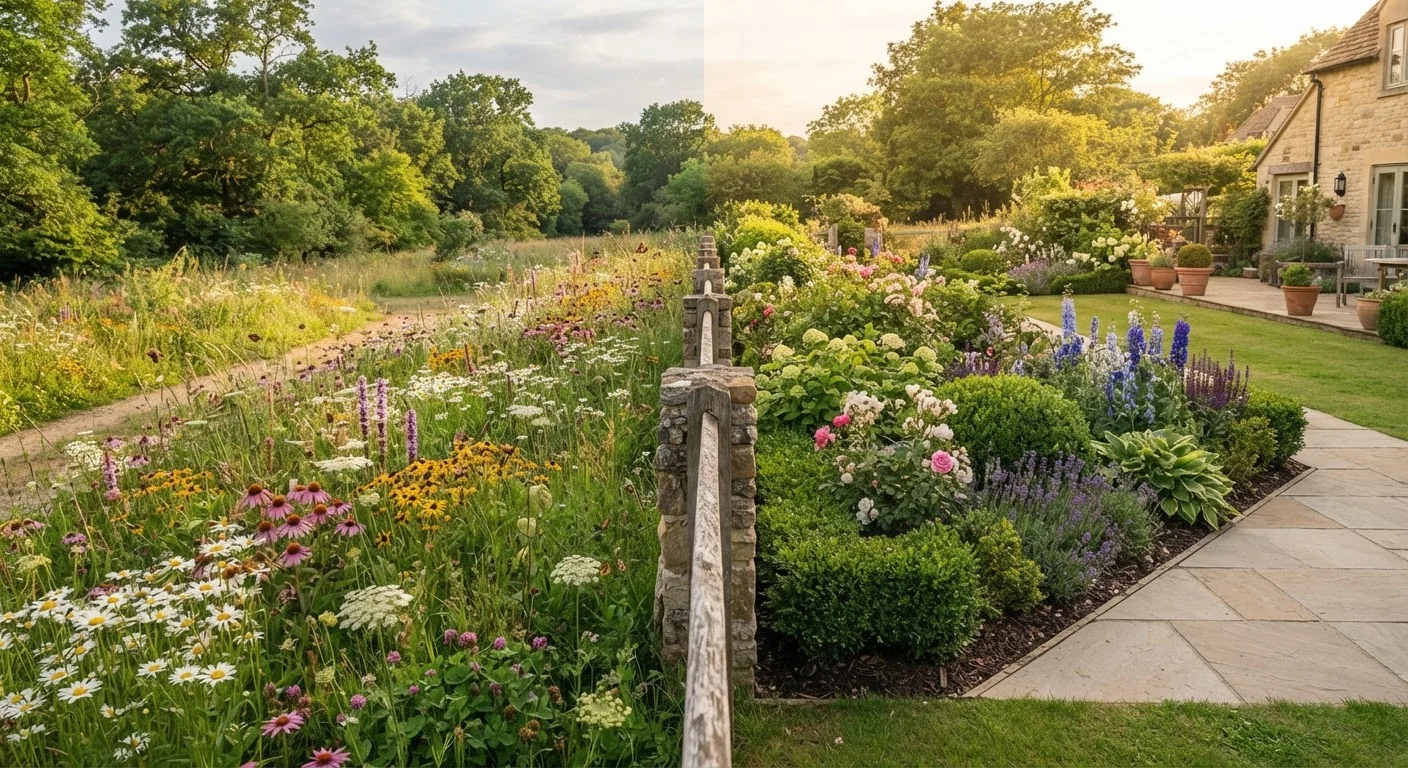
Option A
Native Plants
The ecologically grounded, low-maintenance foundation.
Best for: Homeowners who want to support local wildlife, reduce watering and fertilizing, and build a landscape that sustains itself over time.
Option B
Ornamental Imports
The visually diverse, design-forward choice.
Best for: Gardeners seeking specific colors, textures, or bloom seasons that local flora may not naturally provide.
What Makes a Plant 'Native' - and What Doesn't
A native plant is one that occurred naturally in a specific region before European colonization - shaped over thousands of years by local soils, rainfall patterns, insects, and wildlife. A native plant in the Mid-Atlantic region may not be native in the Pacific Northwest, so the designation is always geographic.
Ornamental imports - sometimes called exotic or non-native ornamentals - are plants introduced from other countries or distant regions, selected primarily for their visual appeal: showy blooms, unusual foliage, or extended flowering seasons. Many have been in American gardens for generations. Common examples include Japanese barberry, English ivy, and Bradford pear - all widely planted, all now flagged by ecologists as problematic in many states.
Not every imported plant is harmful. The concern arises when a non-native species reproduces aggressively in the wild, displacing the plants that local insects and animals depend on. Understanding this distinction helps you make smarter choices before anything goes in the ground. See also what hardiness zones actually tell you when selecting any plant for your region.
| Criterion | Native Plants | Ornamental Imports |
|---|---|---|
| Wildlife value | High - supports insects, birds, mammals | Low to moderate - varies by species |
| Water needs (established) | Low - adapted to local rainfall | Moderate to high - often needs supplementing |
| Fertilizer needs | Minimal once established | Often benefits from regular feeding |
| Invasive risk | None - cannot be invasive in home region | Ranges from none to significant |
| Visual variety | Good, varies by region | Extensive - global plant palette |
| Availability at nurseries | Growing, but still limited in some areas | Widely available at most garden centers |
| Establishment time | 1-3 seasons before peak performance | Often showy in first season |
The Ecological Gap Between Natives and Imports
The core argument for native plants isn't just aesthetic - it's functional. Entomologist Doug Tallamy's research at the University of Delaware has documented that native oaks support over 500 species of caterpillars, while many ornamental imports support fewer than five. Caterpillars are not just butterflies in waiting; they are the primary food source for most North American songbird nestlings.
Native plants also tend to bloom in sync with the insects that need them. That timing - honed over millennia - means native wildflowers often provide nectar precisely when native bee species are active. Ornamental imports, even when they produce nectar, may bloom at the wrong time or produce flowers structurally inaccessible to native bee species.
500+
Caterpillar species supported by native oaks
Research by entomologist Doug Tallamy at the University of Delaware found native oaks host hundreds more insect species than most ornamental imports.
~4,000
Native bee species in North America
The USDA estimates there are roughly 4,000 native bee species in the U.S. and Canada, most of which depend on native plants for their lifecycle.
40%+
Invasive plant species that were ornamental introductions
According to the National Invasive Species Council, a substantial proportion of U.S. invasive plant problems trace back to species introduced for ornamental gardening.
If attracting pollinators is a priority, research-backed strategies for bringing bees and butterflies to your garden make clear that plant species selection matters far more than flower color alone.
Practical Tradeoffs: Maintenance, Cost, and Availability
Native plants carry a real learning curve upfront. Many are sold as smaller starts and take one to three seasons to establish fully - a period when they may look underwhelming compared to lush ornamental imports at garden centers. Once established, however, natives typically reduce ongoing labor: less watering during dry spells, less fertilizing, and fewer pesticide applications because local beneficial insects naturally help keep pest populations in check.
Ornamental imports are often easier to source and arrive ready to make an impact. They've been bred for vigor and visual consistency, which makes them reliable performers in designed landscapes. The tradeoff is that many require more supplemental irrigation, may need winter protection in colder zones, and occasionally escape garden boundaries to become invasive problems in nearby natural areas.
Cost varies considerably by region and nursery. Native plant sales through botanical gardens, conservation organizations, and specialty native nurseries can offer competitive pricing - sometimes lower than big-box garden center imports. For feeding guidance on either plant type, understanding fertilizer tradeoffs is worth reading before you amend your soil.
How to Check if a Plant Is Invasive in Your State
The USDA Plants Database (plants.usda.gov) and your state's Department of Agriculture both maintain lists of regulated and invasive species by region. Before purchasing any ornamental import you're unfamiliar with, a quick search by common or scientific name can save you from introducing a future problem. Many states also have cooperative extension programs that provide regionally tailored native plant recommendations at no cost.
Building a Yard That Works for Both Beauty and Ecology
The most effective approach for most American homeowners isn't an all-or-nothing decision. Ecologists and landscape designers increasingly recommend a native-dominant model: filling at least half to two-thirds of your planting area with regionally appropriate native species, then using non-invasive ornamental imports as intentional accents where you want specific visual effects.
Before adding any ornamental import, check your state's invasive species list - most state departments of agriculture or natural resources maintain updated lists online. Plants legal to sell in one state may already be classified as invasive in another. This one step can prevent years of unwanted spread into your lawn, neighbors' yards, or nearby wild areas.
Planning how your plants will grow year after year also shapes these decisions. Choosing between perennials and annuals intersects directly with the native vs. import question - many native perennials offer exactly the low-maintenance, returning structure that makes a yard both manageable and ecologically rich. And if you're deciding how to configure your planting space, raised beds vs. in-ground planting explores how each setup affects your plant choices and long-term maintenance needs.
The content provided on our blog site traverses numerous categories, offering readers valuable and practical information. Readers can use the editorial team’s research and data to gain more insights into their topics of interest. However, they are requested not to treat the articles as conclusive. The website team cannot be held responsible for differences in data or inaccuracies found across other platforms. Please also note that the site might also miss out on various schemes and offers available that the readers may find more beneficial than the ones we cover.