

Our Verdict
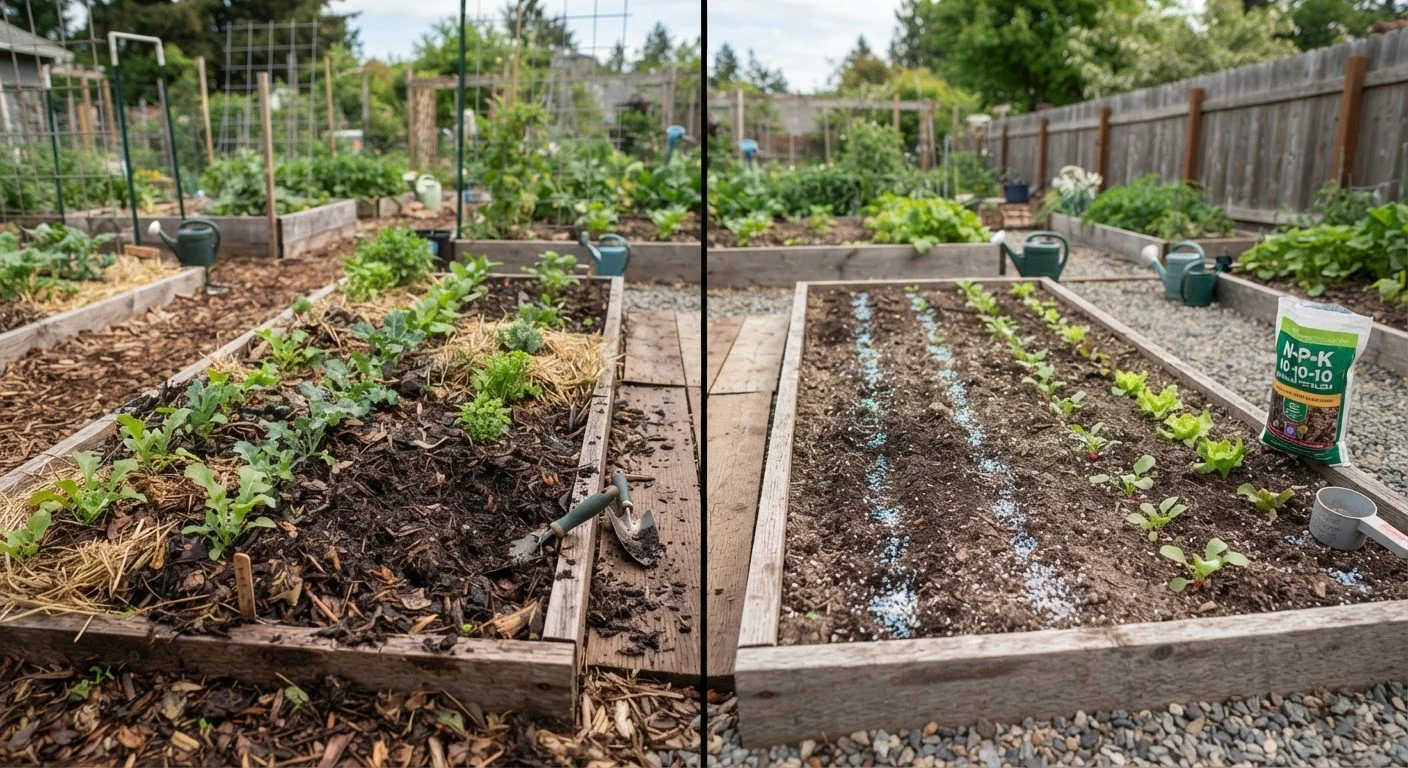
Organic fertilizers reward long-term investment in soil health, while synthetic fertilizers offer precision and speed for immediate plant needs. Most home gardeners benefit from understanding both and choosing based on their specific situation rather than defaulting to one type exclusively.
| Best for | Recommended |
|---|---|
| Gardeners building soil health over multiple seasons | Organic fertilizers |
| Fixing a nutrient deficiency quickly or boosting seedlings fast | Synthetic fertilizers |
| Those growing food and prioritizing minimal synthetic inputs | Organic fertilizers |
| Working with a tight budget and needing reliable results this season | Synthetic fertilizers |
How Each Type Works
Fertilizers deliver three key macronutrients - nitrogen (N), phosphorus (P), and potassium (K) - shown as an N-P-K ratio on any fertilizer label. The fundamental difference between organic and synthetic lies in how those nutrients reach your plants.
Organic fertilizers come from plant, animal, or mineral sources - things like compost, bone meal, blood meal, kelp, and worm castings. These materials must be broken down by soil microorganisms before plants can absorb the nutrients. That biological process takes time, but it also feeds the living ecosystem in your soil - the bacteria, fungi, and earthworms that make soil productive long-term.
Synthetic fertilizers are manufactured through chemical processes and deliver nutrients in forms plants absorb almost immediately. They typically carry higher concentrations of N-P-K, are applied in smaller quantities, and produce visible results within days rather than weeks. They do not, however, contribute organic matter or support soil microbial life.
Understanding this distinction helps clarify nearly every other tradeoff between the two - including cost, timing, environmental impact, and ease of use. If you're planning a new garden and thinking through setup choices, see our guide to raised beds vs. in-ground planting for related soil and site decisions.
Key Tradeoffs at a Glance
Here's a structured look at how organic and synthetic fertilizers compare across the factors that matter most to home gardeners:
| Organic Fertilizers | Synthetic Fertilizers | |
|---|---|---|
| Nutrient release speed | Slow, weeks to months | Fast, days to a week |
| Soil health impact | Builds microbial life and structure | Minimal to neutral effect on microbes |
| Upfront cost | Generally higher per bag | Generally lower per bag |
| Nutrient concentration | Lower N-P-K ratios | Higher N-P-K ratios |
| Risk of over-application | Lower risk, harder to burn plants | Higher risk of plant burn and runoff |
| Ease of use | Variable; some need mixing or aging | Precise, consistent, easy to measure |
| Long-term soil benefit | High - improves tilth over time | Low - no lasting soil contribution |
One pattern that stands out: synthetic fertilizers optimize for this season, while organic fertilizers optimize for the next several seasons. Neither is a wrong choice - they reflect different goals.
Environmental and Soil Health Considerations
Repeated heavy use of synthetic fertilizers can compact soil over time, reduce microbial diversity, and contribute to runoff that affects local waterways. Nitrogen and phosphorus that wash off garden beds during rain can lead to algal blooms in ponds and streams - a process called eutrophication. This is why following label rates carefully matters more with synthetics than with organics.
Organic fertilizers, applied appropriately, tend to improve soil structure over time - a property called tilth. Better tilth means soil that drains well, holds moisture when needed, and supports robust root growth. If you're gardening with native species or ecological goals in mind, this matters even more. Our article on native plants vs. ornamental imports covers how plant selection interacts with soil and ecosystem health.
Don't Overdo Synthetic Fertilizers
Applying more than the label recommends can burn plant roots, strip beneficial microbes from the soil, and cause nutrient runoff into local waterways. Always measure carefully, water after application, and avoid applying before heavy rain is forecast.
That said, organic fertilizers aren't risk-free. Some, like blood meal, can attract animals. Others, such as raw manure, must be composted properly before use near edible crops to avoid pathogen risk. Always follow product guidelines.
Practical Tips for Choosing and Using Fertilizers
The best approach for most home gardeners isn't an either/or decision - it's situational. A few practical principles:
- Start with a soil test. Many cooperative extension offices offer low-cost testing. Knowing your actual nutrient levels prevents over-application and saves money.
- Use organic fertilizers for long-term beds. Perennial borders, food gardens, and lawn renovation all benefit from gradual soil enrichment. See our guide on perennials vs. annuals to match fertilizer strategy to plant type.
- Use synthetics for targeted, fast fixes. If a vegetable plant shows yellowing leaves mid-season, a quick-release nitrogen source can correct the deficiency without waiting weeks.
- Combine approaches when it makes sense. Some gardeners top-dress beds with compost in the fall and use a diluted liquid synthetic fertilizer sparingly during the growing season.
Test Before You Apply
A basic soil test removes the guesswork from fertilizer selection. Many US state cooperative extension services offer affordable testing kits or lab analysis. Results tell you exactly which nutrients are lacking - so you only add what your garden actually needs, saving money and reducing waste.
Whatever you choose, avoid the common mistake of thinking more fertilizer equals more growth. Excess nutrients - of either type - can damage roots, stress plants, and waste money.
The content provided on our blog site traverses numerous categories, offering readers valuable and practical information. Readers can use the editorial team’s research and data to gain more insights into their topics of interest. However, they are requested not to treat the articles as conclusive. The website team cannot be held responsible for differences in data or inaccuracies found across other platforms. Please also note that the site might also miss out on various schemes and offers available that the readers may find more beneficial than the ones we cover.