

Why Your Garden May Not Be Attracting Pollinators
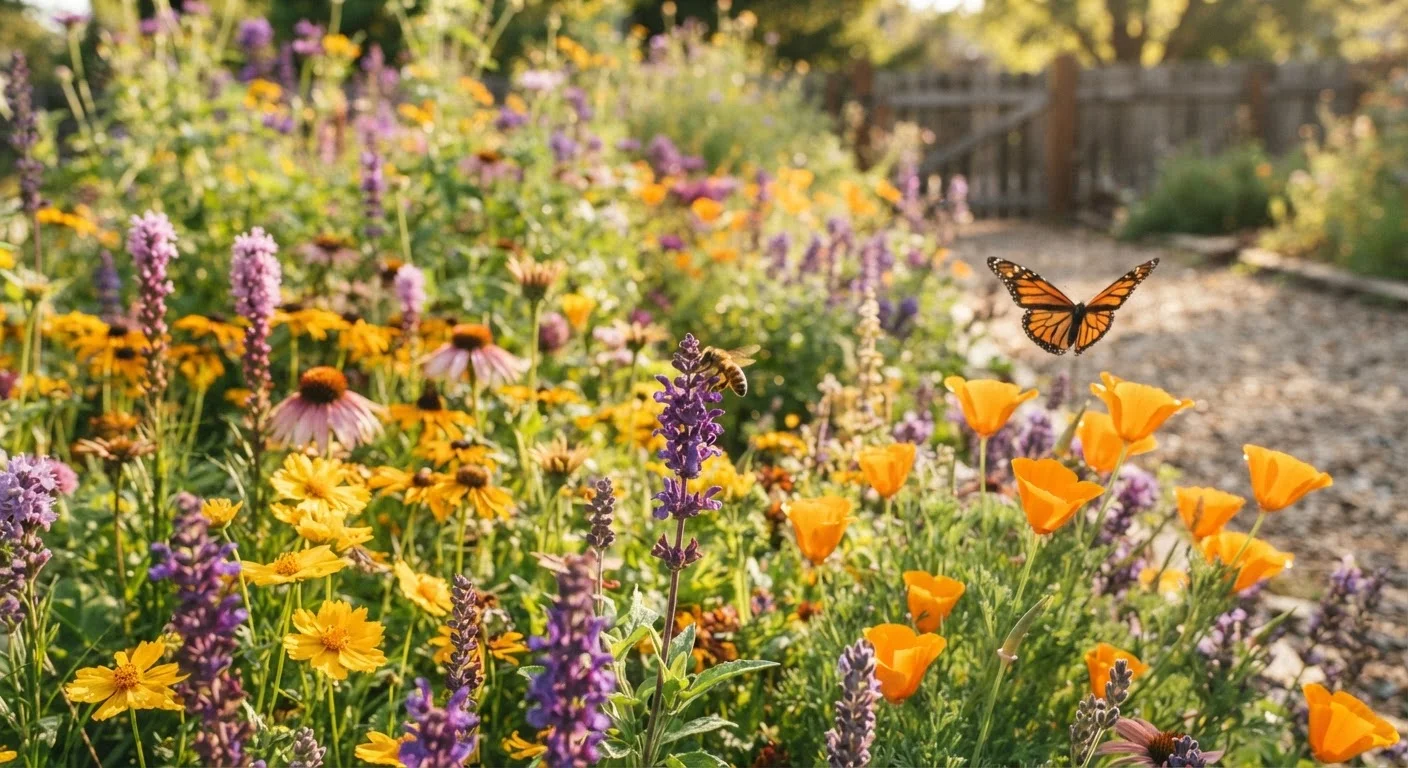
Many well-intentioned gardens offer flowers but still see few bees or butterflies. The reason is usually that visual appeal and ecological function aren't the same thing. A yard full of double-petaled hybrid blooms may look stunning but offer almost no accessible nectar or pollen - the extra petals physically block pollinator access. Similarly, a monoculture of even a good plant species narrows the window of food availability and limits which pollinator species can benefit.
Understanding what pollinators actually need - continuous bloom, nutritionally appropriate pollen, nesting habitat, and clean water - helps explain why some gardens hum with activity while others sit quiet. The practices below reflect what's supported by research and field observation, not just gardening folklore.
For broader context on how plant choices shape your outdoor ecosystem, see our guide to native vs. ornamental plants.
Proven Practices for a Pollinator-Friendly Garden
The following practices are grounded in ecological research and widely recommended by university extension services and conservation organizations. Together, they address the full range of what pollinators need across a growing season.
Plant native species suited to your specific region and climate.
Native plants co-evolved with local pollinators, offering the right pollen chemistry, flower shape, and bloom timing that native bee and butterfly species depend on. Research consistently shows that native plantings support significantly more pollinator diversity than ornamental-heavy landscapes.
Design your planting calendar to ensure overlapping blooms from early spring through late fall.
Pollinators need continuous food sources throughout their active season. A garden that peaks in July and goes quiet by August leaves late-season bees-including bumble bees building winter reserves-without support.
Reduce or eliminate broad-spectrum pesticide use in and around pollinator plantings.
Even pesticides labeled as low-toxicity can harm bees and butterflies when applied to blooming plants or soil where larvae develop. Contact exposure during foraging and residue in pollen and nectar are well-documented pollinator hazards.
Leave areas of bare or loosely mulched soil for ground-nesting bees.
Roughly 70% of native North American bee species nest in the ground. Thick mulch layers and dense ground covers can make entire garden sections uninhabitable for these bees, which are critical pollinators for many food crops and wildflowers.
Provide a consistent, shallow water source within or near the garden.
Pollinators-especially bees-need water for hydration and nest construction. A simple shallow dish with landing stones prevents drowning while making your garden a complete habitat rather than just a feeding station.
Group plants in clusters rather than scattering individual specimens.
Pollinators forage more efficiently when blooms are concentrated. Clustered plantings reduce the energy cost of foraging and make a garden more visually detectable to insects navigating from a distance.
Pollinators Need More Than Flowers
Many gardeners focus entirely on bloom color when planning for pollinators, but habitat features like bare ground patches, brush piles, and shallow water dishes are equally important. Ground-nesting bees, which make up the majority of native bee species in North America, require loose, undisturbed soil to complete their life cycles. A garden that feeds pollinators but offers no nesting or overwintering habitat will see far fewer return visits.
For gardeners weighing where and how to establish new plantings, our article on raised beds vs. in-ground planting can help you decide which setup best supports your pollinator goals.
Start Today: Quick Wins Worth Doing Now
You don't need to redesign your entire yard to begin supporting pollinators. Several impactful changes can be made immediately, with little to no cost. Focus first on eliminating barriers - pesticides, bare water hazards, absence of native species - before adding new features.
Thinking about how your pollinator plantings fit into the larger design of your outdoor space? Designing an outdoor space that you'll actually use explores layout and plant placement principles that make yards both livable and ecologically productive.
Also consider the role of mulch: mulch affects soil temperature, moisture, and ground-nesting habitat in ways that directly influence whether ground-nesting bees can establish in your beds.
Thinking Long-Term: Bloom Sequencing and Plant Selection
“The single most impactful thing a gardener can do for pollinators is increase plant diversity - particularly native species that local insects have evolved alongside for thousands of years.”
— Entomology Extension Specialists, University cooperative extension programs, multiple US land-grant institutions
The most resilient pollinator gardens are planned across time, not just across space. Selecting a mix of perennials and annuals allows you to maintain structural plantings that return each year while filling gaps with fast-blooming annuals that extend the season at either end.
When choosing plants, prioritize single-flower forms over doubles, and check that your selections are open-pollinated varieties - meaning their nectar and pollen are accessible and nutritionally intact. Breeding for showiness often trades away the very qualities that make a flower useful to a bee or butterfly. A modest-looking native aster almost always outperforms a bred ornamental for pollinator support.
Revisiting your plant palette each season - noting what attracted the most activity - is one of the most practical forms of garden observation. Over two to three seasons, you'll build a clear picture of which plants deliver in your specific microclimate, and you can expand from there with confidence.
The content provided on our blog site traverses numerous categories, offering readers valuable and practical information. Readers can use the editorial team’s research and data to gain more insights into their topics of interest. However, they are requested not to treat the articles as conclusive. The website team cannot be held responsible for differences in data or inaccuracies found across other platforms. Please also note that the site might also miss out on various schemes and offers available that the readers may find more beneficial than the ones we cover.