

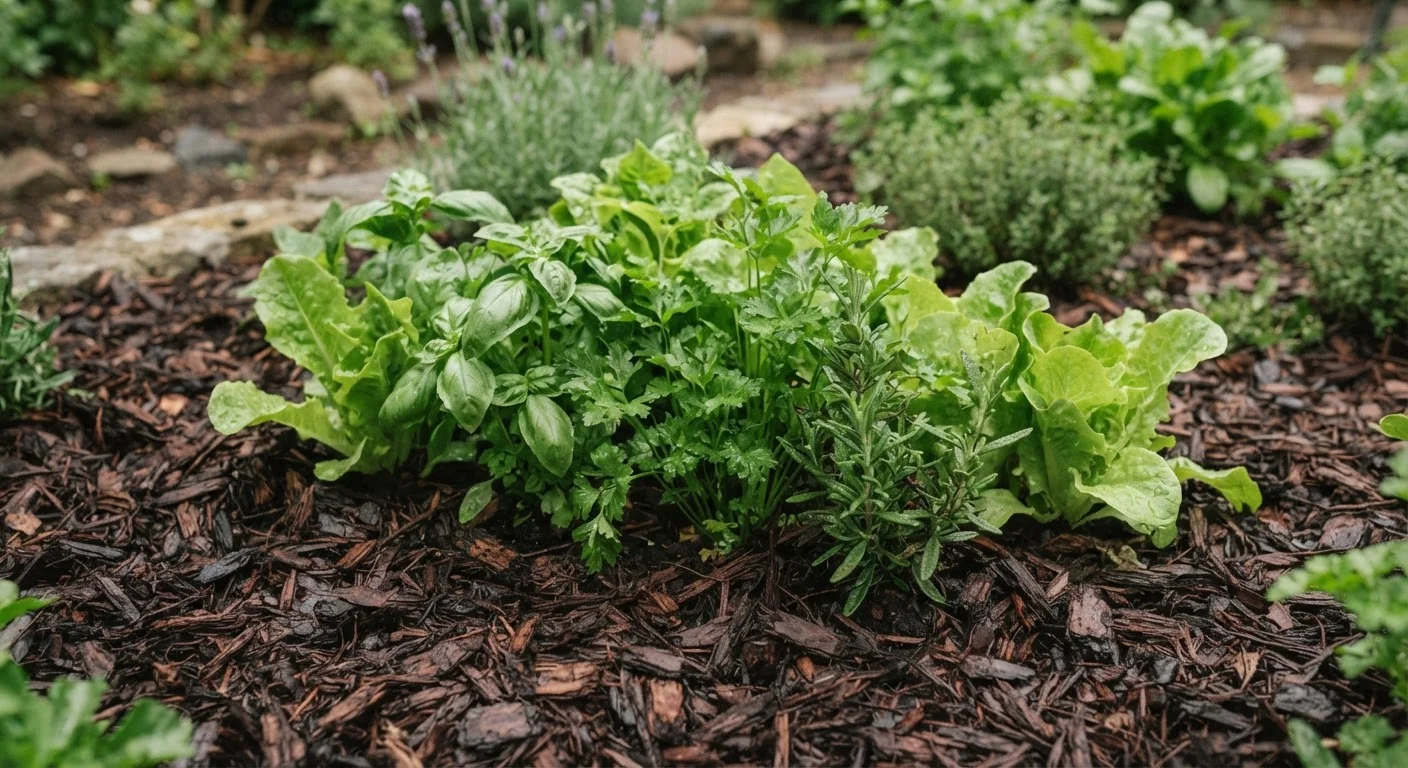
The Four Things Mulch Actually Does
Mulch is one of the most underrated tools in a gardener's toolkit. Most people see it as a finishing touch - something that makes a bed look neat. But its real value is entirely practical, and it operates in four overlapping ways.
Moisture retention. Bare soil exposed to sun and wind loses water rapidly through evaporation. A layer of mulch dramatically slows that process. Studies from university extension programs consistently show that mulched soil retains significantly more moisture than unmulched soil, translating directly to less frequent watering. That matters for both water bills and plant health - especially during summer heat. For more on watering strategy, see common garden watering mistakes that quietly stress plants.
Weed suppression. Weed seeds need light to germinate. A thick, even mulch layer denies them that light, dramatically reducing the number of weeds that establish. This isn't a perfect barrier - seeds that blow in on top of the mulch can still sprout - but the reduction in weeding time is real and significant.
Temperature moderation. Soil temperatures swing more wildly in unmulched beds. In summer, bare soil can heat to levels that stress shallow roots. In winter, freeze-thaw cycles heave soil and damage root systems. Mulch acts as insulation, buffering both extremes and creating a more stable root environment year-round.
Soil building. Organic mulches decompose slowly, and as they do, they feed the microbial life that makes soil healthy and fertile. This is essentially a slow-release soil amendment happening passively on the surface - no digging required. Composting at home works on a similar principle and pairs naturally with a mulching routine.
Up to 70%
Reduction in soil moisture evaporation
University cooperative extension research has demonstrated that mulched soil retains significantly more moisture than bare soil under the same conditions.
2-4 inches
Optimal mulch layer depth
This range is widely recommended by horticulturists as the practical sweet spot for weed suppression, moisture retention, and root health.
30°F+
Soil temperature swing reduction
Mulch can buffer soil temperatures by significant margins, protecting roots from both summer heat spikes and winter freeze-thaw cycles.
Organic vs. Inorganic Mulch: What the Difference Means in Practice
The mulch category that best fits your garden depends on your goals. Organic mulches - wood chips, shredded bark, straw, shredded leaves, pine needles, and compost - break down over time. That decomposition is a feature, not a flaw: it feeds soil organisms and gradually improves soil structure. The trade-off is that you'll need to replenish organic mulch periodically, typically once a year or when the layer drops below an inch or two.
Inorganic options - gravel, river rock, and landscape fabric - don't decompose and require virtually no replenishment. They're practical in pathways or in low-maintenance plantings where soil fertility improvement isn't a priority. However, they don't contribute anything to soil health, and some landscape fabrics can degrade and fragment over several years, creating their own maintenance problem.
Shredded Leaves Are Free Mulch
If you have deciduous trees, a bagged-leaf mulch is available to you every fall at no cost. Run dry leaves through a mower or shredder to break them down, which prevents them from matting into a water-repelling layer. Shredded leaves decompose relatively quickly and add real organic matter to the soil as they do.
For most garden beds - whether perennials, shrubs, or vegetables - organic mulch is the workhorse choice. It earns its keep in multiple ways simultaneously. The specific type matters less than the quality of application: depth, even coverage, and keeping it away from plant stems are what determine results. This principle applies whether you're gardening in the ground or in raised beds.
How to Apply Mulch So It Actually Works
Getting the benefits of mulch depends almost entirely on how it's applied. The common mistakes are simple to avoid once you know what to watch for.
- Depth: Aim for 2-4 inches of coverage. Thinner than 2 inches and the layer isn't substantial enough to suppress weeds or retain meaningful moisture. Deeper than 4 inches risks waterlogging, oxygen restriction at the root zone, and slug habitat.
- Clearance from stems: Pull mulch back 2-3 inches from plant stems, crowns, and tree trunks. The "volcano mulching" style - piling mulch against tree trunks in a cone - is one of the most persistent bad practices in landscaping. It traps moisture against bark and promotes rot and pest problems.
- Even coverage: Gaps in coverage are gaps in weed suppression and moisture retention. Take the time to distribute material evenly across the bed surface.
- Timing: Spring application is most effective after soil has had a chance to warm. Fall application insulates roots ahead of winter. Avoid mulching over waterlogged or dry, compacted soil without addressing the underlying condition first.
Understanding what's happening in your soil more broadly - including soil pH and nutrient availability - can help you choose the right mulch and get the most from it.
Frequently Asked Questions
A 2-4 inch layer works well for most garden beds. Shredded or fine-textured mulches can be applied closer to 2 inches since they compact more tightly. Coarser materials like wood chips can go up to 4 inches. Avoid piling mulch deeper than 4 inches, as this can reduce oxygen and water reaching plant roots.
Generally, no. If the existing layer is less than an inch thick and partially decomposed, you can simply top it up. If the old mulch has compacted into a mat that repels water, loosen it with a rake before adding fresh material on top.
Wood chips are a widely used and effective organic mulch. A common concern is that they deplete soil nitrogen as they decompose on the surface, but research suggests this effect is minimal when chips remain on top of the soil rather than being tilled in. Over time they actually contribute to soil health.
Mulch piled directly against plant stems or tree trunks can trap moisture and create conditions favorable to rot, fungal disease, and some pests. Keeping mulch pulled back 2-3 inches from stems and trunks prevents most of these issues.
Straw, shredded leaves, and compost-based mulches are popular choices for vegetable beds because they break down and enrich the soil. Avoid dyed or treated wood products in edible gardens and always source materials from reputable suppliers.
Spring and fall are the most productive times to mulch. In spring, apply mulch after the soil has warmed up - too early and you slow warming. In fall, a fresh layer insulates roots against winter cold and reduces freeze-thaw soil heaving.
The content provided on our blog site traverses numerous categories, offering readers valuable and practical information. Readers can use the editorial team’s research and data to gain more insights into their topics of interest. However, they are requested not to treat the articles as conclusive. The website team cannot be held responsible for differences in data or inaccuracies found across other platforms. Please also note that the site might also miss out on various schemes and offers available that the readers may find more beneficial than the ones we cover.