

The Hidden Reason Your Plants Are Struggling
You've watered consistently, added compost, and given your plants plenty of sun - yet something still looks off. Leaves are yellowing, growth is slow, and the harvest disappoints. Before blaming the weather or buying more fertilizer, consider checking something most gardeners overlook: soil pH.
Soil pH is not just a number on a testing kit. It's the chemical environment your plant roots live in every day. When that environment is off balance, plants physically cannot access the nutrients in the soil - even when those nutrients are present in abundance. Understanding this concept is one of the most practical things you can do for your garden.
If you're new to gardening or just starting out, you may find our beginner's guide to vegetable gardening a useful companion to this article.
How pH Affects Nutrient Availability
Think of soil pH as a gatekeeper. Each essential plant nutrient - nitrogen, phosphorus, potassium, iron, manganese, and others - becomes chemically available to plant roots only within a specific pH window. Outside that window, the nutrient is present in the soil but locked into forms roots cannot absorb.
For example, iron and manganese become less available in alkaline soil (pH above 7.0), causing a condition called chlorosis - where leaves turn yellow between their veins while the veins stay green. Phosphorus becomes locked out in both very acidic and very alkaline conditions. Aluminum and manganese, by contrast, can become too available in highly acidic soil, reaching toxic concentrations.
6.0-7.0
Optimal pH range for most vegetables
According to University of Minnesota Extension, the majority of common vegetable crops perform best within this slightly acidic to neutral range.
~4.5
pH needed for blueberries to thrive
Blueberries have some of the most specific soil pH requirements of any common garden crop, per guidance from multiple state cooperative extension services.
13 nutrients
Essential nutrients affected by soil pH
Soil scientists identify at least 13 mineral nutrients whose availability to plant roots is directly influenced by soil pH levels.
This is why applying more fertilizer doesn't solve a pH problem. You're adding nutrients to soil that can't deliver them. Correcting the pH first is what makes the rest of your gardening effort actually work.
How to Test Your Soil pH
Testing soil pH is straightforward and doesn't require specialized knowledge. There are three practical approaches for home gardeners:
- Paper or liquid test kits: Widely available at garden centers. You mix a soil sample with water and a chemical indicator, then compare the resulting color to a chart. These are quick and affordable, though less precise.
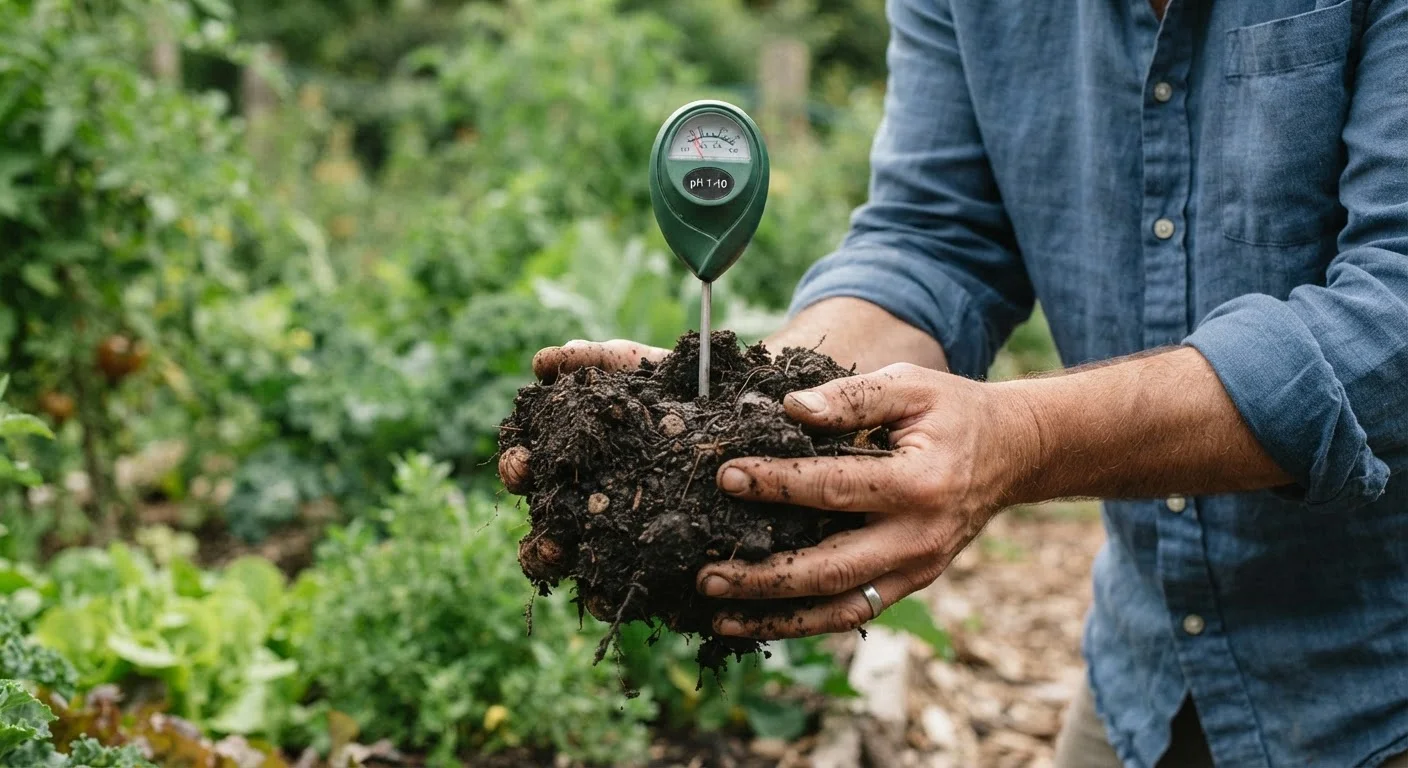
- Digital pH meters: Small electronic probes that you insert directly into moist soil for an instant reading. Accuracy varies by model, and probes need regular calibration.
- Cooperative extension lab testing: Many state universities run soil labs through their cooperative extension programs. You mail in a sample and receive a detailed report that includes pH, nutrient levels, and specific amendment recommendations. This is the most thorough and reliable option.
Collect soil from several spots across your garden bed, mixing them together for a representative sample. Test at a depth of 4 to 6 inches, where most plant roots feed.
Test Before You Amend
Never add lime or sulfur to your soil without testing first. Guessing can push your pH further in the wrong direction, wasting money and stressing plants. A cooperative extension soil test typically costs a modest fee and returns detailed, region-specific amendment recommendations - well worth it before any major planting.
Adjusting Soil pH: Raising and Lowering
Once you know your soil's pH, you can adjust it - but patience matters. Amendments work gradually, often over several weeks or months, so plan ahead of planting season.
To raise pH (make soil less acidic)
Ground agricultural limestone - often called garden lime - is the standard choice. Dolomitic lime also adds magnesium, which can benefit deficient soils. The exact quantity depends on your soil type (clay soils require more than sandy soils) and how large a shift you need. Your cooperative extension service can provide tailored recommendations.
To lower pH (make soil less alkaline)
Elemental sulfur is the most reliable amendment for acidifying soil. Soil bacteria convert it into sulfuric acid over time, gradually lowering pH. Incorporating generous amounts of compost and organic matter can also nudge pH slightly lower while improving soil structure overall.
Avoid making large pH adjustments all at once. Dramatic swings can stress soil life and plants alike. Small, measured changes followed by retesting are a safer approach.
Gardeners using raised beds have a practical advantage here - amending a contained volume of soil is far easier than treating a large in-ground area. Our article on raised beds vs. in-ground planting covers how to choose the right setup for your space.
Plants With Specific pH Preferences
While most vegetables prefer a slightly acidic to neutral range (6.0-7.0), some plants have strong preferences that are worth knowing before you plant:
- Blueberries: Require quite acidic soil, around 4.5-5.5. They will simply fail to thrive in neutral or alkaline conditions.
- Azaleas and rhododendrons: Prefer 4.5-6.0 - they're reliable indicators that your soil may already be on the acidic side.
- Brassicas (cabbage, broccoli, kale): Prefer near-neutral soil around 6.5-7.0, which also helps suppress clubroot disease.
- Potatoes: Do well in slightly acidic soil (5.0-6.0), which can reduce the incidence of potato scab.
Matching plant selection to your existing pH - or amending before planting - saves considerable frustration. You'll spend less time troubleshooting and more time enjoying your garden.
Keep in mind that pH is just one piece of the puzzle. Watering habits also have a major impact on plant health - our piece on common garden watering mistakes covers the problems that even correct pH can't fix.
Frequently Asked Questions
For most vegetables, herbs, and flowers, a pH between 6.0 and 7.0 is ideal. Within this range, the widest variety of nutrients are chemically available for plant uptake. Some plants, like blueberries, prefer more acidic conditions around 4.5 to 5.5.
You can use an inexpensive test kit from a garden center, which involves mixing soil with a chemical solution and matching the color to a chart. Digital pH meters are also available and give quick readings. For the most reliable results, send a sample to your local cooperative extension service.
Adding ground agricultural limestone (lime) is the most common method. The amount needed depends on your current pH, soil type, and target level. Changes take several weeks to take effect, so test again before applying more.
Elemental sulfur is the standard amendment for lowering pH in alkaline soil. Soil microbes convert it over time, so results are gradual. Incorporating organic matter like compost also helps acidify soil slightly over the long term.
Yes. Raised beds give you more control over soil composition from the start, making it easier to maintain a target pH. You can blend your growing mix before planting and amend a smaller, defined volume of soil.
Testing once a year - ideally in early spring before planting - is a reasonable practice for active garden beds. If you've recently applied amendments or notice ongoing plant problems, testing every six months helps you track changes.
The content provided on our blog site traverses numerous categories, offering readers valuable and practical information. Readers can use the editorial team’s research and data to gain more insights into their topics of interest. However, they are requested not to treat the articles as conclusive. The website team cannot be held responsible for differences in data or inaccuracies found across other platforms. Please also note that the site might also miss out on various schemes and offers available that the readers may find more beneficial than the ones we cover.