

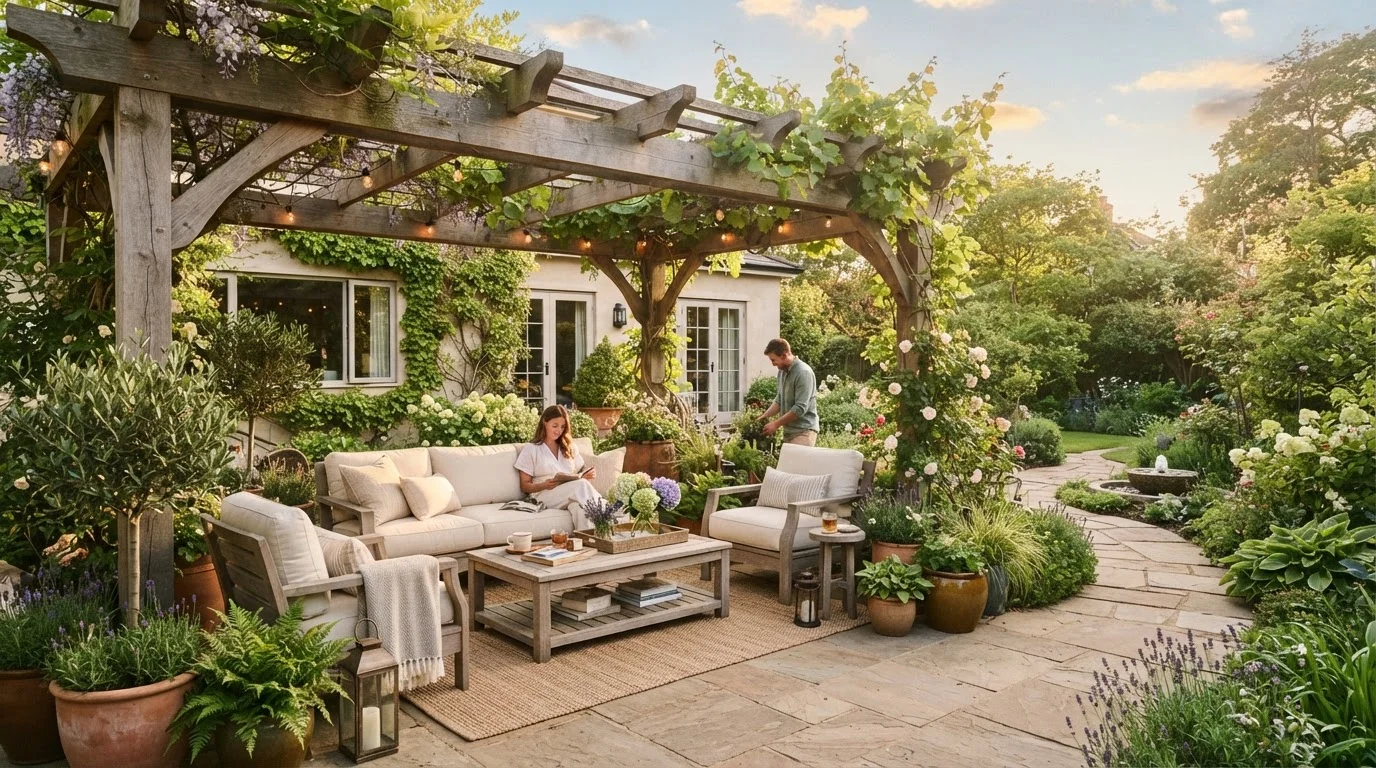
Why Most Outdoor Spaces Go Unused
A patio that nobody sits on. A yard that gets mowed and nothing else. These aren't failures of effort - they're usually failures of planning. Outdoor spaces stop being used when they're uncomfortable, inconvenient, or don't match how the household actually lives.
The fix isn't spending more money. It's asking better questions before you arrange a single chair or plant a single shrub. Where does the afternoon sun hit hardest? Where do people naturally walk when moving from the back door to the garage? What do you actually want to do out there - eat, relax, grow food, let kids play?
Designing around real behavior, rather than idealized pictures, is what separates outdoor spaces people love from ones they ignore.
“People don't use spaces that make them uncomfortable. Comfort - thermal, visual, spatial - has to come first, before aesthetics.”
— Landscape Design Principles, Foundational concept in environmental design education
Map the Space Before You Arrange It
Spend a few days noticing your yard at different times of day. Morning sun on the east side may make a breakfast nook lovely; the same spot becomes unusable by 2 p.m. in summer. Track where puddles form after rain - that's where drainage is poor and hardscape or raised planting may be needed.
Sketch a rough overhead map. Mark the directions of north, south, east, and west. Note permanent features: the house, fences, mature trees, utility boxes, and doors. These non-negotiables anchor everything else.
Traffic flow matters just as much as sun exposure. People cut corners and take the shortest path - always. If your layout forces awkward detours, furniture will get pushed aside and paths will wear through grass. Design routes that feel natural and keep primary walkways at least 36 inches wide for comfortable movement.
The 'Two-Week Observation' Rule
Before finalizing any layout, spend at least two weeks simply watching your yard. Note where sunlight falls at 8 a.m., noon, and 4 p.m. Track which areas stay damp after rain and which dry quickly. This simple observation period prevents the most common and costly outdoor design mistakes.
Zone for Activities, Not Just Aesthetics
One of the most effective principles in outdoor design is zoning - dividing a space into areas with distinct purposes. Even a modest backyard can accommodate a dining zone near the kitchen door, a lounging zone under a tree or pergola, and a planting zone along a fence or border.
Separation doesn't require walls. A change in surface material (gravel versus pavers versus lawn), a row of containers, or a simple hedge creates a psychological boundary that makes each zone feel intentional.
For gardeners, zoning also means deciding where edible plants, ornamentals, and pollinator-friendly plants each belong. See our guide to raised beds vs. in-ground planting to think through how planting style interacts with layout.
Shade, Comfort, and Plant Placement
Shade is non-negotiable for a usable outdoor space in most of the US. A seating area with no overhead cover is pleasant in April and miserable in July. Options range from permanent pergolas and shade sails to well-placed trees and large container plants - choose based on your budget, rental situation, and how permanent you want the solution.
When positioning plants, think about mature size, not just what goes in the ground today. A shrub that looks modest at the nursery may block a window or crowd a path in three years. Leave room for growth, and group plants by similar water needs so irrigation stays manageable.
If you're working with a compact area, vertical planting - trellises, wall-mounted planters, stacked containers - can add greenery and even edibles without consuming floor space. Our article on container gardening for small patios and balconies covers this in detail.
Plant selection also shapes how much wildlife visits your space. Native flowering plants chosen for seasonal bloom succession can support bees and butterflies throughout the growing season. Learn what actually works in our pollinator gardening guide.
The Small Tweaks That Make the Biggest Difference
Lighting is consistently underestimated. Low-voltage path lighting, string lights over a seating area, or a lantern on a table extend usable hours into evening and make a space feel finished. Solar options require no wiring and can be repositioned as your layout evolves.
Storage is equally overlooked. Outdoor cushions, tools, and kids' toys that have nowhere to go end up creating clutter that discourages use. A weatherproof bench with hidden storage, a compact deck box, or hooks on a fence panel can solve this without major construction.
Finally, consider the view from inside. The outdoor space you see from your kitchen or living room should feel attractive even when you're not in it. That means keeping clutter managed and choosing plants and structures that look good year-round - a principle that connects neatly to home organization strategies applied outdoors.
Permits and Codes for Permanent Structures
Pergolas, decks, shade structures, and fencing above certain heights often require a building permit in the US. Requirements vary significantly by municipality. Always check with your local building department before beginning any permanent outdoor construction - skipping permits can complicate home sales and create safety or insurance issues.
The content provided on our blog site traverses numerous categories, offering readers valuable and practical information. Readers can use the editorial team’s research and data to gain more insights into their topics of interest. However, they are requested not to treat the articles as conclusive. The website team cannot be held responsible for differences in data or inaccuracies found across other platforms. Please also note that the site might also miss out on various schemes and offers available that the readers may find more beneficial than the ones we cover.