

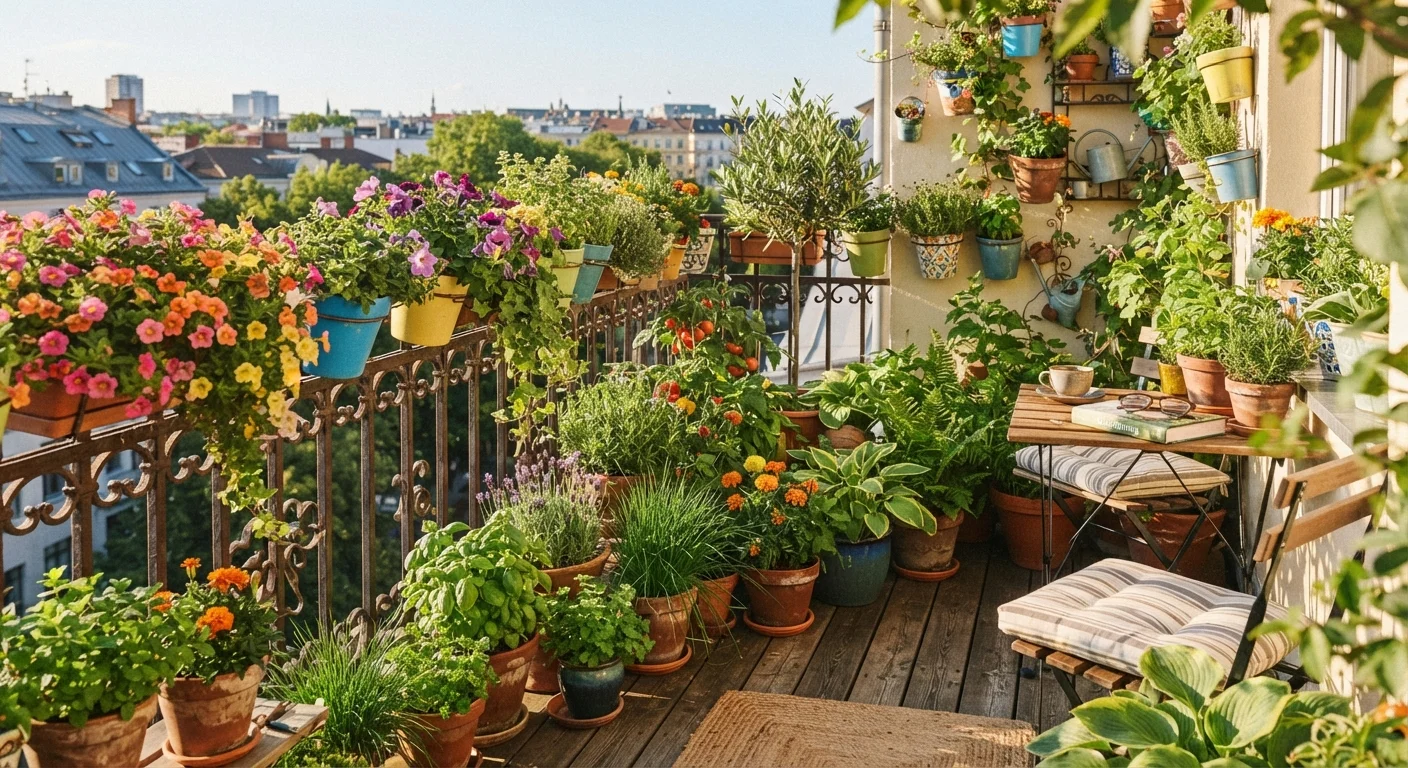
Why Container Gardening Works in Small Spaces
A balcony or small patio isn't a compromise - it's a design challenge with real solutions. Container gardening lets you control soil quality, move plants to chase sunlight, and grow an impressive variety of edibles and ornamentals without a single square foot of ground. Whether you're renting an apartment or working with a narrow townhouse patio, the fundamentals are the same.
The biggest shift from in-ground gardening is understanding that your containers are the growing environment. Unlike a raised bed or traditional plot, containers can't draw moisture or nutrients from surrounding soil. That means you're responsible for everything - drainage, fertility, and root space. Get those three things right, and small-space gardening becomes genuinely rewarding.
For a broader look at how your outdoor layout affects plant placement and usability, see this guide to designing outdoor spaces you'll actually want to spend time in.
What you will need
Choosing the Right Containers
Container selection shapes every outcome downstream. A pot that's too small starves roots; one that holds water without draining rots them. Here's what to prioritize:
- Size matters more than aesthetics. Most vegetables and herbs need at least 6-12 inches of depth. Tomatoes, peppers, and eggplants need 12-18 inches or more. Shallow troughs work well for lettuce, spinach, and herbs like basil and chives.
- Drainage holes are non-negotiable. Every container must have at least one drainage hole. Saucers are fine for catching runoff on a balcony, but don't let containers sit in standing water for more than a day.
- Weight is a practical constraint. On balconies especially, large ceramic or concrete pots can add up quickly. Lightweight resin, fabric grow bags, and foam planters offer generous volume without the structural risk. Always check your building or HOA guidelines for balcony weight limits before loading up.
Fabric grow bags (5-25 gallon)
Provide excellent drainage and airflow to roots while keeping weight low on elevated surfaces.
Lightweight resin or foam planters
Mimic the look of ceramic or stone containers at a fraction of the weight - ideal for balconies.
Quality potting mix
Provides the aerated, nutrient-rich growing medium containers need; never substitute with garden soil.
Slow-release granular fertilizer
Mixed into potting soil at planting to supply steady nutrition throughout the season.
Saucers or drip trays
Catch drainage water to protect balcony surfaces and neighbors below.
Watering can with a rose (sprinkler) head
Delivers a gentle, even stream that doesn't displace soil or damage seedlings.
Soil, Drainage, and Feeding
Never fill containers with soil dug from the ground. Garden soil compacts heavily in pots, suffocates roots, and may introduce pests or disease. Use a quality potting mix - a lightweight blend designed specifically for containers. Look for mixes that include perlite or vermiculite for aeration and water retention balance.
To improve drainage further without adding weight, place a single layer of gravel or broken pottery shards at the bottom of deep pots. A thin layer - about one inch - is sufficient. Skip the popular myth that a thick gravel layer dramatically improves drainage; research has shown it can actually create a perched water table that keeps roots wetter.
Because watering flushes nutrients out of container soil faster than in-ground growing, feeding matters. Mix a slow-release granular fertilizer into your potting mix at planting time, then supplement with a diluted liquid fertilizer every two to three weeks during the growing season. Compost can also boost fertility - making your own compost is a cost-effective way to enrich container soil over time.
Keep Moisture in Check With Mulch
A thin layer of coco coir or fine bark mulch on top of your container soil slows evaporation noticeably, especially in summer. This small step can reduce how often you need to water by stretching the interval between sessions. It also gives containers a tidy, finished appearance.
Selecting Plants for Containers and Compact Spaces
Not every plant is well-suited to container life, but the list of those that are is longer than most people expect. Compact or dwarf varieties of vegetables perform far better than full-size cultivars in limited soil volume. Herbs - basil, parsley, cilantro, mint, thyme, rosemary - are naturals in containers and can be tucked into small pots near the kitchen door.
For flowering color, look for trailing or mounding annuals like petunias, calibrachoa, or sweet potato vine that spill over pot edges and create visual fullness. Mixing trailing plants with upright ones in the same large container - a technique called "thriller, filler, spiller" - maximizes impact per square foot.
If you're deciding between plants you'll buy every season versus ones that come back on their own, understanding perennials vs. annuals will help you plan smarter and spend less over time.
Mint Needs Its Own Container
Mint is an aggressive spreader that will overtake neighboring plants if planted in a mixed container. Always grow mint in its own dedicated pot to keep it from crowding out herbs or flowers beside it. This applies to other vigorous spreaders like lemon balm and some oregano varieties.
The content provided on our blog site traverses numerous categories, offering readers valuable and practical information. Readers can use the editorial team’s research and data to gain more insights into their topics of interest. However, they are requested not to treat the articles as conclusive. The website team cannot be held responsible for differences in data or inaccuracies found across other platforms. Please also note that the site might also miss out on various schemes and offers available that the readers may find more beneficial than the ones we cover.