

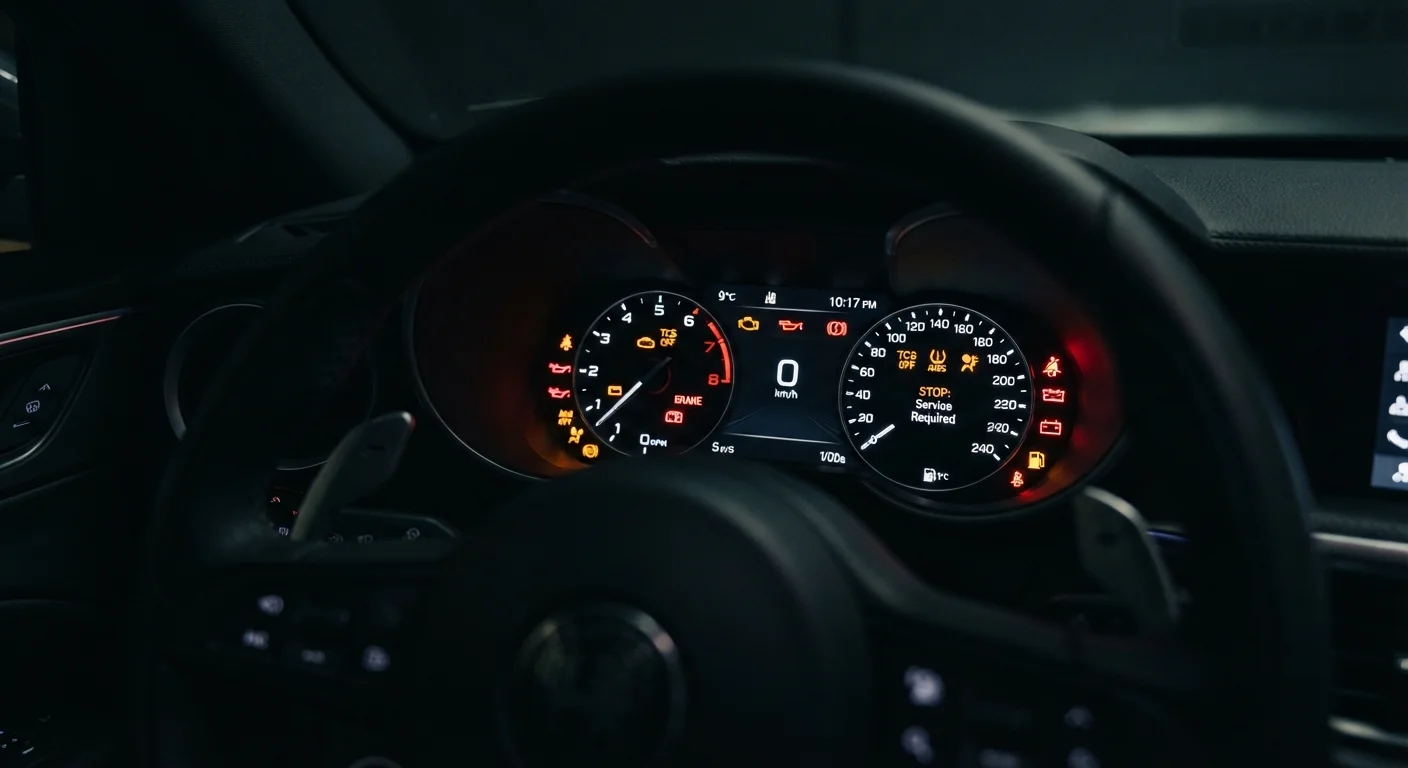
Why Warning Lights Exist - and Why You Shouldn't Ignore Them
Modern vehicles use a network of sensors that constantly monitor systems ranging from engine performance to tire pressure. When something falls outside normal operating parameters, the car's onboard computer triggers a dashboard warning light. These lights aren't suggestions - they're your vehicle communicating a condition that needs attention.
The urgency of your response should match the light's color. Red lights signal immediate danger and typically require you to stop driving as soon as it is safe to do so. Amber or yellow lights indicate a condition that needs attention soon but may not require immediate stoppage. Green and blue lights are generally informational, confirming that a system - like high beams or turn signals - is active.
| Red light urgency | Stop driving as soon as safely possible |
| Amber/yellow light urgency | Schedule service soon; monitor closely |
| TPMS activation threshold | 25% below recommended tire pressure (U.S. NHTSA TPMS regulation) |
| Flashing check engine light | Reduce speed; seek immediate service |
| Owner's manual location | Typically in the glove compartment |
| Fault code reading | Many auto parts stores offer free OBD-II scans |
Ignoring warning lights doesn't make the underlying problem disappear. In many cases, a minor issue that triggers a yellow light can escalate into a costly repair or a safety hazard if left unaddressed. Think of dashboard alerts the same way you'd think about road sign color codes - the color itself carries meaning before you even read the symbol.
The Most Common Warning Lights, Explained
While exact symbols vary by manufacturer, most passenger vehicles sold in the U.S. share standardized icons governed by federal safety standards. Here are the lights drivers encounter most often:
MIL (Malfunction Indicator Lamp)
The official name for the check engine light. It illuminates when the vehicle's onboard diagnostic system detects a fault in the engine, transmission, or emissions system.
TPMS
Tire Pressure Monitoring System - a federally mandated sensor system that alerts drivers when one or more tires falls significantly below the recommended inflation level.
OBD-II
On-Board Diagnostics, second generation - a standardized port and protocol used to read fault codes from a vehicle's computer. Required on U.S. passenger vehicles since 1996.
Charging System
The combination of the alternator, battery, and related wiring that generates and stores electrical power while the engine is running.
Catalytic Converter
An exhaust system component that reduces harmful emissions. Engine misfires can overheat and permanently damage it, making a flashing check engine light especially urgent.
Check Engine (MIL): The malfunction indicator lamp - often an engine outline - is one of the most misunderstood lights. It can signal anything from a loose gas cap to a misfiring cylinder. A steady amber light means schedule a diagnostic soon. A flashing check engine light indicates an active misfire that can damage the catalytic converter - reduce speed and see a mechanic promptly.
Battery: A red battery icon means the charging system isn't maintaining adequate voltage. This could point to a failing alternator, a worn belt, or the battery itself. If this light comes on while driving, your vehicle may only have minutes of power remaining. Learn to spot early battery warning signs before you're stranded.
Oil Pressure: A red oil can symbol is one of the most critical alerts. Low oil pressure can cause catastrophic engine damage within minutes. Pull over safely, turn off the engine, and check the oil level. Do not continue driving until the cause is identified.
Tire Pressure (TPMS): An amber symbol showing an exclamation mark inside a tire cross-section means one or more tires is significantly under-inflated. This affects handling, fuel economy, and tire wear. Proper tire inflation is a simple check with a big payoff.
Brake System: A red circle with an exclamation mark (or the letter P in a circle) can indicate the parking brake is engaged - but if it illuminates while driving, it may signal low brake fluid or a system fault. Brake issues should never wait.
Temperature Warning: A thermometer symbol in red means the engine is overheating. Pull over safely and allow the engine to cool. Do not open the radiator cap while the engine is hot. Check coolant levels only after the engine has fully cooled, and consult your owner's manual or a mechanic before driving further. For a broader look at fluid levels and what each one does, see our guide on car fluids every driver should know.
What to Do When a Warning Light Comes On
Your first step when any light appears is to stay calm and assess the color. If the light is red and accompanied by unusual sounds, smells, or changes in vehicle behavior, treat it as an emergency and pull over safely.
For amber lights, check your owner's manual - the single most underused resource in most glove compartments - to identify exactly what the symbol means for your specific make and model. Many automakers also offer free lookup tools via their websites or mobile apps.
Your Owner's Manual Is Your Best Reference
Dashboard symbols are not fully universal - an icon that means one thing on a Toyota may look slightly different on a Ford. Your owner's manual includes a complete symbol guide specific to your vehicle's year and trim level. Digital versions are often available free on the manufacturer's website if your printed copy is missing.
If you're uncertain whether a light is serious, err on the side of caution. A quick visit to a trusted mechanic or even a free diagnostic scan at many auto parts stores can read the fault code and give you a clearer picture. Keeping up with routine maintenance - including checks appropriate to each season - reduces the likelihood of unexpected alerts. Our seasonal car care guide outlines what to inspect throughout the year.
Most importantly, never assume a warning light will resolve on its own without understanding the underlying cause. Dashboard alerts exist to protect both you and your vehicle - treating them as a reliable communication tool rather than an inconvenience is one of the most straightforward habits of a well-informed driver.
The content provided on our blog site traverses numerous categories, offering readers valuable and practical information. Readers can use the editorial team’s research and data to gain more insights into their topics of interest. However, they are requested not to treat the articles as conclusive. The website team cannot be held responsible for differences in data or inaccuracies found across other platforms. Please also note that the site might also miss out on various schemes and offers available that the readers may find more beneficial than the ones we cover.