

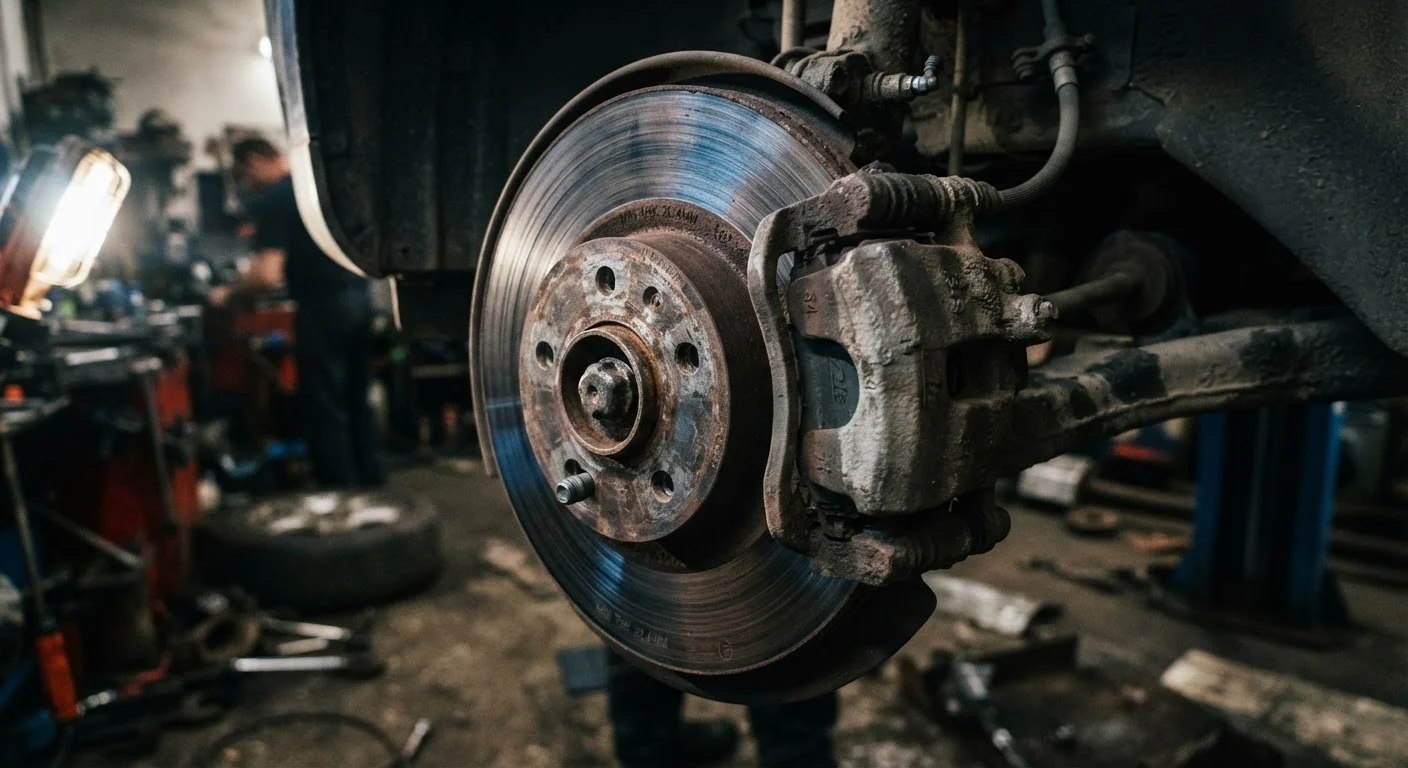
What Your Brakes Are Actually Trying to Tell You
Your braking system is designed with built-in early warning signals. Most modern vehicles use brake pads fitted with small metal tabs called wear indicators. When the pad material wears thin, these tabs contact the rotor and produce that familiar high-pitched squeal - essentially your car filing a maintenance request.
But not every brake noise is the same, and misreading the signal is one of the most common mistakes drivers make. A brief squeal on a cold or damp morning is usually harmless. A persistent squeal during normal braking is not. Understanding the difference helps you act at the right time - not too late, and not unnecessarily early.
Grinding is a separate and more urgent category. That harsh, metallic scraping typically means the brake pads have worn completely through, and metal is now contacting metal directly on the rotor. At this stage, stopping distances increase and rotor damage accelerates, turning a pad replacement into a significantly more expensive rotor replacement as well.
Pulsing or vibrating through the brake pedal points to a different problem: warped or unevenly worn rotors. You may feel the steering wheel shudder slightly as you slow down. This condition won't resolve on its own and affects braking consistency, particularly at highway speeds.
Grinding or Fading Brakes: Don't Wait
If your brakes grind, pull to one side, or feel spongy under normal pressure, do not delay a mechanic visit. These symptoms can indicate rotor damage, a stuck caliper, or low brake fluid - all of which affect your ability to stop safely. Increased following distances and reduced speeds are temporary measures only, not substitutes for repair.
If your brake warning light is also illuminated alongside any noise, treat it as an immediate concern. For a full guide to dashboard signals, see Your Car's Warning Lights, Decoded.
Common Mistakes Drivers Make With Brake Noises
Waiting for the noise to go away on its own before acting.
Why it happens: Drivers often hope an intermittent squeal is a fluke, especially if it disappears after a few stops. Some noises do fade temporarily, reinforcing this false reassurance.
Assuming all squealing means the brakes need immediate replacement.
Why it happens: Because worn-pad squealing is so well-known, many drivers assume any squeal equals an emergency. This can lead to unnecessary service or panic stops at shops that may upsell unneeded work.
Ignoring grinding sounds because the brakes still feel like they work.
Why it happens: A vehicle may still decelerate even with severely worn brakes, giving drivers a false sense that the system is functional. The degradation in stopping power isn't always obvious until it matters most.
Diagnosing and attempting brake repairs without adequate knowledge or tools.
Why it happens: Online tutorials make brake pad swaps look straightforward, and many drivers are comfortable with basic maintenance. Brakes, however, involve hydraulic systems and safety-critical tolerances.
When you're ready to have a shop evaluate your brakes, going in prepared makes a real difference. Taking Your Car to a New Mechanic: What to Ask Before Any Work Begins walks you through the right questions to protect yourself and your vehicle.
Brakes Are a Safety System - Not Optional Maintenance
Unlike a burned-out cabin light or a rattling trim piece, brake problems directly affect your ability to control your vehicle in an emergency. No unusual brake sound, sensation, or behavior should be indefinitely deferred. If you're uncertain about what you're hearing or feeling, schedule an inspection - most shops will assess brakes at no charge.
The content provided on our blog site traverses numerous categories, offering readers valuable and practical information. Readers can use the editorial team’s research and data to gain more insights into their topics of interest. However, they are requested not to treat the articles as conclusive. The website team cannot be held responsible for differences in data or inaccuracies found across other platforms. Please also note that the site might also miss out on various schemes and offers available that the readers may find more beneficial than the ones we cover.