

Start here
Why Car Fluids Matter
Core knowledge
The Six Essential Fluids
Hands-on skill
How to Check Fluid Levels
Troubleshoot
Warning Signs of Low or Dirty Fluid
Know your limits
When to Call a Mechanic
Why Car Fluids Matter
A modern vehicle is a system of interconnected mechanical and hydraulic processes - and nearly every one of them depends on a fluid to function properly. Fluids lubricate moving parts, transfer heat, transmit force, and protect components from corrosion. When any one fluid runs low or degrades, the consequences can range from reduced performance to expensive mechanical failure.
Understanding your car's fluids doesn't require mechanical expertise. It requires knowing what each fluid does, where to find it, and what warning signs look like. This guide gives you exactly that. For a broader look at what routine upkeep involves, see the maintenance overview for first-time drivers.
Dipstick
A long, thin metal rod inserted into the engine oil reservoir that lets you measure the current oil level by reading markings on the rod.
Coolant / Antifreeze
A liquid mixed with water that circulates through the engine to manage heat and prevent the water from freezing in cold temperatures or boiling in hot ones.
Hydraulic fluid
A fluid used to transfer mechanical force inside systems like brakes or power steering, where pushing on one end creates pressure that moves a component on the other end.
Fluid reservoir
A container - usually plastic and translucent - that holds a vehicle fluid and allows you to see the level without opening it.
Transmission fluid
A specialized oil that lubricates and cools the gears inside a vehicle's transmission, allowing smooth gear changes.
The Six Essential Fluids
While vehicle designs vary, most passenger cars share six core fluids every driver should recognize:
- Engine oil - Lubricates the engine's internal moving parts, reduces friction, and helps carry heat away from critical components. It degrades over time and must be changed at intervals specified in your owner's manual. For a deeper look, see what's actually happening inside your engine during an oil change.
- Coolant (antifreeze) - Circulates through the engine and radiator to regulate operating temperature. It prevents overheating in summer and freezing in winter. Coolant also contains corrosion inhibitors that degrade over time.
- Transmission fluid - Lubricates and cools the transmission's gears and clutches. Automatic and manual transmissions use different fluid types, so always verify which your vehicle requires.
- Brake fluid - A hydraulic fluid that transfers the force of your foot on the brake pedal to the brake components at each wheel. It absorbs moisture over time, which lowers its boiling point and reduces braking effectiveness.
- Power steering fluid - Enables the hydraulic assist that makes steering easier. Many newer vehicles use electric power steering and do not have this fluid at all.
- Windshield washer fluid - A cleaning solution that helps maintain visibility. It is not a mechanical fluid, but running out at the wrong moment is a safety issue.
Some vehicles also use differential fluid and transfer case fluid if they have all-wheel or four-wheel drive. Check your owner's manual to confirm what applies to your specific model - the manual is the most reliable reference for your car's requirements, as explained in what your owner's manual actually tells you about service intervals.
Match the Fluid to Your Vehicle
Using the wrong type of fluid - even the wrong viscosity of engine oil - can reduce effectiveness and potentially cause damage. Always cross-reference the fluid type with your owner's manual before adding anything to a reservoir. Generic advice from the auto parts store may not match your specific vehicle's requirements.
How to Check Fluid Levels
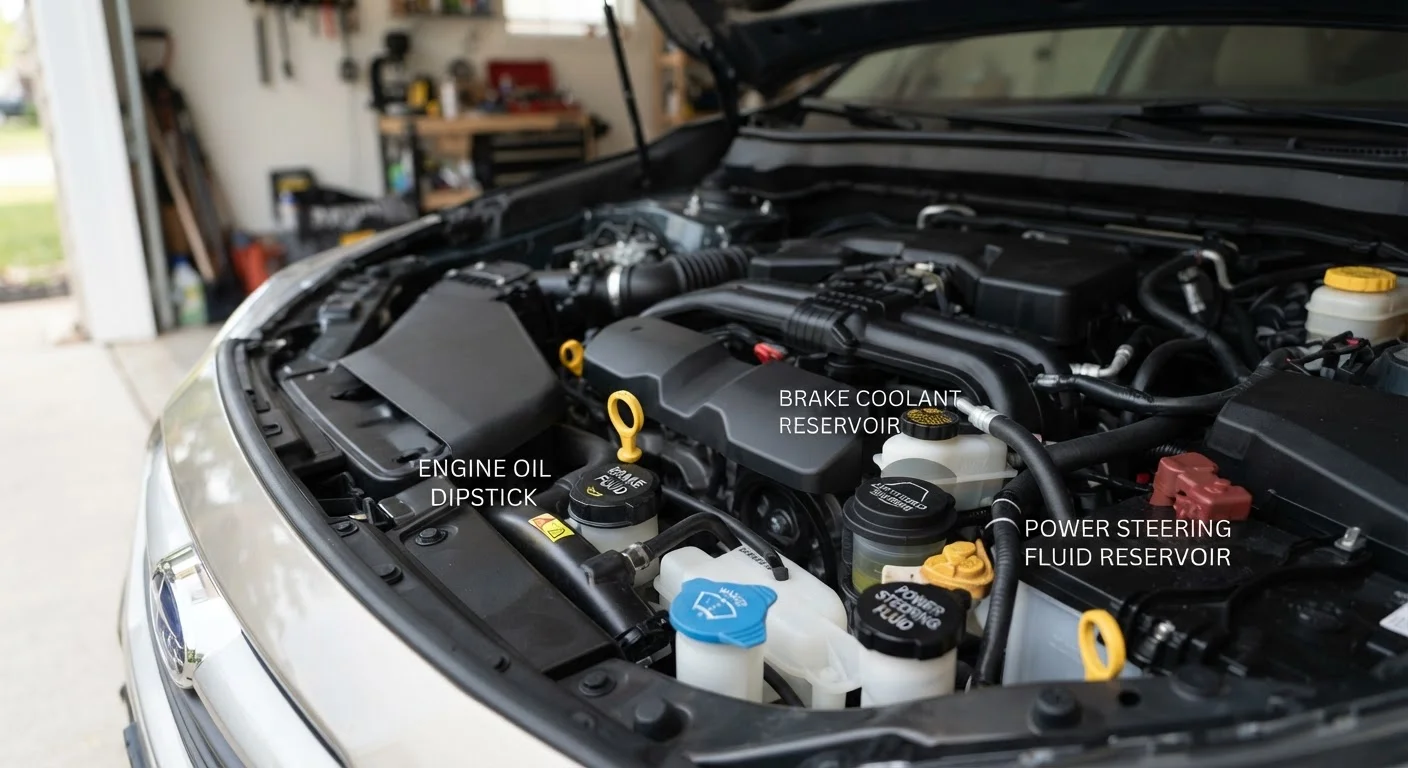
Most fluid checks are quick, safe, and tool-free. Here's the general process for the fluids accessible under the hood:
- Park on level ground and let the engine cool if it has been running. Hot components and pressurized systems can cause burns.
- Open the hood and locate the labeled reservoirs. Most modern vehicles have translucent plastic reservoirs with MIN and MAX markers visible from the outside.
- For engine oil, pull out the dipstick (usually a brightly colored handle), wipe it clean, reinsert it fully, then pull it out again to read the level. The oil should fall between the two marks and appear amber to light brown in color.
- For coolant, check the level in the overflow reservoir - never open the radiator cap on a hot engine, as pressurized coolant can cause serious burns.
- For brake and power steering fluid, check the translucent reservoirs visually against the marked lines.
Transmission fluid checks vary by vehicle - some have a dipstick similar to oil, others are sealed systems that require professional inspection. Consult your owner's manual for the correct procedure.
Warning Signs of Low or Dirty Fluid
Your car often communicates fluid problems before they become serious failures. Knowing what to look for helps you act early.
- Dashboard warning lights - The oil pressure light, temperature gauge, and brake warning light are direct signals. Decode your dashboard warning lights to know when to pull over immediately versus schedule a service visit.
- Unusual smells - A sweet smell can indicate a coolant leak; a burning smell may point to overheating oil or brake fluid; a sharp chemical odor under the hood warrants a visual inspection.
- Puddles under the vehicle - A clear water-like drip is usually normal condensation from the air conditioner. Colored or oily puddles (red, green, brown, or translucent) indicate an actual fluid leak.
- Changes in performance - Hard or spongy braking, rough gear shifts, stiff steering, or engine overheating are all connected to fluid conditions.
Never Ignore a Brake Warning Light
A brake system warning light or significantly spongy brake pedal demands immediate attention - do not continue driving and schedule a professional inspection as soon as safely possible. Brake fluid issues directly affect your ability to stop the vehicle, making this one of the few fluid problems that is never safe to defer.
Frequent fluid loss - even if you keep topping it off - is not normal and usually points to a leak or internal wear that requires professional diagnosis.
When to Call a Mechanic
Checking fluid levels and topping off most reservoirs are reasonable DIY tasks for everyday drivers. However, some fluid-related situations call for a qualified mechanic:
- Any suspected brake fluid leak or significant drop in brake fluid level
- Coolant loss that keeps recurring after you top it off
- Milky or foamy oil, which can indicate coolant mixing with engine oil - a serious condition
- Transmission fluid that appears burnt or contaminated
- Any fluid puddle you cannot identify
For guidance on which car maintenance tasks are genuinely DIY-friendly versus which carry real safety risks, see the DIY tasks worth doing yourself - and the ones to leave to a pro. Catching a fluid problem early is almost always cheaper and safer than waiting for a warning light or breakdown to force the issue.
Electric Vehicles Have Fluid Needs Too
While EVs skip engine oil and traditional transmission fluid, they still require coolant for battery thermal management, brake fluid, and windshield washer fluid. If you drive an EV or hybrid, consult your owner's manual for the specific fluids and service intervals that apply - they differ meaningfully from conventional gas-powered vehicles.
Frequently Asked Questions
A quick visual check once a month is a good habit for most drivers. Certain fluids - particularly engine oil and coolant - are worth checking more frequently on older vehicles or during long trips. Your owner's manual will also list recommended service intervals for each fluid.
Yes, most fluid top-offs are straightforward DIY tasks - engine oil, coolant, windshield washer fluid, and brake fluid reservoirs are all accessible under the hood. Always use the fluid type specified in your owner's manual and avoid overfilling. If a fluid needs frequent topping off, that signals a possible leak worth investigating.
Driving with critically low oil causes metal engine components to grind against each other without lubrication, which can cause severe and costly internal damage in a short time. If your oil light illuminates while driving, pull over safely as soon as possible and check the level before continuing.
Brake fluid level drops slightly as brake pads wear down - this is normal. However, a sudden drop in brake fluid level is a red flag for a leak in the brake system and should be inspected by a qualified mechanic immediately, as it affects your ability to stop safely.
Fresh transmission fluid is typically bright red and slightly translucent. Fluid that has turned dark brown or black, or that smells burnt, is overdue for a change. Milky or foamy fluid can indicate water contamination, which requires prompt professional attention.
Electric vehicles still use several fluids, including coolant for battery and motor thermal management, brake fluid, and windshield washer fluid. They do not require engine oil or transmission fluid, however. Consult your EV's owner's manual for its specific fluid requirements.
The content provided on our blog site traverses numerous categories, offering readers valuable and practical information. Readers can use the editorial team’s research and data to gain more insights into their topics of interest. However, they are requested not to treat the articles as conclusive. The website team cannot be held responsible for differences in data or inaccuracies found across other platforms. Please also note that the site might also miss out on various schemes and offers available that the readers may find more beneficial than the ones we cover.