

What Engine Oil Actually Does
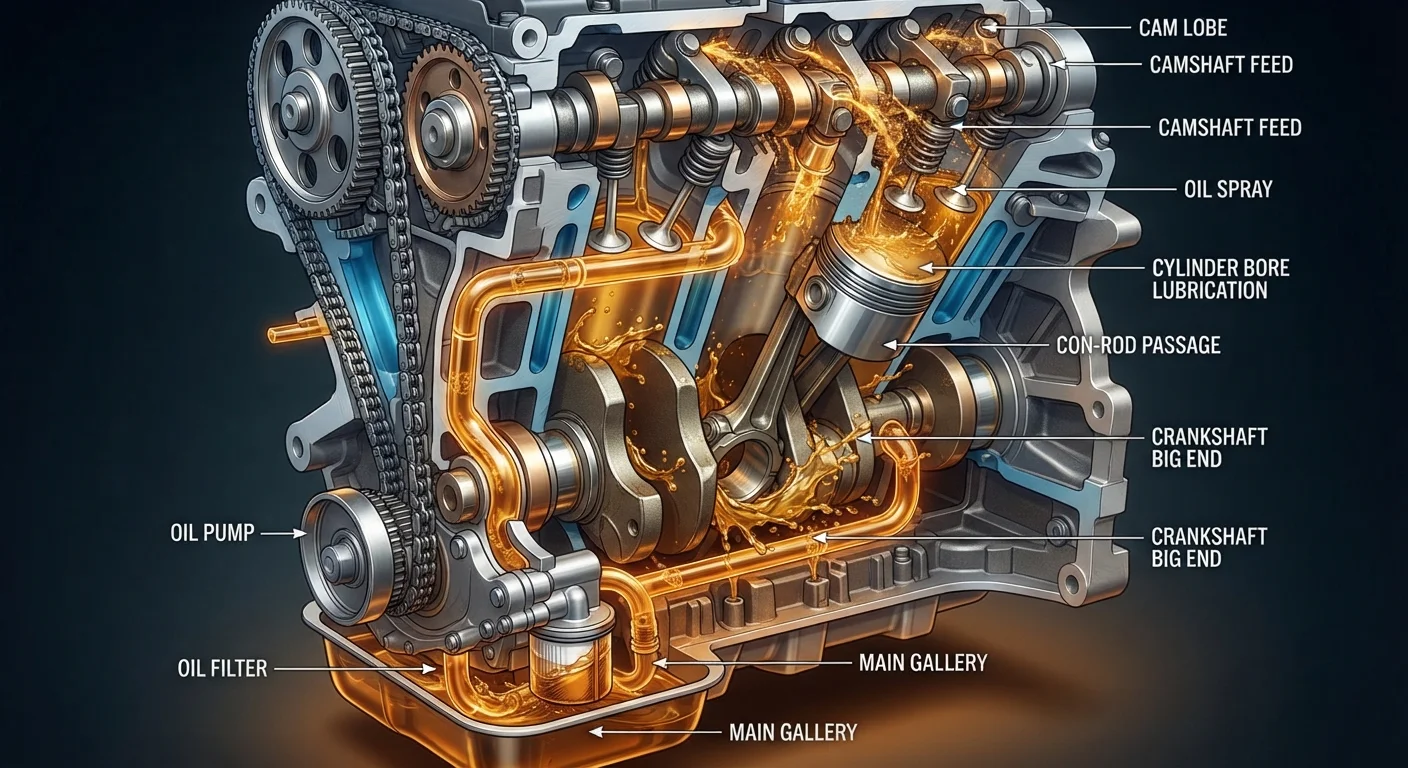
Motor oil is doing a remarkable amount of work every time your engine runs. Its primary job is lubrication - creating a thin, protective film between metal surfaces like pistons, crankshaft bearings, and camshafts that would otherwise grind against each other thousands of times per minute.
But lubrication is just the beginning. Oil also acts as a coolant for internal components that the radiator system can't reach directly, absorbing heat from friction and transferring it away. It serves as a cleaning agent, suspending tiny particles of combustion soot and metal debris and carrying them to the oil filter. And it contains additive packages - chemical compounds that neutralize acids formed during combustion and prevent corrosion on internal metal surfaces.
For a broader look at how oil fits alongside other critical fluids, see Car Fluids Every Driver Should Know About.
~$150B
Annual U.S. engine repair costs linked to poor maintenance
Industry estimates suggest improper lubrication and neglected maintenance contribute substantially to engine repair costs for American drivers each year.
5,000-10,000 mi
Typical synthetic oil change interval for modern vehicles
Many current manufacturer recommendations for full synthetic oil fall in this range, well above the outdated 3,000-mile guideline.
200°F+
Typical engine oil operating temperature
Motor oil routinely withstands temperatures exceeding 200°F during normal driving, which drives the oxidation process that degrades its protective properties over time.
Why Oil Wears Out - And What That Looks Like
Oil doesn't last indefinitely. Each time your engine runs, the oil endures extreme heat - often exceeding 200°F - which causes oxidation, a chemical breakdown that thickens the oil and reduces its ability to flow quickly through tight engine clearances. The additive packages that neutralize acids and prevent wear gradually deplete as they do their job.
Meanwhile, the oil filter captures contaminants, but it has a finite capacity. Once saturated, particles bypass the filter and remain suspended in the oil, acting like fine abrasive grit circulating through your engine. The result is accelerated wear on precision-machined surfaces.
In severe neglect cases, degraded oil can form sludge - a thick, tar-like deposit that blocks oil passages and starves critical components of lubrication entirely. Sludge damage is often permanent and can require engine replacement.
Check Your Oil Level Monthly
You don't have to wait for a service appointment to monitor your oil. Checking the dipstick once a month takes under two minutes and can catch a slow leak or burning issue early. Low oil level - even with fresh oil - can cause as much damage as degraded oil.
How to Know When It's Time
The old "every 3,000 miles" rule is outdated for most modern vehicles. Many manufacturers specify intervals of 5,000 to 10,000 miles or more, depending on the oil type and engine design. Driving conditions matter too - frequent short trips, towing, and extreme temperatures all accelerate oil degradation and may warrant more frequent changes.
Many newer vehicles include an oil life monitoring system that calculates change intervals based on real driving data rather than a fixed mileage counter. If your car has one, it's a useful tool - but it doesn't replace knowing your manufacturer's baseline recommendation.
The single most reliable source is your owner's manual. If you're unsure how to read it, your owner's manual covers service intervals in more detail than most drivers realize. And if you've heard that conventional oil rules still apply to your newer car, it may be worth checking which common habits are actually car maintenance myths costing drivers money.
Conventional vs. Synthetic: Does It Matter Here?
The type of oil you use directly affects how long it stays effective. Conventional motor oil is refined from crude oil and contains natural impurities that make it more susceptible to breakdown under heat and stress. Synthetic oil is engineered at a molecular level for greater thermal stability, meaning it resists oxidation longer and maintains its viscosity more reliably across temperature extremes.
For most drivers, the practical difference shows up in change intervals and cold-weather performance. Synthetics generally allow longer service intervals - but only if your vehicle's manufacturer approves them. Switching oil types without checking your manual can void warranties or cause unexpected compatibility issues.
For a deeper comparison, see our full guide on synthetic vs. conventional motor oil.
“The single most important thing you can do to extend engine life is maintain clean oil at the proper level. Everything else in engine maintenance is secondary to that.”
— SAE International Technical Committee, Standards body for automotive engineering and fluid performance specifications
What Happens During an Oil Change
The process itself is straightforward: a technician (or a capable DIYer) drains the spent oil from the engine's oil pan via a drain plug, removes and replaces the oil filter, reinstalls the drain plug, and fills the engine with fresh oil to the correct level specified by the manufacturer.
The oil filter replacement is not optional - installing fresh oil with a clogged filter undermines the entire service. A good filter holds roughly 5,000 to 8,000 particles per square inch of media, so a saturated one needs to go with the old oil.
If you're considering handling this task yourself, it's worth knowing which jobs are practical for home mechanics and which carry real risk. Our guide to DIY car maintenance tasks worth doing yourself lays out the honest assessment. For anyone who prefers a shop, a basic oil change remains one of the most affordable preventive services available.
This article provides general information for educational purposes. Always consult your vehicle's owner's manual and a qualified mechanic for guidance specific to your car's make, model, and condition.
Frequently Asked Questions
It depends on your vehicle, driving conditions, and the type of oil used. Many modern cars using full synthetic oil can go 7,500 to 10,000 miles between changes. Your owner's manual is the most reliable source - check <a href="/cars-driving/car-maintenance/what-the-owners-manual-actually-tells-you-about-service-intervals">what your owner's manual says about service intervals</a> for specifics.
Degraded oil loses its ability to lubricate and cool engine components effectively. Over time, metal parts experience increased friction and heat, leading to accelerated wear, sludge buildup, and potentially irreversible engine damage. Repair costs in severe cases can run into the thousands of dollars.
Not necessarily. Oil darkens quickly as it does its job of capturing combustion byproducts - that's normal. Color alone isn't a reliable measure of oil condition. Rely on your mileage, elapsed time, and your vehicle's oil life monitoring system if it has one.
Generally, yes. Synthetic oil is engineered to resist breakdown at higher temperatures and over longer intervals. However, the right choice depends on your vehicle's requirements - see our comparison of <a href="/cars-driving/car-maintenance/synthetic-vs-conventional-motor-oil">synthetic vs. conventional motor oil</a> for a full breakdown.
Yes, and it's a good habit. With the engine off and cooled down, pull the dipstick, wipe it clean, reinsert it fully, then pull it again to read the level. If the level is below the minimum mark, add the oil type specified in your owner's manual.
The content provided on our blog site traverses numerous categories, offering readers valuable and practical information. Readers can use the editorial team’s research and data to gain more insights into their topics of interest. However, they are requested not to treat the articles as conclusive. The website team cannot be held responsible for differences in data or inaccuracies found across other platforms. Please also note that the site might also miss out on various schemes and offers available that the readers may find more beneficial than the ones we cover.