

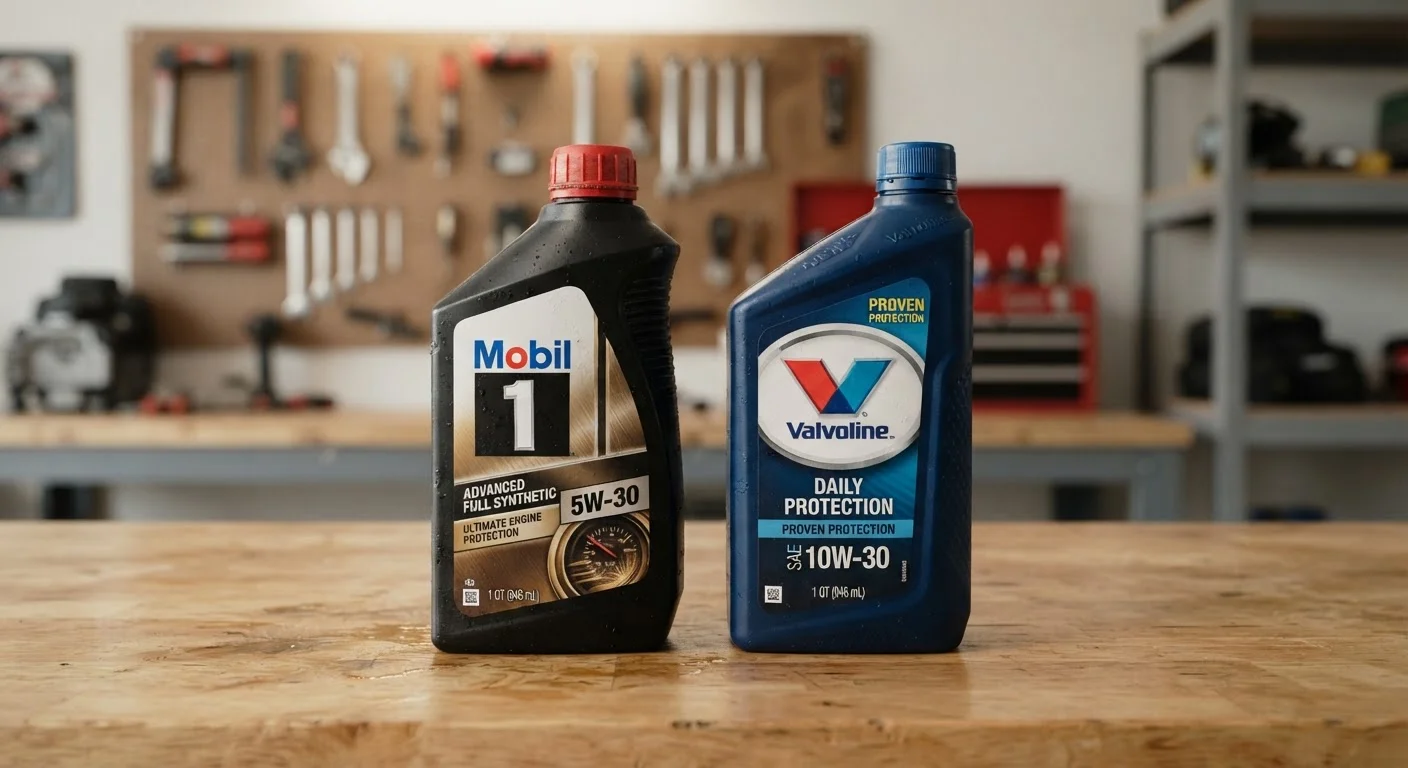
Option A
Synthetic Motor Oil
The engineered, high-performance lubricant.
Best for: Best for drivers with newer vehicles, turbocharged engines, extreme climates, or longer intervals between oil changes.
Option B
Conventional Motor Oil
The time-tested, petroleum-based standard.
Best for: Best for older vehicles with high mileage running under normal driving conditions and standard service intervals.
What Sets Them Apart at a Molecular Level
Motor oil's primary job is to reduce friction between moving engine parts, carry away heat, and suspend contaminants until your next oil change. Both synthetic and conventional oils accomplish this - but through very different starting points.
Conventional motor oil is refined from crude petroleum. During refining, many impurities are removed, but the resulting molecules are not perfectly uniform in size or shape. This variability is largely manageable under normal conditions, but it can affect how the oil performs at temperature extremes.
Synthetic motor oil is chemically engineered - typically built from a base of either PAO or other synthetic compounds. Because scientists control the molecular structure, synthetic oil has more consistent chain lengths, fewer impurities, and predictable behavior across a much wider temperature range.
For a broader picture of how motor oil fits alongside other critical fluids in your vehicle, see our guide to car fluids every driver should know about.
| Criterion | Synthetic Motor Oil | Conventional Motor Oil |
|---|---|---|
| Base composition | Chemically engineered molecules | Refined crude petroleum |
| Typical change interval | 7,500-10,000+ miles | 3,000-5,000 miles |
| Cold-weather performance | Flows faster at low temps | Thickens more in cold |
| High-temperature stability | Resists breakdown well | Degrades faster under heat |
| Typical cost per quart | Higher | Lower |
| Best engine match | Modern, turbocharged engines | Older, naturally aspirated engines |
Performance, Change Intervals, and Real-World Tradeoffs
One of the most practical differences between synthetic and conventional oil is how long each lasts before it degrades. Conventional oil typically requires changes every 3,000 to 5,000 miles under standard driving conditions. Synthetic oil can often go 7,500 to 10,000 miles - or longer - though your owner's manual is the only authoritative source for your specific vehicle.
It's worth noting that the old "every 3,000 miles" rule is considered outdated for most modern vehicles. Our article on car maintenance myths that cost drivers money covers this and other widespread misconceptions that can lead to unnecessary expense.
~7,500 mi
Average synthetic oil change interval
Many automakers list 7,500 to 10,000 miles as the recommended interval for vehicles using full synthetic oil, though this varies by model.
~30%
Faster low-temp flow for synthetics
Independent lubrication research has shown synthetic oils can flow significantly faster than conventional oil at sub-zero temperatures, reducing cold-start wear.
Synthetic oil also offers a meaningful advantage during cold starts. At sub-freezing temperatures, conventional oil thickens and flows more slowly, which means critical engine components go without full lubrication for a brief moment after ignition. Synthetic oil flows significantly faster in those same conditions, reducing wear during that vulnerable window.
To understand what's actually happening inside your engine during an oil change - and why skipping them matters - our guide on oil changes and what's happening inside your engine explains the process in plain terms.
How to Choose the Right Oil for Your Vehicle
The single most important factor is your vehicle's owner's manual. Manufacturers specify oil viscosity grades (such as 5W-30 or 0W-20) and often the oil type. Many vehicles built in the last decade come factory-filled with full synthetic or synthetic-blend oil, and using conventional oil in its place can sometimes fall short of what the engine requires.
Synthetic blends - a mix of conventional and synthetic base oils - occupy a middle ground. They offer some of synthetic's cold-weather and high-temperature benefits at a lower cost, making them a practical choice for drivers who want an upgrade without fully committing to full synthetic pricing.
Drivers with significantly older, high-mileage engines should consult a trusted mechanic before switching oil types. In some cases, engines that have run on conventional oil for many years can experience increased seepage if switched to synthetic, because synthetic's detergents can affect aged gaskets. A qualified mechanic is best positioned to advise based on your engine's condition.
Check Your Warranty Terms
Using an oil type or viscosity grade that doesn't match your manufacturer's specification can, in some cases, affect powertrain warranty coverage. If your vehicle is under warranty, confirm the required oil specification in your owner's manual before making any changes. When in doubt, ask your dealership's service department for clarification.
Regardless of which oil you choose, no oil change schedule should be skipped entirely. Oil degrades over time and accumulates contaminants - this is true of both synthetic and conventional. Regular changes remain the single most effective routine maintenance step for engine longevity.
The content provided on our blog site traverses numerous categories, offering readers valuable and practical information. Readers can use the editorial team’s research and data to gain more insights into their topics of interest. However, they are requested not to treat the articles as conclusive. The website team cannot be held responsible for differences in data or inaccuracies found across other platforms. Please also note that the site might also miss out on various schemes and offers available that the readers may find more beneficial than the ones we cover.