

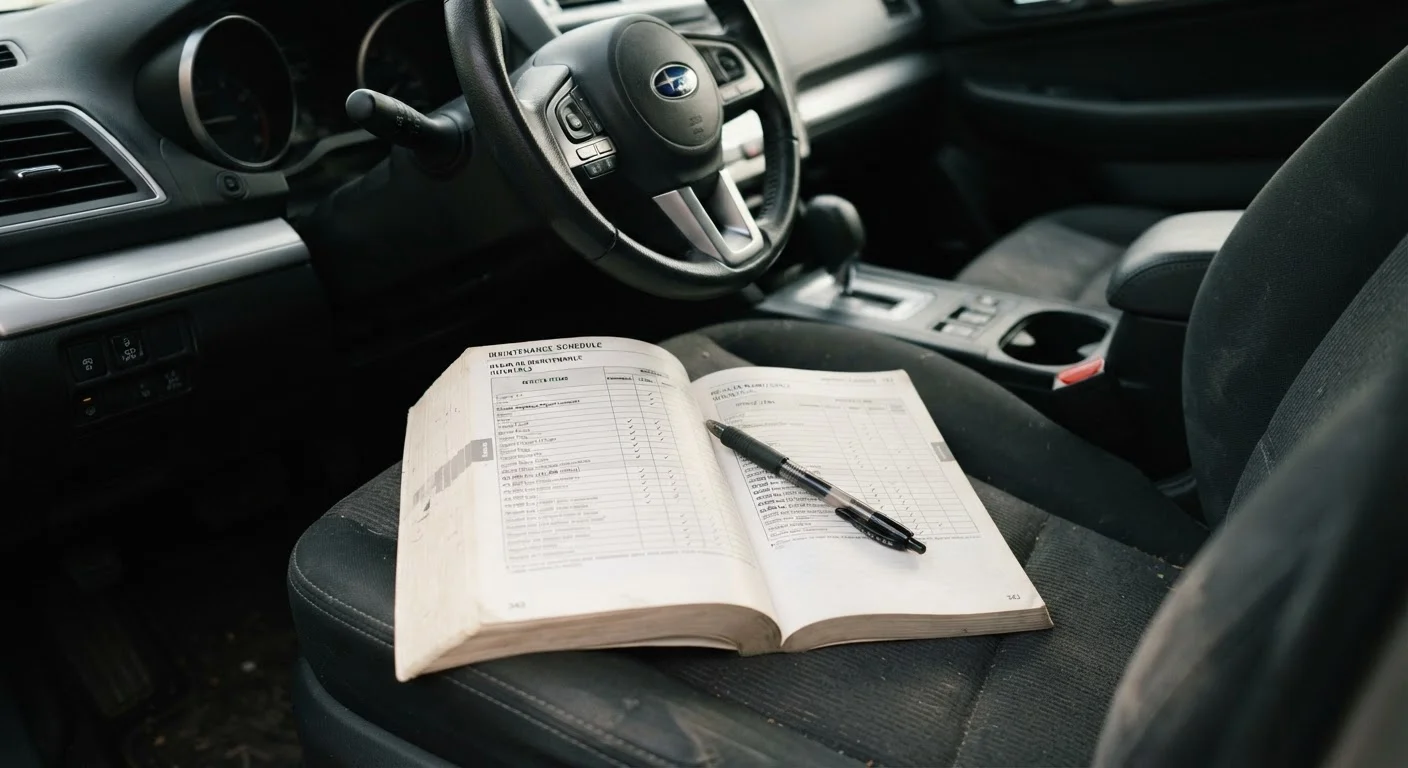
Why the Owner's Manual Is Your Most Reliable Source
Shops, online forums, and well-meaning friends all offer maintenance advice - but none of them engineered your specific engine, transmission, or cooling system. Your owner's manual was written by the team that did. Every interval it lists reflects the actual tolerances, materials, and design life of your vehicle's components under defined operating conditions.
Generic rules of thumb persist because they're simple to remember, but they don't account for the wide variation between a turbocharged four-cylinder commuter, a naturally aspirated V8 pickup, and a hybrid powertrain. Following your manual means you're working with a schedule calibrated for your car - not the average of all cars. For a broader look at which jobs are safe to handle yourself, see DIY car maintenance tasks worth doing yourself.
Your Manual Beats Generic Advice Every Time
Advice like "change your oil every 3,000 miles" was reasonable decades ago, but modern engines and synthetic oils have made many such rules obsolete. Your owner's manual reflects the actual engineering specifications for your car. Following it - rather than generalized recommendations - helps you avoid both under-maintaining and paying for services you don't yet need. For more on outdated maintenance myths, see car maintenance myths that cost drivers money.
What You'll Need Before You Start
What you will need
Owner's Manual
Contains the manufacturer's exact service intervals for every maintenance item on your specific vehicle.
Maintenance log or notebook
Helps you record completed services so you can compare against the schedule over time.
Smartphone or calculator
Useful for calculating upcoming service mileage milestones based on your current odometer reading.
How to Read Your Maintenance Schedule
Locate the maintenance schedule section
Open your owner's manual and look for a chapter titled "Maintenance," "Scheduled Maintenance," or "Maintenance Schedule." In most manuals this appears in the final third of the book. Some manufacturers also include a separate, foldout quick-reference card tucked inside the same glove compartment sleeve.
Identify which driving condition category applies to you
Most manuals provide two schedules: Normal and Severe (sometimes called Special Operating Conditions). Severe conditions typically include frequent short trips under 5 miles, stop-and-go city driving, towing or hauling, dusty or unpaved roads, or extreme temperatures. Review the definitions carefully - a surprising number of everyday drivers technically fall under the severe schedule.
Read the interval columns correctly
Maintenance intervals are listed by mileage, elapsed time (months), or both. The rule is straightforward: service is due when either threshold is reached first. For example, if your manual says to change the engine oil every 7,500 miles or 12 months, and you've only driven 4,000 miles but a year has passed, the oil change is still due. Oil degrades chemically over time even when the car sits.
Cross-reference each service item
Go line by line through the schedule. Common items include engine oil and filter, tire rotation, air filter, cabin air filter, spark plugs, coolant, brake fluid, transmission fluid, and timing belt or chain. Note the specific interval for each - they vary considerably. Spark plugs on a modern vehicle with iridium tips may not need replacement until 100,000 miles, while brake fluid might be listed at every 2 years regardless of mileage. See typical part lifespans for additional context on realistic replacement timelines.
Compare the schedule against your actual service history
Using your records - receipts, a maintenance log, or the dealer's service history printout - check which items are current and which are overdue. If records are incomplete, inspect fluid condition and ask a trusted mechanic to assess wear items. Going forward, keeping a maintenance log makes this comparison effortless at every future service.
Flag any warranty-relevant services
If your vehicle is under a manufacturer's warranty or an extended service plan, certain maintenance tasks must be completed on schedule - and with documentation - to keep coverage intact. Your manual will note which services carry this requirement. Keep all receipts and records in a dedicated folder.
Don't Rely Solely on Dashboard Reminder Lights
Oil life monitors and service reminder lights are useful tools, but they track only a subset of your total maintenance needs. They won't remind you that your brake fluid is due for replacement or that your timing belt is approaching its service limit. Always cross-reference these alerts with your owner's manual schedule.
Special Situations Worth Knowing
Timing Belt Intervals Are Non-Negotiable
If your engine uses a timing belt (rather than a timing chain), the replacement interval listed in your owner's manual is critical. A failed timing belt can cause severe engine damage - in some cases destroying the engine entirely. Check your manual now to confirm whether your vehicle has a belt or chain, and when replacement is due.
Beyond the timing belt, a few other manual entries deserve close attention. Coolant and brake fluid are often overlooked because they don't show obvious signs of degradation the way oil does. Your manual will specify a flush interval - typically measured in years rather than miles - and the correct fluid specification. Using the wrong coolant type, for instance, can cause corrosion inside the cooling system. For a full breakdown of what each fluid does and how to spot problems, see car fluids every driver should know about.
Transmission service intervals also vary dramatically. Some sealed automatic transmissions carry "lifetime" fluid labeling, while others require changes at 30,000 to 60,000 miles, especially under severe conditions. Your manual is the only reliable way to know which category yours falls into. For broader perspective on component lifespans, the guide to how long car parts actually last is a useful companion reference.
If you're new to car ownership and want a complete overview of what routine maintenance involves, Car Ownership: A Maintenance Overview for First-Time Drivers covers the essential concepts from the ground up.
The content provided on our blog site traverses numerous categories, offering readers valuable and practical information. Readers can use the editorial team’s research and data to gain more insights into their topics of interest. However, they are requested not to treat the articles as conclusive. The website team cannot be held responsible for differences in data or inaccuracies found across other platforms. Please also note that the site might also miss out on various schemes and offers available that the readers may find more beneficial than the ones we cover.