

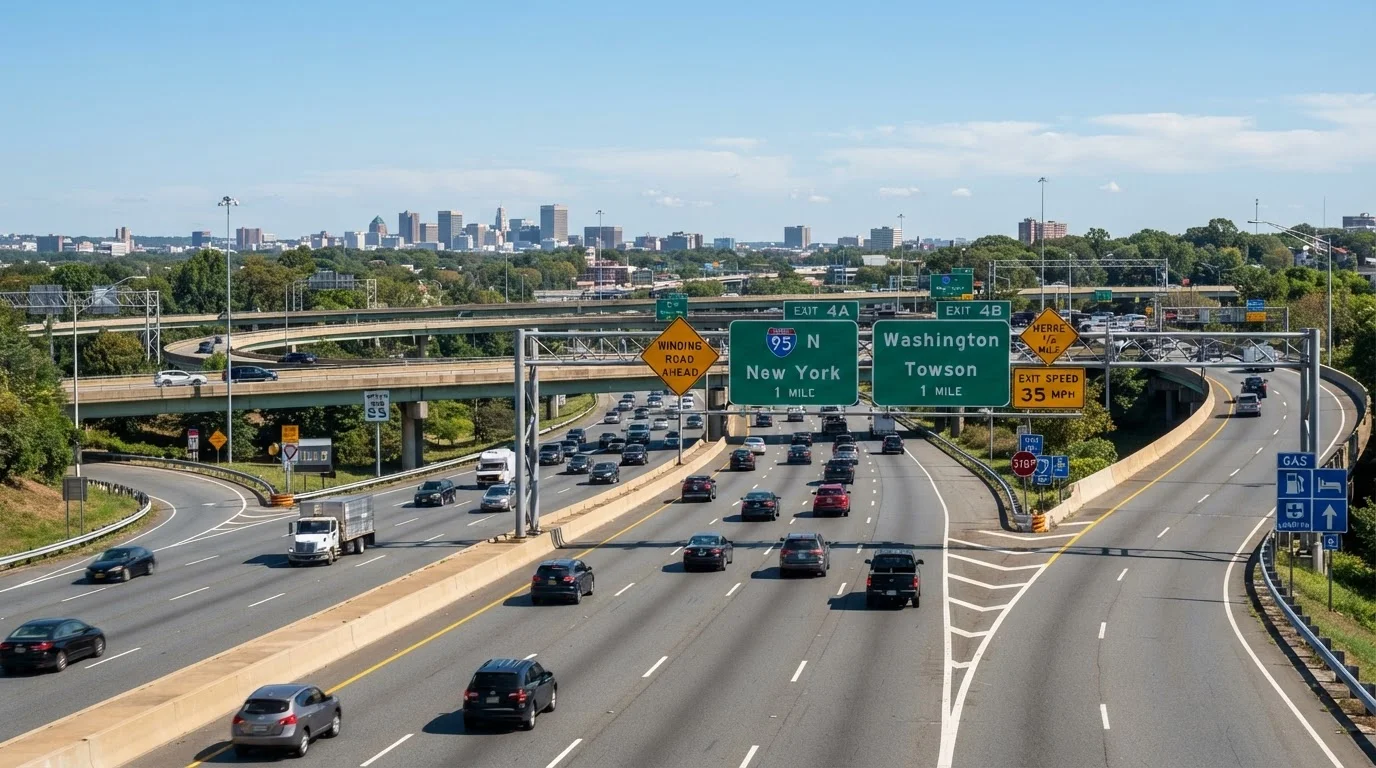
The System Behind the Colors
Every color on a U.S. road sign is deliberate. The federal government standardizes sign colors through the Manual on Uniform Traffic Control Devices (MUTCD), published by the Federal Highway Administration. This system ensures that drivers in Maine and drivers in Arizona see - and immediately understand - the same signals without reading a single word.
Recognizing what each color communicates is one of the most practical things a driver can know. Whether you're a new license holder or a road-trip veteran, the color-coding system is your first layer of information before shape or text even registers.
For a deeper look at how signs interact with legal right-of-way, see our guide to right-of-way rules American drivers most commonly misread.
What Each Color Means
Here's a breakdown of the eight standard road sign colors and what each communicates to drivers:
Red
Reserved exclusively for stop, yield, and prohibition signs. A red sign always communicates a mandatory action or restriction - you must stop, give way, or refrain from doing something. Examples: STOP sign, DO NOT ENTER, WRONG WAY.
Yellow
Indicates a general warning about road conditions or hazards ahead. Yellow signs alert drivers to curves, pedestrian crossings, school zones, and other situations requiring extra caution. They advise - they do not command.
Orange
Designates temporary traffic control, almost always in construction or maintenance work zones. An orange sign signals that normal traffic patterns have changed and heightened attention is required.
Green
Used for guide and directional information, including highway exit numbers, route markers, and mileage signs. Green signs tell you where you are and where you're going without implying any warning or restriction.
Blue
Identifies motorist services such as gas stations, food, lodging, hospitals, and rest areas. Blue signs provide travelers with helpful resources without any regulatory meaning.
Brown
Marks recreational areas, parks, historical sites, and scenic destinations. Brown signs are informational guides to cultural and outdoor points of interest managed by public agencies.
White
Used for regulatory signs that communicate rules of the road - speed limits, lane-use controls, turn restrictions, and parking regulations. White signs state what drivers are legally required to do or not do.
Fluorescent Yellow-Green
A high-visibility variant used specifically for pedestrian, bicycle, and school zone warnings. This color was adopted because it stands out more than standard yellow in a wide range of lighting conditions.
Sign color knowledge pairs directly with understanding road laws. Some rules - like when a flashing red versus flashing yellow applies - vary by situation in ways most drivers don't expect. New and experienced drivers alike will benefit from reviewing the complete guide to American roads for full context.
Why Color Recognition Matters
At highway speeds, a driver may have less than a second to register an approaching sign. Color recognition works faster than reading because it triggers an immediate categorical response - danger, instruction, or information - before the brain processes words or shapes.
This is especially important in low-visibility conditions: rain, fog, glare, or night driving. High-retroreflective sheeting on signs is designed to bounce headlight beams back to the driver, but color still plays a foundational role in immediate classification.
It's also worth noting that some sign meanings differ by state. Speed limit signs are always black and white, but the regulations behind them can vary significantly. Check our article on traffic laws that vary by state if you're driving across state lines.
This article provides general educational information about U.S. road sign standards. Always consult your state's DMV handbook and obey posted signs for legally binding guidance in your jurisdiction.
The content provided on our blog site traverses numerous categories, offering readers valuable and practical information. Readers can use the editorial team’s research and data to gain more insights into their topics of interest. However, they are requested not to treat the articles as conclusive. The website team cannot be held responsible for differences in data or inaccuracies found across other platforms. Please also note that the site might also miss out on various schemes and offers available that the readers may find more beneficial than the ones we cover.