

Speed Limits, Lane Rules, and Right-of-Way
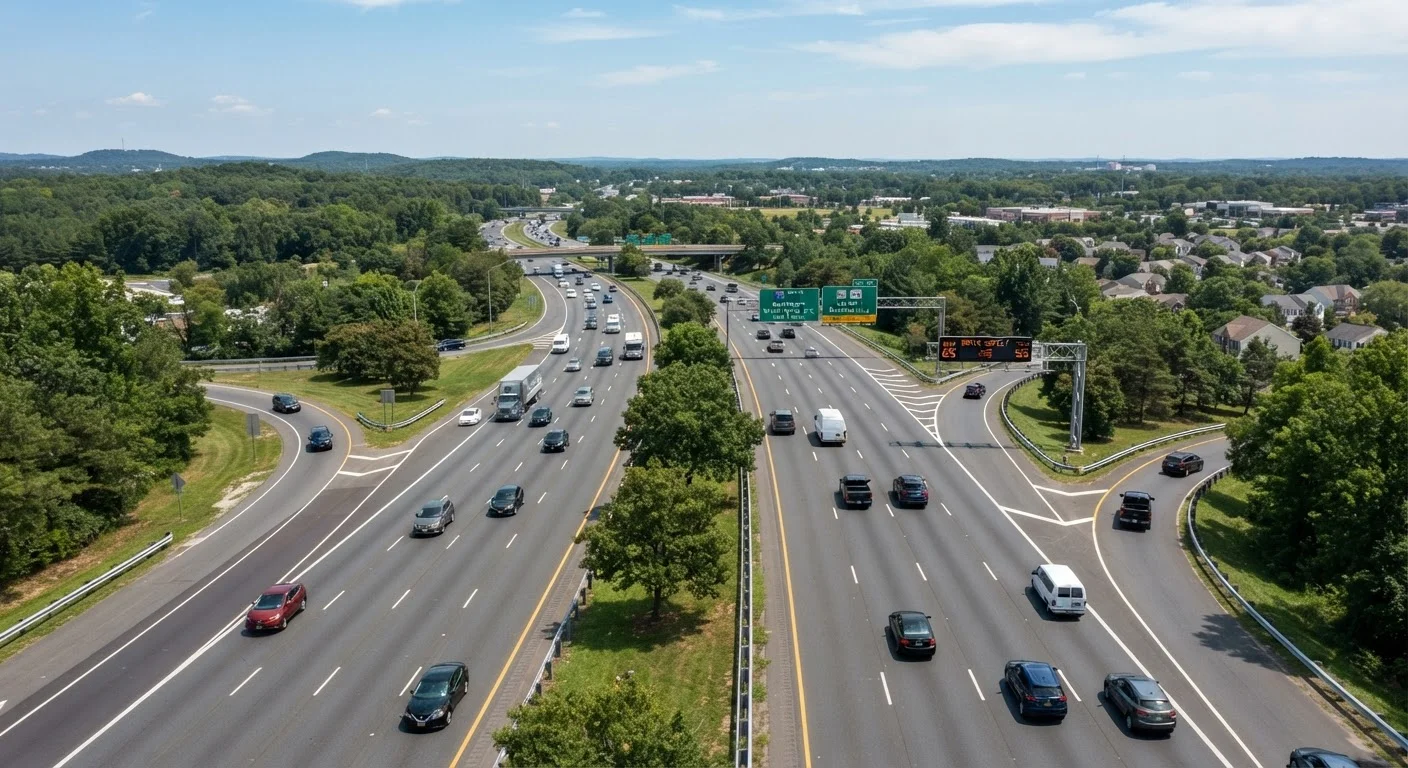
Speed limits in the United States are set by individual states, which means they vary significantly depending on where you're driving. Urban interstates commonly post limits between 55-65 mph, while rural freeways in states such as Texas and Montana may allow up to 80-85 mph. Posted limits are maximums - drivers are also expected to adjust speed for weather, traffic, and road conditions.
| Minimum Passing Distance (Cyclists) | 3 feet in most states (Varies by state law) |
| School Bus Stop Arm - Required Stop Distance | 20 feet minimum (Standard across U.S. states) |
| Headlight Use Requirement | Required when visibility is under 500-1,000 feet (varies by state) (State vehicle codes) |
| Turn Signal Advance Notice | 100 feet before turning in most states (State driver handbooks) |
| Blood Alcohol Limit (Legal Driving) | 0.08% BAC for adults 21+ (0.00-0.02% for drivers under 21) (Federal standard adopted by all 50 states) |
| Interstate Highway Speed Limit Range | 55-85 mph depending on state and road type (State transportation departments) |
Lane discipline is governed by a simple principle: slower traffic should keep right. The left lane on a multi-lane road is intended for passing or higher-speed travel. In many states, occupying the left lane without passing is a ticketable offense. When changing lanes, drivers must signal, check mirrors and blind spots, and yield to vehicles already in the target lane.
Right-of-way rules are among the most misunderstood on American roads. At a four-way stop, the first vehicle to arrive goes first. When two vehicles arrive simultaneously, the driver on the right has priority. At uncontrolled intersections, yield to traffic already in the intersection. Pedestrians legally in a crosswalk - marked or unmarked - have the right of way in all 50 states. For more foundational guidance, see The New Driver's Complete Guide to American Roads.
School Zones, Emergency Vehicles, and Special Situations
School zones require heightened attention. Speed limits typically drop to 15-25 mph when children are present, and flashing yellow lights or posted times indicate when reduced limits apply. Passing a stopped school bus with its red lights flashing and stop arm extended is illegal in all 50 states - this applies in both directions on undivided roads in most states.
Posted Speed Limit
The maximum legal speed set by state or local authority for a given road segment under normal conditions. Drivers must slow below this limit when conditions - such as rain or heavy traffic - demand it.
Right-of-Way
The legal entitlement of a driver, cyclist, or pedestrian to proceed through a junction or intersection before another road user. Yielding right-of-way means allowing another to go first.
Move Over Law
A state law requiring drivers to move one lane away from stopped emergency, law enforcement, or roadside assistance vehicles when safe to do so, or to slow down significantly if a lane change isn't possible.
School Zone
A designated area near a school where speed limits are reduced and additional traffic regulations apply, typically during school arrival and dismissal hours.
Four-Way Stop
An intersection where all approaches have stop signs. Vehicles must stop fully and proceed in order of arrival; ties are resolved by yielding to the driver on the right.
Implied Consent
A legal doctrine in all U.S. states stating that by driving on public roads, a driver consents to chemical testing (breathalyzer or blood test) if lawfully requested by law enforcement.
Emergency vehicles - police, fire, and ambulances running lights or sirens - require drivers to immediately pull to the right edge of the road and stop until the vehicle has passed. All states have adopted Move Over laws requiring drivers to change lanes away from stopped emergency vehicles on the roadside, or slow down substantially if a lane change isn't safe.
Construction zones double fines in most states and require reduced speeds even when workers aren't present. Roundabouts require yielding to traffic already circulating inside the circle before entering. Railroad crossings with flashing lights or lowered gates require a full stop - never attempt to beat a train. Understanding road signs is fundamental to navigating all of these situations safely; learn what every road sign color actually means to interpret warnings faster.
Before heading out on a multi-state journey, make sure your documents and vehicle are road-ready. The long road trip safety and legal readiness checklist covers everything from insurance cards to tire pressure.
The content provided on our blog site traverses numerous categories, offering readers valuable and practical information. Readers can use the editorial team’s research and data to gain more insights into their topics of interest. However, they are requested not to treat the articles as conclusive. The website team cannot be held responsible for differences in data or inaccuracies found across other platforms. Please also note that the site might also miss out on various schemes and offers available that the readers may find more beneficial than the ones we cover.