

Summary
22 items · 30-60 minutes
Why This Checklist Matters Before You Leave
A long road trip can be one of the most rewarding ways to travel - but it also puts your vehicle, your documents, and your decision-making to the test in ways a quick errand never does. Breaking down 200 miles from home because of a tire you never checked, or getting pulled over for expired registration, are entirely preventable situations.
This checklist covers two overlapping categories: legal readiness (the documents and compliance items that keep you street-legal) and safety readiness (the mechanical and preparedness checks that keep you on the road). Work through both before any drive that will take you far from home. For broader trip logistics - route planning, overnight stops, budgeting - see the comprehensive road trip planning guide.
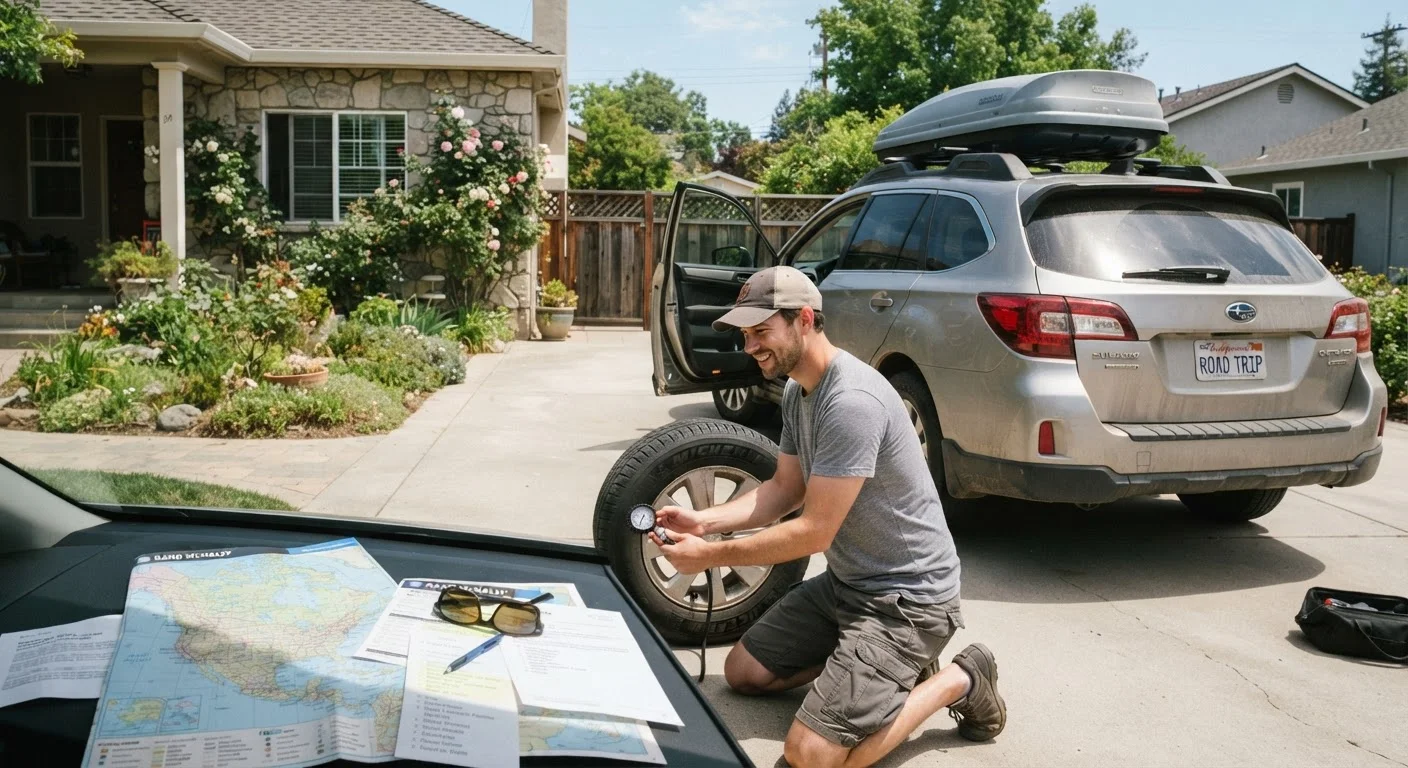
Tire pressure gauge
Accurately measure tire pressure against the vehicle manufacturer's recommended psi.
Flashlight or work light
Inspect tires, fluid levels, and under the hood in low-light conditions.
Jump starter pack or jumper cables
Restart a vehicle with a dead battery without needing another car nearby.
First-aid kit
Handle minor injuries on the road until professional medical help is available.
Roadside reflective triangles or flares
Warn other drivers if your vehicle is stopped on or near the roadway.
Offline maps app (e.g., Google Maps offline, Maps.me)
Navigate without cell service in rural or remote stretches of your route.
Legal Documents and Compliance
Before thinking about oil levels or tire pressure, confirm that every document required to operate your vehicle legally is current, accessible, and in the car. Law enforcement in every U.S. state can request your license, registration, and proof of insurance during any traffic stop. Missing or expired versions of any of these can result in fines or worse.
Legal Documents
Tires and Wheels
Fluids and Mechanical
Emergency Kit and Driver Readiness
Lapsed Insurance Can Have Serious Consequences
Driving without valid insurance is illegal in nearly every U.S. state and can result in fines, license suspension, and vehicle impoundment - not just a warning. Before a long trip, log into your insurer's portal or call your agent to confirm your policy is active and that your coverage limits are appropriate for highway travel. Keep a digital copy of your insurance card in addition to the physical one.
If you're driving a vehicle that isn't registered in your name - a rental, a borrowed car, or a vehicle recently purchased - verify you have the appropriate paperwork. For newly purchased vehicles, the new car purchase checklist covers what documentation you should have in hand before your first drive.
Mechanical and Safety Checks
Your vehicle carries more stress on a sustained highway drive than during typical daily use. Heat buildup, extended braking on grades, and hours of continuous operation expose any underlying maintenance issue. The checks below don't require a mechanic's expertise - most can be done in a driveway in under 20 minutes. If anything looks or feels off, consult a qualified mechanic before departing. The questions to ask a new mechanic article can help if you need to have a shop look things over quickly.
Don't DIY Brake or Suspension Repairs Before a Trip
If you notice brake pedal softness, a pulling sensation when braking, or unusual noises from the wheels, do not attempt to self-diagnose or repair these issues immediately before a highway trip. Brake and suspension systems are safety-critical - have a qualified mechanic inspect and address any concerns before you depart. Delaying a trip by a day is far preferable to a brake failure at highway speed.
Fluid levels - engine oil, coolant, brake fluid, windshield washer fluid - should all be at or near their recommended marks. Low coolant in particular is a common cause of highway overheating. Tires deserve extra attention: check pressure against the placard inside your driver's door jamb (not the tire sidewall), and inspect tread depth and sidewall condition visually.
Emergency Preparedness and Driver Readiness
Even a perfectly maintained, fully documented vehicle can encounter trouble on the road. A blown tire, a dead battery, or an unexpected weather change are scenarios every long-distance driver should be ready for. Equally important is your own physical readiness - fatigue is a genuine highway safety hazard. Nighttime driving introduces additional risks beyond just reduced visibility, including increased fatigue susceptibility. Plan rest stops proactively rather than waiting until you feel tired.
Maintaining a proper following distance is especially important on unfamiliar roads and during long stretches of highway driving. Review what a safe following gap actually looks like at different speeds and in varying conditions before your departure. For a thorough look at documents to carry and emergency contacts to organize, see what to organize before any trip.
The content provided on our blog site traverses numerous categories, offering readers valuable and practical information. Readers can use the editorial team’s research and data to gain more insights into their topics of interest. However, they are requested not to treat the articles as conclusive. The website team cannot be held responsible for differences in data or inaccuracies found across other platforms. Please also note that the site might also miss out on various schemes and offers available that the readers may find more beneficial than the ones we cover.