

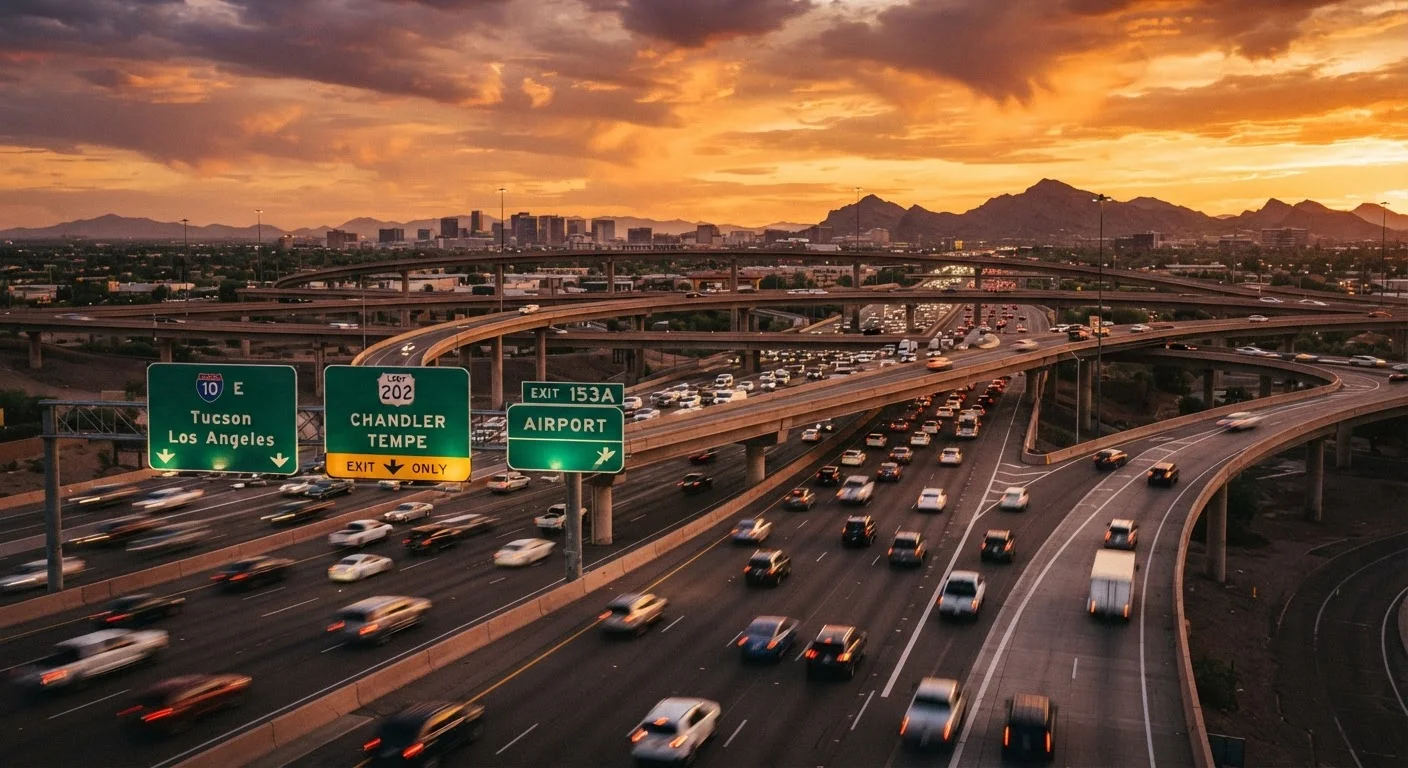
Same Roads, Different Rules
The United States has no single unified traffic code. While federal guidelines shape some standards - such as the federal highway speed limit framework or the manual on uniform traffic control devices - individual states retain wide authority over their own road rules. The result is a patchwork of laws that can trip up even experienced drivers the moment they cross a state line.
That's not a hypothetical concern. Whether you're commuting through multiple states daily, relocating across the country, or setting out on a summer road trip, assuming the rules you know at home apply everywhere is a gamble. Our road trip readiness checklist covers the legal basics worth reviewing before any long drive - but understanding where state laws diverge most sharply is a useful starting point.
The traffic rules below aren't edge-case technicalities. They're everyday situations where the law differs enough between states to matter.
Handheld Mobile Phone Use While Driving
This is one of the most inconsistently regulated areas in U.S. traffic law. Some states ban all handheld use of a phone while driving - meaning you cannot hold a phone to your ear, text, or even briefly check a map without a hands-free setup. Others restrict only texting while allowing handheld calls. A smaller number have more limited restrictions that apply only to certain driver categories, such as novice drivers or those in school zones.
The fine structures also vary widely. Penalties in some states run well over $100 for a first offense, while others treat first offenses more leniently. If you're traveling between states, it's safest to use a hands-free mount or Bluetooth system regardless of local law - the inconsistency itself is a reason not to rely on what you know from home.
Assuming your home state's phone rules apply everywhere can cost you a significant fine the moment you cross a state line.
Right Turn on Red
In most U.S. states, turning right on a red light is permitted after a complete stop - unless a sign prohibits it. However, New York City is a well-known exception: right turns on red are prohibited throughout the five boroughs unless a sign explicitly allows it. Some other cities and jurisdictions have added similar blanket prohibitions or expanded restricted intersections in recent years, particularly in dense urban areas.
Even where the general rule allows it, individual intersections in any state can post "No Turn on Red" signs based on sight-line issues, pedestrian volume, or traffic flow concerns. Treating every red light as a full stop and checking signage before turning is the habit that protects you everywhere.
New York City bans right turns on red citywide - a rule that surprises many out-of-state visitors.
Maximum Speed Limits on Rural Interstates
The federal 55 mph national maximum speed limit was repealed in 1995, returning full control of speed limits to individual states. Today, rural interstate speed limits range from 65 mph in some states to 85 mph in parts of Texas. Most western states - including Utah, Wyoming, Nevada, and Idaho - post limits of 80 mph or higher on certain rural interstates.
This matters for two reasons. First, the speed you set your cruise control to in one state may put you over the limit the moment you cross into the next. Second, many states also enforce minimum speed limits on interstates, meaning driving significantly below posted traffic flow can also result in a citation. See our guide to speed zone misjudgment for more on how posted limits interact with enforcement.
Rural interstate speed limits range from 65 mph to 85 mph across U.S. states - a 20 mph swing with real enforcement consequences.
Move Over Laws
All 50 states have some version of a "Move Over" law requiring drivers to shift lanes or slow down when passing emergency vehicles stopped on the roadside. However, the specifics vary considerably. Some states extend the law to cover tow trucks, utility vehicles, and highway maintenance workers - not just police and fire vehicles. Others require a lane change only when safely possible, while some mandate a reduction to a specific speed if changing lanes isn't feasible.
Violations carry serious consequences in most states, including fines, license points, and in some cases misdemeanor charges. The law is actively enforced, and roadside stops are inherently dangerous situations - compliance protects workers' lives as much as it protects your driving record.
Move Over laws in many states now cover tow trucks and utility vehicles, not just emergency responders - a detail many drivers miss.
Radar Detector Legality
Radar detectors - devices that alert drivers to the presence of speed-enforcement radar - are legal in private vehicles in most U.S. states. However, Virginia and Washington D.C. prohibit their use entirely, with fines and possible device confiscation on the line. In Illinois, New York, and New Jersey, detectors may be legal in passenger cars but prohibited in commercial vehicles.
Federal law also prohibits radar detectors in any commercial motor vehicle over 10,000 pounds gross vehicle weight, regardless of the state. Drivers who cross state lines with a detector should be aware that what's permitted at home may not be permitted in the next state - and that ignorance of the prohibition is not a recognized defense.
Virginia and Washington D.C. ban radar detectors entirely - a rule that catches many out-of-state drivers by surprise.
Passing on the Right and Left-Lane Rules
Most states require slower vehicles to keep right on multi-lane roads and reserve the left lane primarily for passing. But how strictly this is enforced - and what exactly the law says - differs. Some states, including Georgia, Indiana, and New Jersey, have relatively strict "keep right" statutes that can result in citations for lingering in the left lane even when traffic is light. Other states treat it more as guidance than an enforceable rule.
Passing on the right is generally permitted on roads with multiple marked lanes going in the same direction, but on two-lane roads, passing on the right is restricted or prohibited in most states. The nuance matters most on two-lane state highways and rural roads where the rules are less intuitive than on a standard interstate. For a broader look at how lane and road rules affect everyday driving, the new driver's guide to American roads is a useful reference.
Several states actively fine drivers for camping in the left lane - not just for unsafe passing.
Headlight Use in Rain and Low Visibility
A number of states require drivers to turn on headlights whenever windshield wipers are in use - not just after dark or in heavy rain. States including Florida, Virginia, and several others have codified this as a formal legal requirement, not just a safety recommendation. The rationale is visibility: headlights make vehicles easier to see for other road users in adverse conditions, even in daytime.
In states without a specific wiper-headlight law, turning lights on in rain is still broadly advisable and may be required if visibility drops below a certain threshold (commonly 500 feet or less). Drivers unfamiliar with the law in a state they're passing through can inadvertently be in violation simply by following what's standard practice back home. See our coverage of nighttime vs. daytime driving differences for more on how visibility conditions change the legal and safety picture.
In some states, running your wipers without headlights on is a ticketable offense - even in the middle of the day.
Know Before You Go
Staying legal across state lines starts with awareness. Most state DMV websites publish their motor vehicle codes in plain language, and many states have dedicated driver's manual PDFs that summarize key rules for visitors and new residents alike. When planning a multi-state route, it's worth spending a few minutes checking the laws of each state you'll pass through - particularly for areas like handheld device use, speed limits, and lane-change requirements.
Check Official State DMV Sources
Before driving in an unfamiliar state, look up that state's official DMV or Department of Transportation website. Most publish a current driver's manual or motor vehicle code summary. These are authoritative, free, and more reliable than general summaries found on third-party sites. A few minutes of research before a road trip can prevent a costly citation.
Right-of-way rules are another area where local interpretation can vary from what you expect. Our piece on right-of-way rules drivers get wrong highlights some of the most commonly misunderstood situations. And for a broader reference covering speed limits, signaling requirements, and school zone rules, see America's driving laws reference guide.
Traffic enforcement doesn't pause for out-of-state plates. When you cross a state line, you're subject to that state's laws immediately - so the safest approach is to treat unfamiliar states as new driving environments until you've confirmed what applies.
The content provided on our blog site traverses numerous categories, offering readers valuable and practical information. Readers can use the editorial team’s research and data to gain more insights into their topics of interest. However, they are requested not to treat the articles as conclusive. The website team cannot be held responsible for differences in data or inaccuracies found across other platforms. Please also note that the site might also miss out on various schemes and offers available that the readers may find more beneficial than the ones we cover.