

Our Verdict
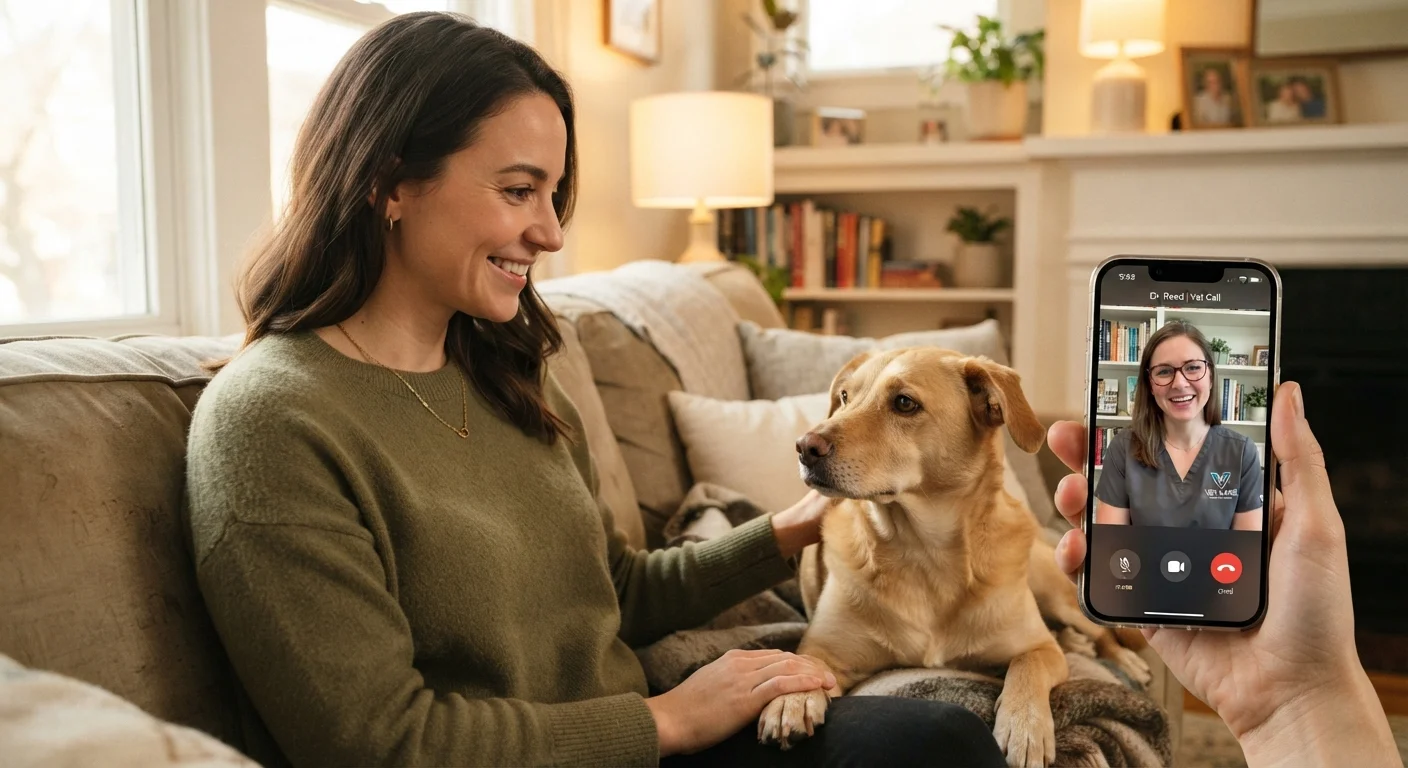
Vet telehealth fills a genuine gap — offering convenient, low-barrier access to professional guidance for non-urgent concerns. It performs best as a supplement to traditional veterinary care, helping owners triage symptoms, manage chronic conditions between checkups, and get behavioral guidance without the stress of clinic visits. However, it cannot replicate a hands-on physical exam, run diagnostics, or handle emergencies.
Best for pet owners seeking quick professional input on minor concerns, behavioral questions, or chronic condition management between scheduled in-person visits.
What Vet Telehealth Actually Is
Veterinary telehealth refers to professional consultations conducted remotely — typically by video call, phone, or asynchronous messaging — between a pet owner and a licensed veterinarian or veterinary technician. Platforms vary widely: some connect owners with their own regular vet, while others offer on-demand access to a pool of credentialed professionals.
An important distinction exists between teletriage (assessing urgency and directing care) and telemedicine (providing specific medical advice or treatment plans). What a telehealth provider can legally do depends on whether a valid Veterinarian-Client-Patient Relationship (VCPR) has already been established through a prior in-person exam — rules that vary by state. Understanding this distinction helps set realistic expectations before you book a session.
For a broader look at how routine professional care fits into your pet's health picture, see our overview of what annual vet visits actually cover.
Where Telehealth Genuinely Helps
Remote consultations have carved out a legitimate role in pet care for several use cases where physical presence adds little value.
Convenient triage for non-urgent symptoms
Owners can quickly determine whether a symptom warrants an emergency visit or can wait for a scheduled appointment, potentially reducing unnecessary clinic trips and associated stress for pets.
Accessible behavioral guidance
Many behavioral concerns — such as excessive barking, litter box avoidance, or anxiety triggers — can be effectively assessed and addressed through video observation and owner-reported history.
Useful for follow-up and chronic condition monitoring
Pets managing ongoing conditions like diabetes or arthritis can benefit from between-visit check-ins to review symptoms or adjust management strategies without a full clinic appointment.
Removes geographic and mobility barriers
Rural pet owners, those without reliable transportation, or owners with mobility limitations gain meaningful access to professional guidance that might otherwise be difficult to obtain promptly.
Less stressful for highly anxious pets
For animals with severe clinic anxiety, a home-based consultation can yield more accurate behavioral assessment since the pet is observed in its natural environment.
Telehealth also pairs naturally with the kind of at-home health monitoring owners can do between clinic visits — a vet can help you interpret what you're observing in real time.
Where Telehealth Falls Short
The appeal of convenience can sometimes lead owners to delay necessary in-person care. It's worth being clear-eyed about what a screen simply cannot provide.
No physical examination is possible
Palpating the abdomen, listening to heart and lung sounds, assessing lymph nodes, and checking reflexes all require hands-on contact — none of which a camera can replicate. Many diagnoses depend on findings that simply cannot be detected remotely.
Diagnostics are completely unavailable
Blood panels, urinalysis, X-rays, ultrasound, and cultures require laboratory or imaging equipment. A telehealth vet can suggest that testing is warranted, but cannot perform or interpret results from a remote session.
Prescribing is legally restricted in many states
Without an established VCPR through a prior in-person exam, many states prohibit telehealth vets from prescribing medications, limiting what treatment guidance they can formally provide.
Risk of delayed care for serious conditions
Symptoms that appear mild — such as subtle lethargy or a small lump — can indicate serious underlying issues. Relying on telehealth for reassurance without follow-up in-person evaluation can result in harmful delays in diagnosis.
Image and video quality limits assessment
Poor lighting, an uncooperative pet, or low-resolution footage can prevent a vet from clearly observing gait abnormalities, skin conditions, eye discharge, or wound severity.
Not appropriate for any emergency situation
Conditions such as suspected toxin ingestion, respiratory distress, trauma, or neurological symptoms require immediate hands-on emergency care — telehealth consultation in these moments could waste critical time.
When to Skip Telehealth Entirely
Telehealth is not appropriate for emergencies or any situation where your pet's condition may be rapidly deteriorating. Signs such as difficulty breathing, pale gums, suspected poisoning, inability to urinate, collapse, or uncontrolled bleeding require immediate in-person emergency veterinary care. No remote consultation should substitute for urgent physical evaluation in these situations.
If your pet is showing signs of an emergency — difficulty breathing, suspected poisoning, severe injury, uncontrolled bleeding, collapse, or prolonged seizure — do not wait for a telehealth appointment. Go directly to your nearest emergency veterinary clinic.
Making Telehealth Work as Part of a Broader Care Plan
The most effective use of vet telehealth treats it as one layer in a complete care strategy — not as a cost-cutting substitute for scheduled exams. Think of it as the tool you reach for between appointments, not instead of them.
~70%
Pet owners reporting interest in telehealth services
A survey published by the American Pet Products Association found growing owner interest in virtual veterinary access, particularly for behavioral and minor health questions.
50+
U.S. states with varying telehealth VCPR rules
Each U.S. state sets its own rules on what veterinarians may advise or prescribe without a prior in-person exam, making regulatory context essential for understanding service limitations.
Owners who already perform routine observations are better positioned to give a telehealth vet useful information. Building that habit connects directly to understanding preventive versus reactive care approaches — telehealth tends to support preventive habits rather than replace reactive clinical intervention.
If your pet struggles with anxiety around vet visits, telehealth can sometimes serve as a lower-stress starting point for behavioral consultations. Separately, practical techniques for reducing clinic-visit stress can help when in-person care is unavoidable.
This article is for general informational purposes only and does not constitute veterinary medical advice. Always consult a licensed veterinarian for concerns specific to your pet's health.
The content provided on our blog site traverses numerous categories, offering readers valuable and practical information. Readers can use the editorial team’s research and data to gain more insights into their topics of interest. However, they are requested not to treat the articles as conclusive. The website team cannot be held responsible for differences in data or inaccuracies found across other platforms. Please also note that the site might also miss out on various schemes and offers available that the readers may find more beneficial than the ones we cover.