

Summary
22 items · 10–20 minutes
Why At-Home Monitoring Matters
Most pets visit the vet once or twice a year, but health changes can emerge at any time. As the person who sees your pet every day, you're uniquely positioned to notice subtle shifts — a slight reluctance to climb stairs, a new odor from the ears, or a change in drinking habits — that might not be apparent during a brief annual exam.
Think of these home checks as the connective tissue between professional appointments. They won't replace what happens in the exam room — see what veterinarians actually check during a routine exam for a detailed breakdown of that process — but they give you a steady stream of information that makes you a more effective advocate for your pet's health.
The goal is not to diagnose. It's to observe, compare against your pet's normal baseline, and flag meaningful changes for your vet. Use the checklist below as a starting point and adapt it to your pet's age, species, and known health history.
Home Checks Are Not a Diagnosis
Nothing in this checklist should be used to self-diagnose your pet or delay necessary veterinary care. Your observations are valuable information — but interpreting what they mean medically is your veterinarian's role. If you notice something that concerns you, contact your vet rather than waiting for the next scheduled visit.
What You'll Need
No specialized equipment is required for most of these checks. A few simple items make the process easier and more consistent.
Digital pet scale or infant scale
Provides accurate monthly weight measurements to track gradual gain or loss.
Handheld flashlight or penlight
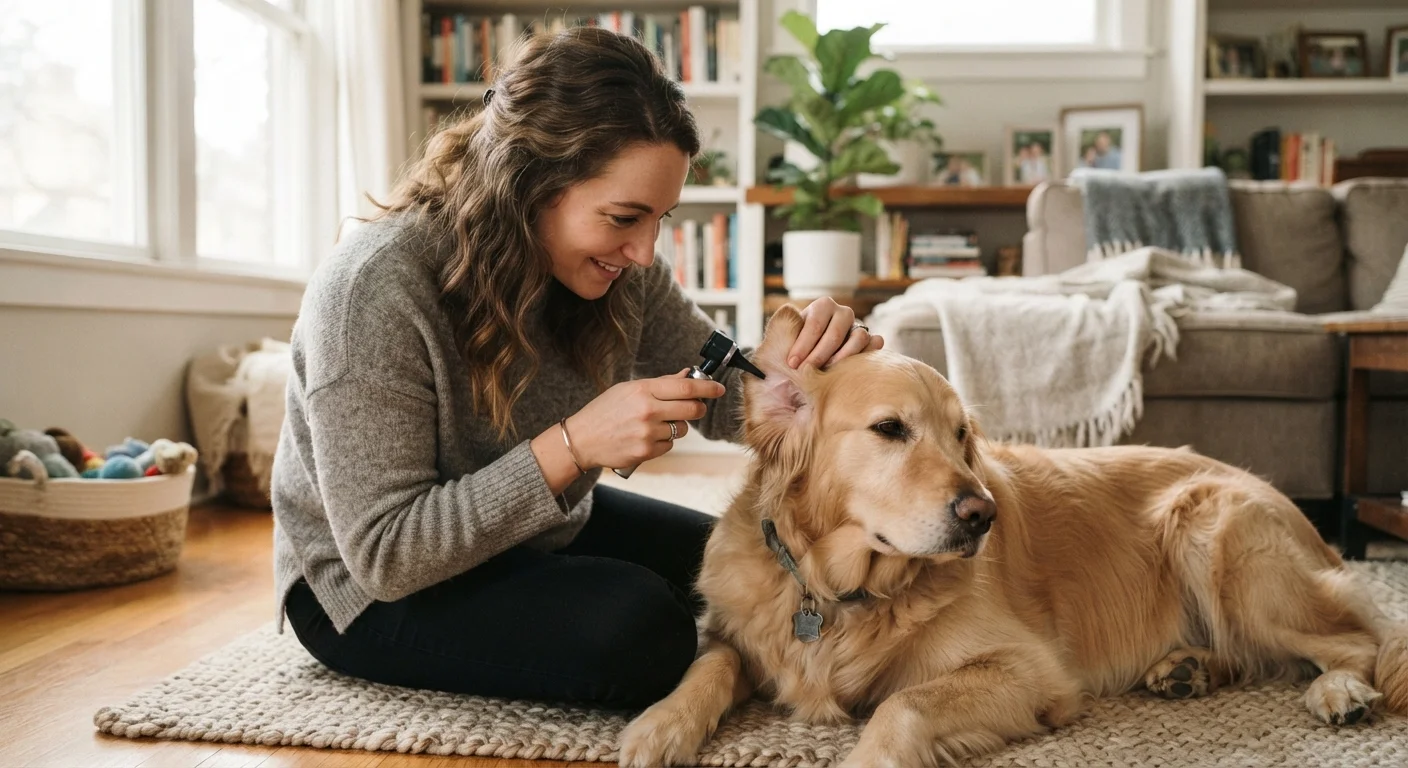
Illuminates the ear canal, mouth, and eyes for a clearer view during checks.
Small notebook or notes app
Records observations with dates so you can identify patterns and share them with your vet.
Smartphone camera
Captures photos or short videos of unusual lumps, skin changes, or limping for reference.
Soft treats
Helps keep your pet calm and cooperative during handling and examination.
The Home Health Checklist
Work through each category calmly, ideally during a quiet moment when your pet is relaxed. For dogs and cats, a gentle petting session is a natural cover — many checks can be done while your pet thinks they're just getting attention.
Eyes
Ears
Mouth and Gums
Coat and Skin
Weight and Body Condition
Mobility and Posture
Behavior and Habits
If you notice something unusual, resist the urge to wait it out indefinitely. Sudden or severe changes — difficulty breathing, collapse, uncontrolled bleeding, suspected poisoning — require immediate veterinary attention, not a home check. For less urgent concerns, early warning signs of illness every pet owner should know can help you decide how quickly to act.
Never Attempt to Treat Without Veterinary Guidance
If you find something abnormal during a home check — an ear infection, a skin mass, weight loss — do not attempt to treat it with over-the-counter or home remedies without first consulting your vet. Misidentifying a condition can delay the correct treatment and, in some cases, make the problem worse.
Logging What You Find
Consistency is what makes home monitoring genuinely useful. Keep a simple log — a notes app, a dedicated notebook, or even a recurring photo folder on your phone — so you can track trends over time. A single observation is just a data point; a pattern is actionable information.
Note the date, what you observed, and any relevant context (did your pet eat differently that day? Was the weather unusually hot?). When you bring your pet in for their next appointment, share these notes with your vet. This kind of owner-reported history is valuable, especially for senior pets whose health needs shift more frequently.
Pairing home checks with everyday habits that support a long, healthy pet life creates a solid wellness routine that compounds over time. You're not looking for perfection — just attentive, regular observation that keeps you informed and your pet better cared for.
This article is for general informational and educational purposes only and is not a substitute for professional veterinary advice, diagnosis, or treatment. Always consult a licensed veterinarian about your pet's specific health needs.
The content provided on our blog site traverses numerous categories, offering readers valuable and practical information. Readers can use the editorial team’s research and data to gain more insights into their topics of interest. However, they are requested not to treat the articles as conclusive. The website team cannot be held responsible for differences in data or inaccuracies found across other platforms. Please also note that the site might also miss out on various schemes and offers available that the readers may find more beneficial than the ones we cover.