

Start here
Choosing Your Route
Next
Pacing Yourself Realistically
Then
National Parks: Passes, Permits, and Planning
Watch out for
What First-Timers Often Get Wrong
Before you go
Preparing Before You Leave
Choosing Your Route
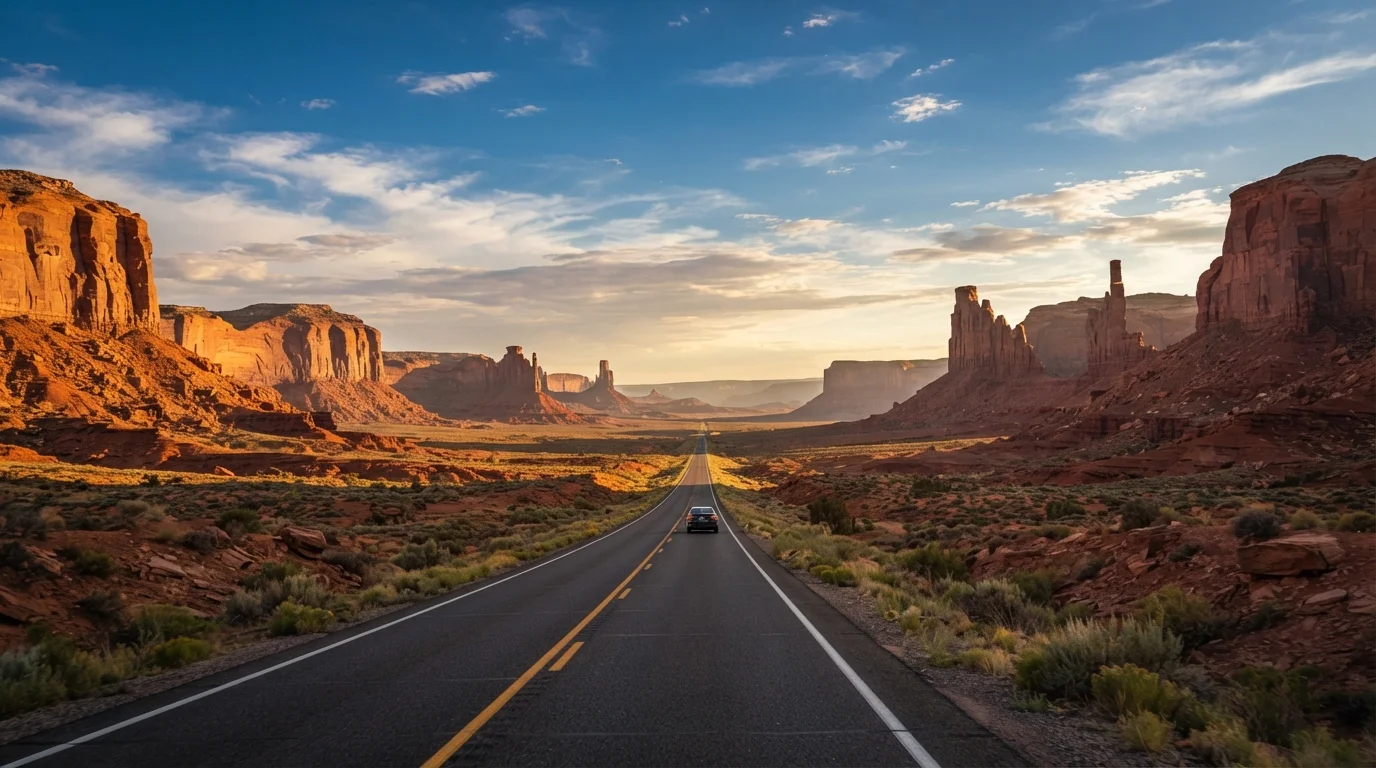
The American West is staggeringly large. Nevada alone is bigger than the United Kingdom. That scale is the first thing to internalize — not to intimidate you, but to help you make smarter choices about scope.
For first-timers, picking one geographic focus beats trying to do it all. Three popular frameworks:
- The Southwest Loop: Las Vegas as a hub, with spokes to Zion, Bryce Canyon, Capitol Reef, Arches, Canyonlands, and the Grand Canyon's South Rim. Manageable in 10–14 days.
- The Pacific Coast Highway: San Francisco to Los Angeles (or reverse), hugging Highway 1 with stops at Big Sur, Hearst Castle, and Santa Barbara. Compact but scenically dense.
- The Northern Rockies: Yellowstone, Grand Teton, and Glacier National Park connected through Wyoming and Montana — best attempted in summer when mountain roads are fully open.
If you're torn between the stark desert and lush forests, this side-by-side look at the Southwest and Pacific Northwest can help clarify which landscape suits your travel style.
America the Beautiful Pass
An annual pass sold by the federal government that covers entrance fees at most national parks and other federally managed lands across the U.S.
Timed-entry permit
A reservation required to enter a specific area of a national park during a set time window, used to manage visitor crowding at popular sites.
Gateway town
A small town or city located near the entrance to a national park or scenic area, typically offering lodging, fuel, food, and supplies for visitors.
Elevation sickness
A physical response to high altitude where the body struggles to get enough oxygen, causing headaches, fatigue, or nausea — common above 8,000 feet.
Dispersed camping
Free, permit-free camping on certain public lands outside designated campgrounds, allowed in many Bureau of Land Management areas with specific rules about location and waste.
Pacing Yourself Realistically
A common first-timer mistake is underestimating drive times. Distances on a western map look approachable until you factor in mountain grades, winding canyon roads, and the simple reality that you'll want to stop — a lot. A route that looks like four hours on paper can easily become seven.
A workable rule of thumb: plan no more than four to five hours of driving on any given day, and build in at least one full rest day every four or five days. Your body needs it, and so does your enjoyment of the trip.
Also account for elevation. If your route moves through high-altitude areas — Rocky Mountain passes, the Colorado Plateau, or the Sierra Nevada — altitude can affect your energy, driving, and even cooking in ways most visitors don't anticipate. Give yourself time to acclimatize.
Book Campgrounds and Hotels Early
In peak season, accommodations inside and near popular parks can sell out months ahead. Lock in at least your first and last nights as soon as your dates are set, then book remaining stops as your itinerary solidifies. Flexibility is great — but having a confirmed bed at the end of a long driving day is better.
National Parks: Passes, Permits, and Planning
If your route touches three or more fee-charging national parks, the America the Beautiful annual pass is almost certainly worth purchasing. A single park entrance can run $35 per vehicle; the pass covers unlimited entries to all federal fee areas for a full year.
Beyond the pass, many of the West's most popular parks have introduced timed-entry permit systems to manage overcrowding. Zion's shuttle system, Arches' timed-entry reservations, and Glacier's vehicle reservation requirement are examples that have been in place in recent years — though exact rules shift seasonally.
Park Rules Change Seasonally
Permit systems, road closures, and reservation requirements at national parks are updated regularly by the National Park Service. Always check the official NPS website (nps.gov) for the specific park and your travel dates — information from blogs or travel guides may be outdated.
Campground reservations inside parks can sell out six months in advance. If you miss the reservation window, look to gateway towns for lodging and drive in early in the morning — most timed-entry permits are distributed in the early hours of the morning on Recreation.gov.
What First-Timers Often Get Wrong
Beyond pacing and permits, a few surprises catch nearly every first-time western road tripper:
- Cell service gaps: Vast stretches of Nevada, eastern Utah, and rural Wyoming have no cell coverage. Download offline maps before you leave each connected area.
- Gas station distances: In some remote corridors, fuel stops are 80–100+ miles apart. Never pass a gas station in the backcountry with less than half a tank.
- Weather volatility: Afternoon thunderstorms are common in summer mountains; desert temperature swings between day and night can exceed 40°F. Pack layers regardless of season.
- Overloaded itineraries: Five parks in five days sounds exciting in planning but exhausting in practice. Doing fewer things more slowly tends to produce much stronger memories.
Desert Heat Is a Serious Hazard
Summer temperatures in desert regions like Death Valley and the Sonoran can exceed 110°F — dangerous for both people and vehicles. Carry more water than you think you need (at least one gallon per person per day for outdoor activity), and avoid strenuous hikes between 10 a.m. and 4 p.m. Always tell someone your itinerary when heading into remote areas.
Preparing Before You Leave
A western road trip rewards preparation. Before departure, run through your vehicle's key systems — tires, fluids, spare tire condition, and emergency kit. Our road trip safety and legal readiness checklist covers the essentials so nothing critical gets missed.
For a broader pre-departure checklist — covering everything from overnight bookings to park passes to emergency supplies — see the multi-state road trip pre-departure checklist. And if you're planning to travel solo, this ground-up guide for first-time independent travelers addresses the specific considerations that come with going it alone.
The American West is genuinely one of the most spectacular road trip regions on the planet. Go in with realistic expectations, a flexible mindset, and a well-checked vehicle — and it will almost certainly exceed them.
Frequently Asked Questions
Two weeks is a comfortable minimum for a meaningful western loop, though 10 days can work if you keep the geography focused. Trying to rush a cross-region trip in under a week often means more windshield time than actual experience.
Many high-demand parks — including Zion, Arches, and Glacier — require timed-entry reservations or vehicle permits during peak season. Check the official National Park Service website for each park before your trip, as rules change seasonally.
It's an annual federal lands pass that covers entrance fees at national parks, monuments, and recreation areas. If you plan to visit three or more fee-charging parks in a year, it typically pays for itself.
Spring (April–May) and fall (September–October) offer milder temperatures and thinner crowds at most destinations. Summer brings peak crowds and extreme heat in desert regions; winter closes some mountain roads entirely.
Research fuel stops along your specific route using a mapping app before you leave each town. In remote areas like Nevada's interior or southern Utah, carry a small approved fuel container as a backup — some gaps between stations exceed 100 miles.
A mix of both is practical. Campgrounds inside popular parks book up months in advance, so reserve early or plan to stay just outside park boundaries. Gateway towns usually have lodging options at various price points.
The content provided on our blog site traverses numerous categories, offering readers valuable and practical information. Readers can use the editorial team’s research and data to gain more insights into their topics of interest. However, they are requested not to treat the articles as conclusive. The website team cannot be held responsible for differences in data or inaccuracies found across other platforms. Please also note that the site might also miss out on various schemes and offers available that the readers may find more beneficial than the ones we cover.