

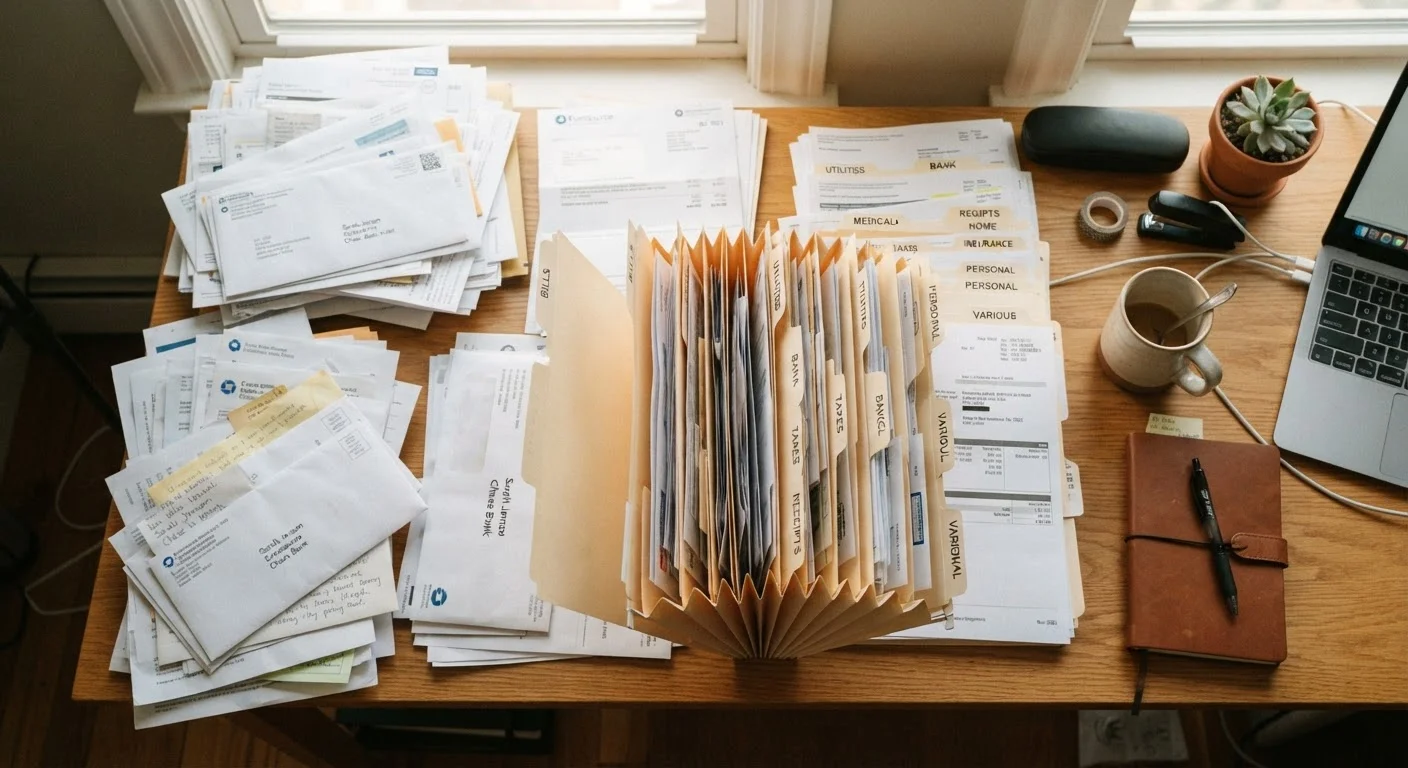
Why Paper Keeps Winning the Battle
Paper enters a home constantly - utility bills, school notices, medical statements, coupons, takeout menus, tax documents, product manuals. The average American household receives roughly 850 pieces of mail annually, according to USPS data, and that's before counting paperwork generated inside the home itself.
The root problem isn't volume - it's deferred decisions. When a piece of paper lands on the counter, the immediate question is: What do I do with this? If the answer isn't obvious, or if acting on it takes more than a few seconds, the paper gets set down temporarily. Temporarily becomes permanently. A pile forms.
Common triggers include missing a designated landing spot, unclear categories, and filing systems that feel more complicated than just leaving the paper out. The irony is that piles feel manageable until they're not - and by the time a pile becomes stressful, it's also large enough to feel impossible to tackle.
Paper Clutter Isn't a Willpower Problem
Research in behavioral science suggests that clutter accumulates when the cost of deciding exceeds the immediate effort of acting. For paper, this means the system itself - not personal motivation - is the controlling variable. A well-designed intake point removes the decision burden almost entirely, making the organized choice the easy choice.
The Three-Category Framework That Makes Filing Work
Most household paper fits into one of three buckets, and naming them clearly is the first step to building a system that holds:
- Action: Paper that requires a response - a bill to pay, a form to sign, an appointment to schedule. This category needs to stay visible and accessible, not filed away.
- Archive: Documents you need to keep but don't act on regularly - tax records, insurance policies, medical history, property documents. These belong in a labeled folder or binder, out of daily sight.
- Recycle or shred: Junk mail, paid-bill statements you've confirmed, expired coupons, duplicate copies. Most incoming paper falls here.
The key insight: paper only becomes clutter when it sits in an undecided state. Assigning it to one of these three categories - even roughly - eliminates the pile-forming moment.
Start With What's Coming In, Not the Backlog
If you have an existing pile, resist the urge to sort through all of it before setting up your system. Build the intake habit first with new incoming paper. Once the daily flow is under control, tackle the backlog in short sessions - fifteen minutes at a time - so the project never feels overwhelming.
Simple Filing Systems That Actually Get Used
The most effective filing system is the one with the fewest steps between picking up a piece of paper and putting it away. Overly elaborate systems - color-coded tabs, sub-sub-categories - create friction that leads right back to piling.
The Desktop File Box
A small, open-top file box with five to eight labeled hanging folders covers most household needs: Bills/Financial, Medical, Home/Auto, Kids/School, and To-Do (your action category). It lives on or near the desk, requires no opening of drawers, and processes paper in seconds.
The Three-Tray Inbox
Three stacked letter trays labeled Incoming, To File, and To Shred create a visual workflow. Paper arrives in the first tray, gets sorted into action or archive, and moves to the appropriate tray before a weekly five-minute filing session handles the rest.
The Accordion Folder for Archives
For documents that must be kept long-term, a sturdy accordion folder with labeled pockets - one per category - stores years of records in a compact space. It's portable, which matters when you need documents for appointments or tax preparation.
For households dealing with broader organizational challenges, our room-by-room decluttering guide covers how to tackle the spaces where paper typically collects most.
850+
Pieces of mail per household annually
According to USPS delivery data, the average US household receives over 850 pieces of mail per year, not including internally generated paperwork.
80%
Of filed papers never referenced again
Organizational research commonly cites that a large majority of filed documents are never retrieved - underscoring the importance of deciding what to keep versus discard upfront.
~10 min
Weekly time to maintain a simple filing system
Households with a consistent sorting habit typically spend only five to fifteen minutes per week processing and filing paper, compared to hours recovering from periodic pile buildup.
Building the Habit That Keeps Piles From Forming
A filing system is only as effective as the habit attached to it. Two practices make the biggest difference:
- Process mail at the point of entry. Sort it over the recycling bin - junk goes immediately, action items go to the inbox or file box, and nothing gets set on a surface "just for now."
- Schedule a monthly purge. Spend ten to fifteen minutes once a month moving completed action items to the archive folder and shredding anything outdated. This prevents the archive from quietly becoming its own pile.
If the idea of maintaining any system feels daunting, you're not alone. Home organization for people who hate organizing outlines low-friction approaches for households where elaborate routines simply don't stick.
For households weighing whether to do a single large paper purge versus building a daily habit, this guide on one-time decluttering vs. daily maintenance breaks down when each strategy works best. And if you want a structured annual reset, the annual home declutter checklist includes a dedicated paper audit step.
“Clutter is not just physical stuff. It's old ideas, toxic relationships, and bad habits. Clutter is anything that does not support your better self - and paper is often the most overlooked category.”
— Peter Walsh, Professional organizer and author on decluttering and home organization
Frequently Asked Questions
Paper clutter returns when there's no consistent intake system - so new paper lands wherever it's put down. The fix isn't a bigger purge; it's a simple routine for processing incoming paper daily or weekly. Even a two-minute sort at the mail station can break the cycle.
Keep tax records for at least seven years, insurance policies, medical records, property documents, and legal contracts. Most utility bills, store receipts, and promotional mail can be discarded or recycled after payment is confirmed. When in doubt, check IRS guidance or consult a financial professional for document retention timelines.
Both have merit, and many households use a combination. Digital scanning works well for documents you need to retrieve but rarely touch. Physical filing is often faster and more reliable for documents you reference regularly or that require original copies, like deeds or birth certificates.
A basic filing system - a few labeled folders or a desktop file box - can be set up in under an hour. The initial paper sort takes longer if a large backlog exists, but processing current incoming paper takes only minutes once a system is in place.
Yes, and it works best when household members agree on shared categories and a single drop point for incoming paper. Clear labels and a simple sorting habit reduce friction. See our guide on <a href="/home-garden/home-organization/shared-spaces-different-habits-organizing-a-home-with-multiple-people">organizing shared spaces</a> for practical approaches.
The content provided on our blog site traverses numerous categories, offering readers valuable and practical information. Readers can use the editorial team’s research and data to gain more insights into their topics of interest. However, they are requested not to treat the articles as conclusive. The website team cannot be held responsible for differences in data or inaccuracies found across other platforms. Please also note that the site might also miss out on various schemes and offers available that the readers may find more beneficial than the ones we cover.