

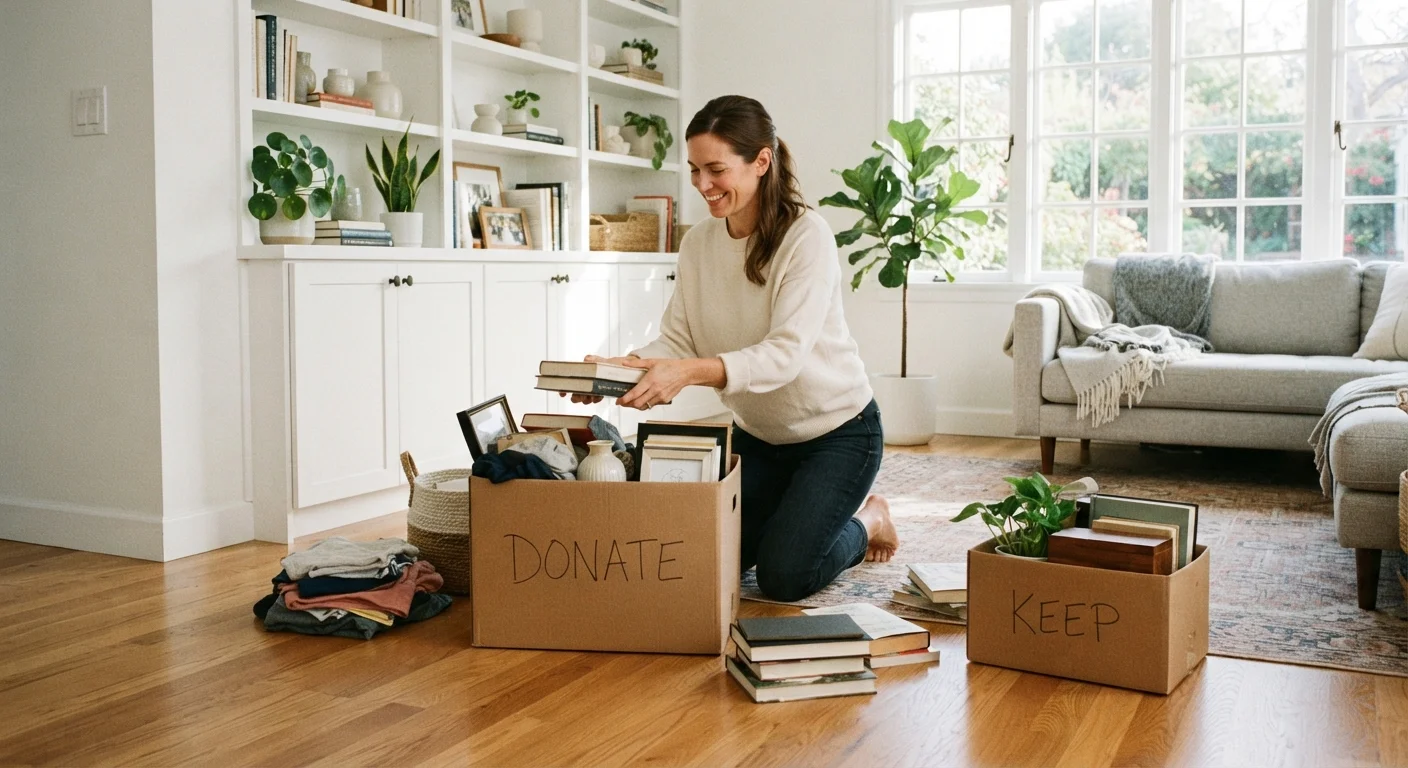
Why a Room-by-Room Approach Works Better Than a Whole-Home Blitz
Chronic clutter rarely develops overnight - and it won't disappear in an afternoon if you try to tackle every room at once. Spreading effort across the whole house simultaneously tends to leave every space half-finished and the homeowner exhausted. A room-by-room method focuses your energy, gives you a clear point of completion for each session, and produces visible results that fuel continued motivation.
The sequence also matters. High-traffic areas - entryways, kitchens, and living rooms - affect daily life the most, so clearing them first delivers immediate quality-of-life improvements. Lower-traffic areas like storage rooms and garages can follow once you've built momentum and refined your sorting instincts.
If you're weighing whether to do a big one-time purge or build smaller daily habits instead, our piece on decluttering once vs. maintaining order daily examines both approaches honestly.
What you will need
Tools and Supplies You'll Need
You don't need specialty organizing products to get started - most of the work is decision-making, not purchasing. That said, a few basic supplies make the process noticeably more efficient.
Labeled sorting boxes or bags
Separates items into Keep, Donate, Trash, and Relocate categories as you work through each room.
Timer
Keeps work sessions focused; prevents burnout by limiting each sprint to 25-45 minutes.
Label maker or masking tape and marker
Marks bins, shelves, and containers so items have a clear permanent home.
Shelf liner or drawer organizers
Creates defined zones inside drawers, cabinets, and shelves once excess items are removed.
Resist the urge to buy storage bins or organizers before the declutter is complete. You won't know what containers you actually need until you know what you're keeping.
Step-by-Step: Working Through Your Home
Set up your sorting system before you touch anything
Place four clearly labeled containers - Keep, Donate, Trash, and Relocate - in the center of the first room you're tackling. The Relocate box is for items that belong in a different room but have drifted. Having physical containers prevents the most common decluttering mistake: picking something up, debating it, and setting it back down in the same spot.
Start with the entryway or most-used common area
Your entryway or main living area is the right starting point because it's the space everyone moves through daily. Clearing it first creates an immediate sense of order that motivates you to continue. Remove everything from surfaces, hooks, and floor zones. Then add back only what genuinely belongs there and gets used regularly - hooks for coats, a tray for keys, a mat for shoes.
Work through the kitchen using zones
The kitchen accumulates clutter in layers: countertops, cabinets, and drawers each need separate attention. Clear one zone at a time. Countertops should hold only appliances used at least several times per week. Pull everything out of one cabinet or drawer at a time, wipe the interior, and return only items with a clear purpose. Duplicate tools, expired pantry goods, and mystery gadgets all belong in the Donate or Trash box.
Declutter the bedroom with clothing as the priority
Bedrooms become cluttered primarily through clothing overflow and surface accumulation. Address the closet first: remove every item, sort into Keep, Donate, and Trash, and return only what fits and is worn regularly. For the rest of the room, clear nightstands and dressers to bare surfaces before deciding what earns a spot back. Items stored under the bed should be intentional - seasonal items in sealed containers, not a catch-all for forgotten things.
If your closet seems to reorganize itself into chaos within days, there may be a structural issue worth examining. Our piece on why closets get messy again so quickly breaks down the common causes.
Tackle bathrooms by clearing and categorizing products
Bathrooms are typically smaller, which makes them faster to declutter but deceptively easy to overload with products. Remove everything from under the sink, medicine cabinet, and any shelving. Discard expired medications through a safe disposal program - do not pour them down the drain. Group remaining items by type: hair care, skin care, first aid, and so on. Return only what's used regularly; store backstock in one clearly labeled zone.
Address secondary spaces last: office, garage, and storage rooms
Home offices, garages, and dedicated storage areas tend to be the most overwhelming because they absorb everything that has no home elsewhere. Work in timed sessions of 30-45 minutes with short breaks to avoid decision fatigue. For paperwork, create three categories: action required, archive, and shred. For tools and equipment, keep only what's functional and accessible; donate or dispose of duplicates and broken items you haven't repaired in over a year.
Relocate items and assign every 'keep' item a permanent home
Once all rooms are sorted, move through your Relocate boxes and return each item to its correct room. Then, critically, assign every kept item a designated storage location. This step is what separates a temporary cleanout from a lasting system. If something doesn't have a logical home, create one - or reconsider whether you actually need it. Label containers and shelves where helpful.
Maintaining Order After the Declutter
A successful room-by-room declutter sets the stage - but it only holds if simple maintenance habits follow. The most effective approach is to build brief daily resets into your routine: five to ten minutes each evening to return items to their assigned homes. This prevents the gradual drift that leads back to chronic clutter.
Once or twice a year, a more thorough audit helps catch accumulation before it becomes overwhelming again. Our annual home declutter checklist gives you a structured room-by-room audit to run through each year.
Build the 'One In, One Out' Rule
Once your home is decluttered, adopt a simple rule: when a new item comes in, an equivalent item leaves. This prevents the slow accumulation that leads back to chronic clutter. It works especially well for clothing, books, and kitchen gadgets - categories that tend to grow unchecked.
If your household involves multiple people with different tidiness habits, maintaining systems requires a shared approach. Our guide on organizing a home with multiple people addresses how to build systems that hold even when habits differ.
The content provided on our blog site traverses numerous categories, offering readers valuable and practical information. Readers can use the editorial team’s research and data to gain more insights into their topics of interest. However, they are requested not to treat the articles as conclusive. The website team cannot be held responsible for differences in data or inaccuracies found across other platforms. Please also note that the site might also miss out on various schemes and offers available that the readers may find more beneficial than the ones we cover.