

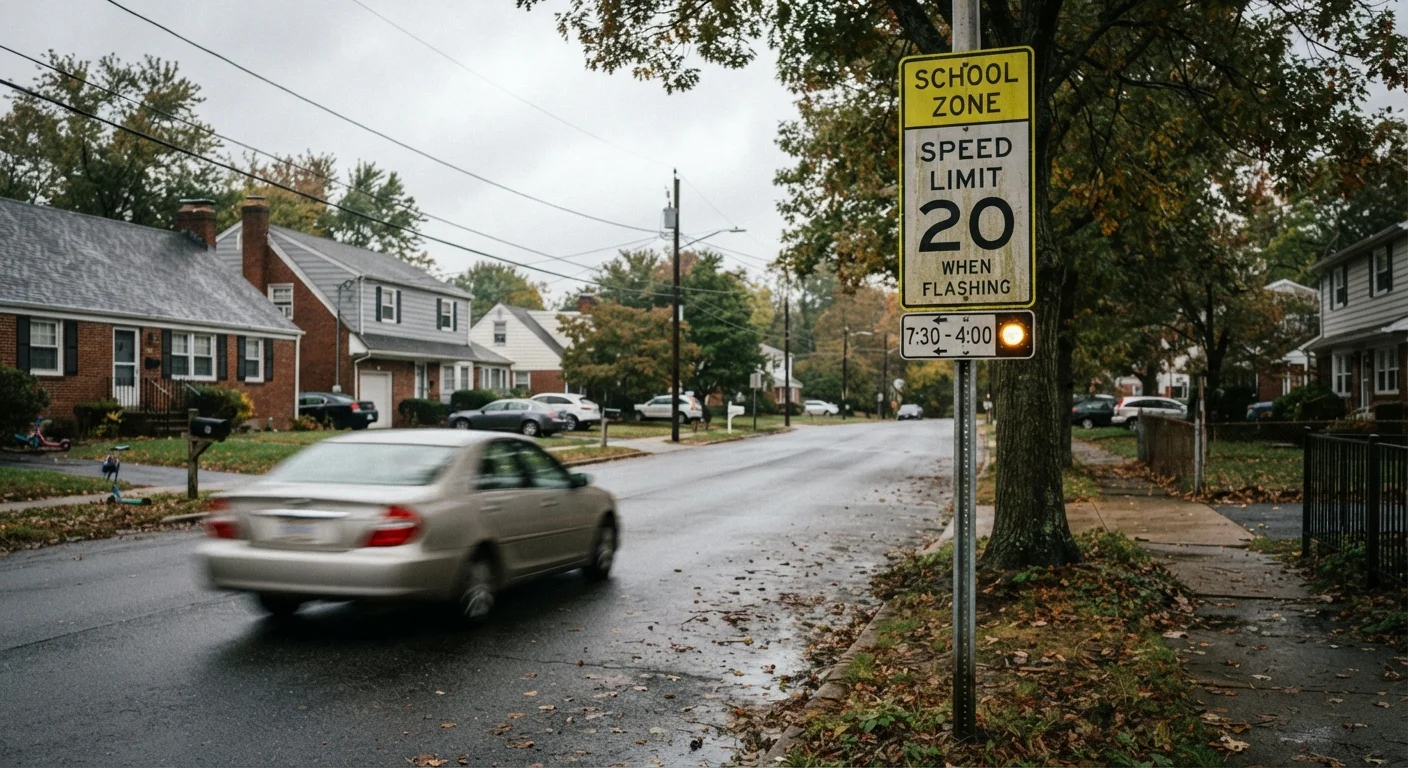
Why These Zones Catch Drivers Off Guard
School and work zones are among the most strictly regulated stretches of American roadway - and among the most commonly violated. The penalties exist because the stakes are high: pedestrians, children, and construction workers are in close proximity to moving traffic. Yet many drivers pass through these zones faster than the law allows, often without realizing it.
The problem isn't usually intentional disregard. It's a combination of perceptual error, sign misinterpretation, and habit. Understanding how these mistakes happen is the first step to avoiding them. For a broader look at how traffic rules are sometimes misunderstood, see our guide to right-of-way rules drivers frequently misread.
~700
Work zone fatalities per year in the U.S.
According to the Federal Highway Administration, approximately 700 people are killed annually in American highway work zones, with speeding cited as a leading contributing factor.
2x-3x
Fine multiplier for speeding in most work zones
Most U.S. states mandate doubled fines for speeding in active work zones, and several states impose triple penalties or mandatory license points under enhanced worker-safety statutes.
15-25 mph
Typical school zone speed limit range
School zone speed limits across the United States generally fall between 15 and 25 mph, though the exact limit varies by state and local jurisdiction.
The Most Common Speed Misjudgments - and How to Correct Them
The mistakes below represent the patterns traffic enforcement officers and road-safety researchers observe most consistently. Each one is correctable with awareness and a deliberate change in driving habit.
Waiting until you're inside the zone to begin slowing down.
Why it happens: Drivers often treat the zone sign as the deceleration point rather than the target speed point, which means they're still braking while already inside the restricted area.
Assuming a school zone limit only applies when the flashing beacon is active.
Why it happens: Many school zones use flashing amber lights to signal active hours, which trains drivers to look for the light rather than the clock or posted schedule.
Speeding up to match surrounding traffic flow through a work zone.
Why it happens: Social pressure and the instinct to keep pace with other vehicles cause drivers to defer to the group rather than the posted sign, especially in fast-moving highway work zones.
Misjudging speed because of a wider-than-normal lane or open environment.
Why it happens: Perception of speed is influenced by visual cues: wide lanes, sparse surroundings, or reduced roadside clutter make vehicles feel slower than they actually are - a well-documented phenomenon in traffic psychology.
Missing or overlooking the zone's end sign and maintaining the reduced speed longer than necessary - or, more dangerously, resuming full speed too early.
Why it happens: End-of-zone signs are sometimes placed inconsistently, or drivers assume the zone has ended based on visual cues like the absence of cones rather than an official sign.
"No Workers Present" Is Not a Legal Defense
A common misconception is that a work zone speed limit only applies when construction workers are actively on-site. In the vast majority of states, the posted reduced speed limit is legally binding as long as the signs are in place, whether or not anyone is working at that moment. Cones and signs alone establish the zone.
It's also worth noting that speed limit rules in these zones can differ meaningfully from one state to another. Our article on traffic laws that vary by state covers how school zone enforcement differs across the country.
Staying Legal, Safe, and Prepared
The most reliable habit is simple: treat every school zone and work zone sign as an immediate instruction, not a suggestion or a countdown. Slow before you enter, watch your instrument panel instead of relying on feel, and don't resume speed until a sign explicitly tells you the zone has ended.
Fines and Points Are Significantly Higher
In most U.S. states, speeding fines in school and work zones are doubled - and in some states, tripled - compared to standard moving violations. A ticket in a work zone can also add elevated points to your license. These penalties apply regardless of whether you saw workers or children present at the time.
If you're a newer driver still building confidence with road rules, our complete guide to American roads provides clear explanations of sign types, speed rules, and zone protocols. And for a comprehensive reference on U.S. driving law, America's Driving Laws reference guide covers school zones, signaling, lane rules, and more in one place.
Reduced speed in these zones isn't just a legal obligation - it's the margin of safety that protects workers, children, and every other driver sharing the road.
The content provided on our blog site traverses numerous categories, offering readers valuable and practical information. Readers can use the editorial team’s research and data to gain more insights into their topics of interest. However, they are requested not to treat the articles as conclusive. The website team cannot be held responsible for differences in data or inaccuracies found across other platforms. Please also note that the site might also miss out on various schemes and offers available that the readers may find more beneficial than the ones we cover.