

Our Verdict
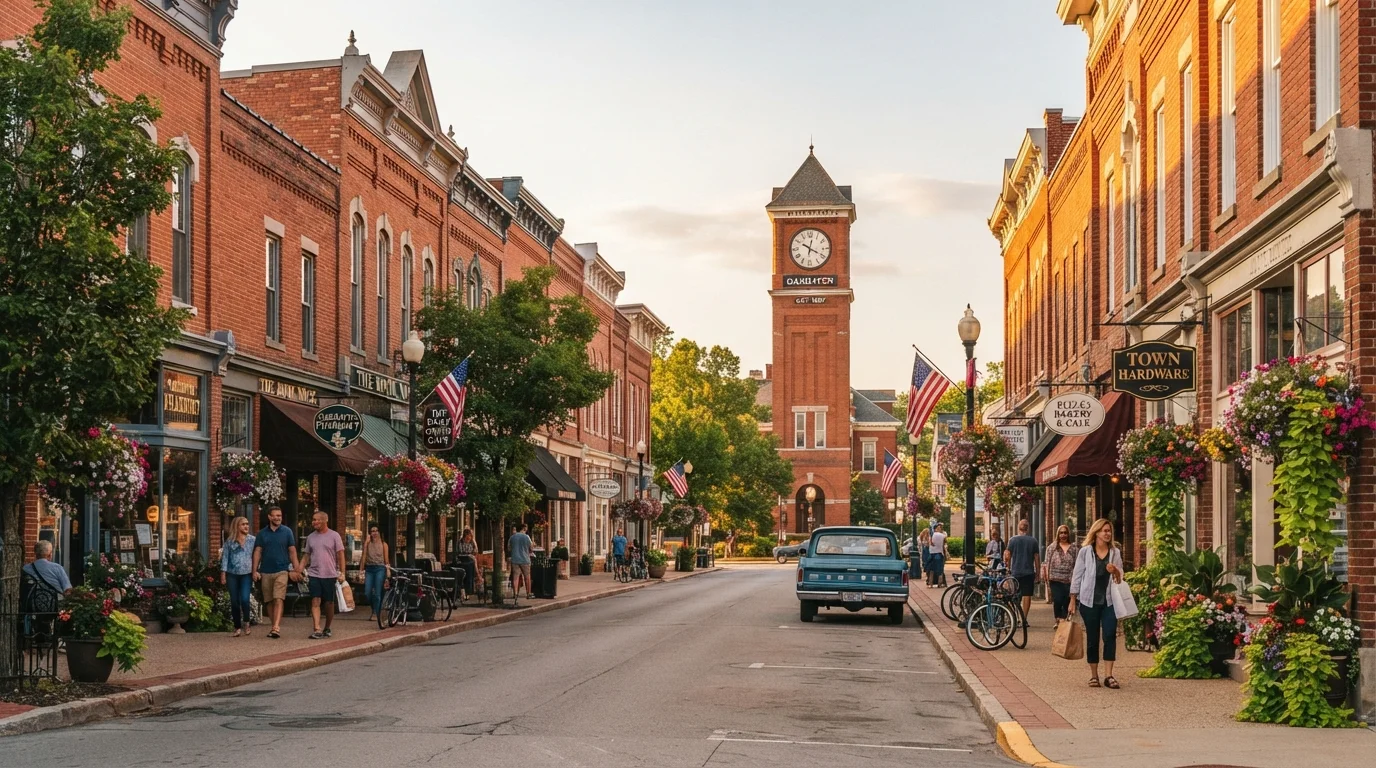
Small-town travel rewards the curious, unhurried traveler with genuine character, affordable experiences, and human-scale connection that sprawling metros often can't provide. That said, it requires flexibility — a car, patience with limited services, and an openness to slower rhythms. For those willing to lean in, the payoff is frequently extraordinary.
Best for travelers who value authenticity, affordability, and meaningful local encounters over convenience, nightlife variety, and big-ticket landmarks.
The Case for Going Small
Somewhere between the airport queues and the $28 cocktails, many American travelers have started asking a simple question: what if the most memorable trip isn't the flashiest one? Small towns — from the fishing villages of coastal Maine to the adobe-lined streets of New Mexico — are increasingly offering exactly the kind of travel experience that big cities used to promise and rarely deliver anymore.
This isn't nostalgia talking. It's a genuine shift in what travel can mean. While a metropolis offers world-class museums and celebrated restaurants, it also comes packaged with traffic gridlock, chain-hotel monotony, and the peculiar loneliness of being surrounded by millions of strangers. Small towns flip that equation entirely.
Of course, going small isn't for everyone, and it comes with real trade-offs worth understanding before you book. Here's a clear-eyed look at both sides.
Authentic local culture with fewer tourist filters
Small towns haven't been buffed smooth for mass tourism. Festivals, food traditions, and community characters remain intact, giving visitors genuine cultural access rather than a curated performance.
Significantly lower travel costs
Accommodation, dining, and activities in small towns typically run 30–60% cheaper than equivalent experiences in major metros, stretching travel budgets considerably further.
No crowds — genuine breathing room
Landmark sites in small towns rarely require timed entry or two-hour queues. You can move at your own pace, revisit a favorite spot, and actually absorb where you are.
Closer access to nature and outdoor experiences
Many small towns sit directly adjacent to forests, rivers, mountains, or coastline that would require long drives or park shuttles to reach from a major city.
Memorable human connection with locals
In smaller communities, visitors stand out in a welcome way. Locals are often genuinely engaged — offering recommendations, stories, and a hospitality that feels personal rather than transactional.
Where Small Towns Fall Short
Honesty is part of good trip planning. Small towns charm, but they also frustrate — especially for travelers accustomed to urban infrastructure and variety.
Car dependency limits accessibility
The vast majority of small American towns have no meaningful public transit and limited or no ride-share coverage. Without a personal vehicle, getting in and getting around can be a real logistical challenge.
Narrow dining and entertainment options
While local food is often a highlight, variety is limited. Travelers seeking cuisine diversity, late-night dining, or a full entertainment calendar will likely come up short.
Fewer medical and emergency services
Rural areas often have limited healthcare infrastructure. For travelers with health conditions or families with young children, the distance to a hospital or urgent care facility is worth factoring into plans.
Limited accommodations — book early
Small towns may have only a handful of lodging options. In peak seasons or during local events, inventory sells out quickly, leaving travelers with long drives to the nearest alternative.
Some towns have seasonal closures
Restaurants, attractions, and even lodges in smaller communities may close entirely in the off-season. Visiting without checking ahead can mean arriving to shuttered storefronts and quiet streets.
The most common sticking point is transportation. Without a personal vehicle, many small towns are genuinely inaccessible. Train routes are sparse, ride-shares may not operate at all, and the distances between attractions can be deceptively large. If you're flying in and hoping to rent a car, rural airport options can be slim and pricey.
Dining variety also narrows sharply. You may find one outstanding local diner and a barbecue joint worth the drive — but if you're craving Thai food or a late-night taco truck, you might be out of luck. The same applies to nightlife, medical facilities, and retail options.
The Hidden Advantages Worth Planning Around
Here's what makes small-town travel genuinely exciting: proximity to nature, authenticity of culture, and the rare gift of unhurried time.
Many of America's most remarkable natural settings are anchored by small gateway towns. Think of the communities that border the national park system — places where the land itself is the main event. Our guide to what makes each national park region distinct is a great companion for pairing small-town stays with wilderness exploration.
Then there's the food culture. Small-town kitchens often source ingredients hyper-locally and cook without the pressure of Yelp stardom. A bowl of gumbo in a roadside Louisiana parish, a plate of smoked brisket from a generations-old Texas pit — these aren't restaurant experiences, they're cultural documents. The hidden waterways of the American South run through communities where food traditions like these have been alive for centuries.
74%
Americans who say they prefer "off-the-beaten-path" trips
According to a 2023 Airbnb travel trends survey, nearly three-quarters of U.S. travelers expressed interest in lesser-known destinations over popular tourist hotspots.
~40%
Lower average nightly lodging cost in rural areas
Data from the U.S. Travel Association has consistently shown rural and small-town lodging rates running significantly below major metro equivalents.
And then there's cost. Hotel rates, restaurant bills, and parking fees in small towns are consistently lower than their urban equivalents. For families or budget-minded travelers, a week in a small town can cost less than a long weekend in a major city.
How Small Towns Compare to Big-City Travel
Big cities remain extraordinary for certain kinds of travel — world-class art, concentrated cultural institutions, and the electric energy of dense urban life. If you're comparing music cultures, for instance, New Orleans and Nashville each offer something no small town can replicate at scale. Both are urban experiences rooted in specific traditions that require critical mass to sustain.
But small towns answer a different hunger. They slow things down. You notice architecture, hear regional accents, and find yourself talking to the person behind the counter rather than ordering through an app. That quality of encounter is increasingly rare — and increasingly valued.
Small Towns and International Comparisons
Many travelers discover small-town America after trips abroad — realizing that the slow, human-scale travel they loved in European villages or Southeast Asian towns exists right at home. If you're curious how domestic small-town travel stacks up against international alternatives, our international travel hub covers the trade-offs in depth. The rhythms may differ, but the spirit of discovery is remarkably similar.
The comparison isn't really about which is better. It's about what kind of traveler you want to be on any given trip. The good news is that America's geographic diversity means you can alternate — an urban weekend, then a rural escape — without ever leaving the country.
The content provided on our blog site traverses numerous categories, offering readers valuable and practical information. Readers can use the editorial team’s research and data to gain more insights into their topics of interest. However, they are requested not to treat the articles as conclusive. The website team cannot be held responsible for differences in data or inaccuracies found across other platforms. Please also note that the site might also miss out on various schemes and offers available that the readers may find more beneficial than the ones we cover.