

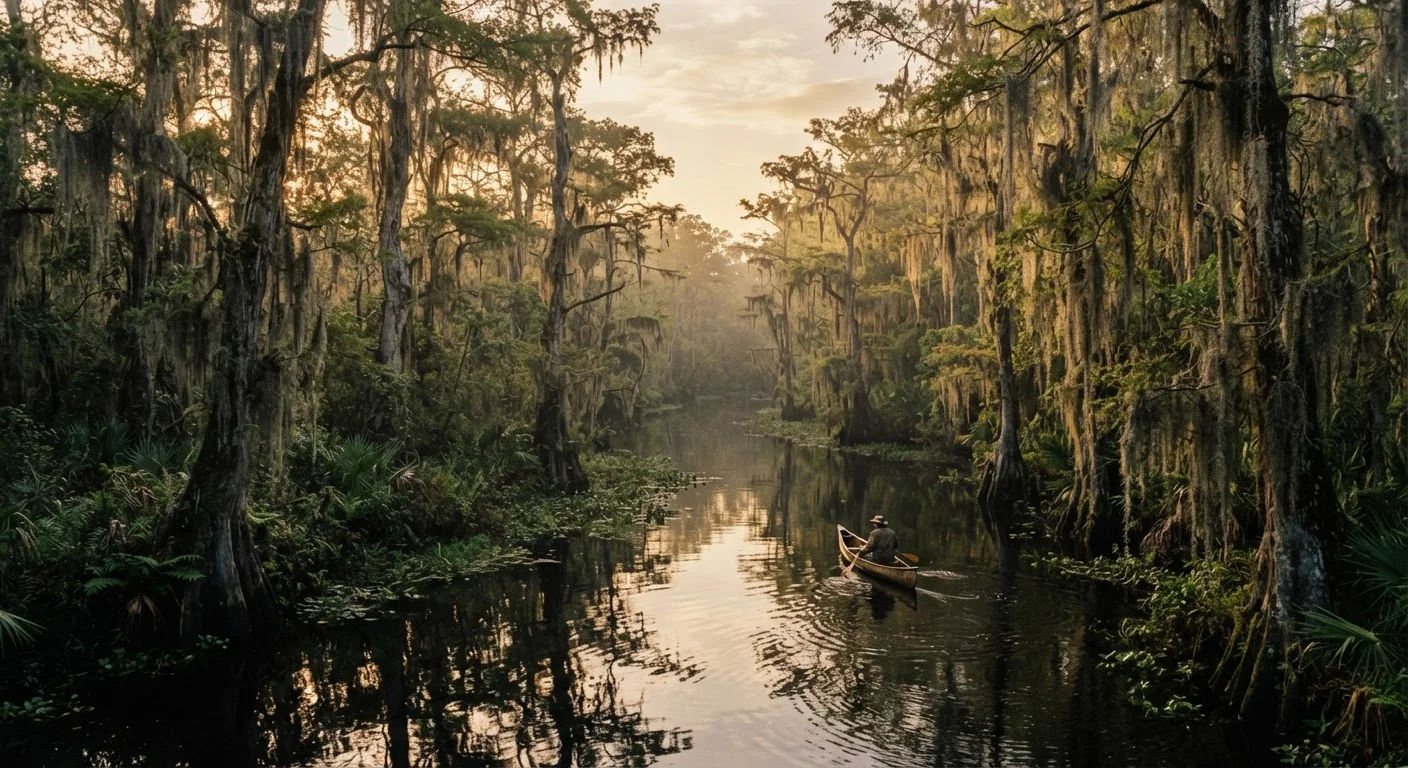
The South's Liquid Landscape
When most Americans think "Southern travel," they picture Gulf Coast beaches or the neon pulse of New Orleans. But the region's most captivating geography often runs quieter — literally. Braided through Louisiana's parishes, Georgia's coastal plain, and the swamplands of Florida's interior lies a network of blackwater rivers, tannin-stained bayous, and centuries-old oxbow lakes that belong on any curious traveler's radar.
These waterways shaped Southern culture, commerce, and ecology long before interstates arrived. Paddling them today feels less like sightseeing and more like reading a living history book — one written in cypress knees, wading herons, and the low hum of cicadas. If you appreciate wild, uncrowded destinations, this is your kind of travel. The South's small waterside communities are part of the draw, too — many echo the themes explored in our piece on why small-town America often outshines big cities for travelers.
Congaree River Bottomlands, South Carolina
South Carolina's Congaree National Park protects the largest intact expanse of old-growth bottomland hardwood forest in the Southeast — and the Congaree River is its beating heart. Paddlers can navigate Cedar Creek, a slow-moving blackwater tributary, beneath towering loblolly pines and bald cypresses draped in Spanish moss. The still, coffee-colored water reflects the canopy perfectly, especially on calm mornings.
Congaree is genuinely uncrowded compared to more famous parks, making solitude easy to find. Wildlife is abundant: barred owls, river otters, and white-tailed deer are regular sightings. The park's ranger-led canoe tours are a reliable way to orient yourself before venturing out independently.
Congaree's blackwater tributary offers one of the Southeast's most pristine paddling experiences.
Caddo Lake, Texas and Louisiana
Straddling the Texas-Louisiana border, Caddo Lake is the only naturally formed lake in Texas and one of the most hauntingly beautiful waterways in the entire South. A vast labyrinth of cypress swamps, lily-pad marshes, and Spanish moss-curtained channels, Caddo rewards slow exploration by canoe or kayak. Getting "lost" here — in the best sense — is practically guaranteed.
The lake supports remarkable biodiversity: more than 70 species of fish and hundreds of bird species call it home. Bald eagles winter here, and wood ducks and great blue herons are fixtures year-round. The surrounding communities retain a distinct, unhurried character that feels a world away from any highway.
Caddo Lake's cypress labyrinth is unlike anything else in the American South.
Okefenokee Swamp, Georgia
The Okefenokee — a name derived from a Native American term meaning "land of trembling earth" — is one of the largest intact freshwater ecosystems in North America. This vast peat-based wetland in southern Georgia encompasses prairies of aquatic plants, dense cypress forests, and open lakes connected by winding waterways. American alligators are so common here that encountering one is nearly a certainty.
The Okefenokee National Wildlife Refuge manages much of the swamp, and multi-day canoe camping trips allow visitors to experience genuine wilderness overnight. Reservations and permits are required well in advance for overnight paddles, so plan ahead and consult the refuge's official website for current regulations.
An overnight paddle through Okefenokee is one of America's most immersive wilderness experiences.
Pascagoula River, Mississippi
Sometimes called America's last uncontrolled river, the Pascagoula flows freely from headwaters to the Gulf of Mexico without a single dam blocking its course — a rarity in the modern South. That unaltered flow sustains remarkable ecological diversity, including more than 300 bird species and over 100 species of fish. The river's corridor also shelters the gopher tortoise and the alligator snapping turtle, both increasingly scarce elsewhere.
Because it lacks the infrastructure of more developed destinations, the Pascagoula demands a spirit of genuine discovery. Local outfitters and guide services along the river can help visitors navigate responsibly. The experience is raw, quiet, and deeply Southern in the best possible way.
The Pascagoula's dam-free flow makes it one of the most ecologically intact rivers in the South.
Atchafalaya Basin, Louisiana
The Atchafalaya Basin is North America's largest river swamp — a vast, living delta of bayous, lakes, and backswamps spreading across south-central Louisiana. It's an ecosystem on the move, constantly reshaping itself as sediment deposits and water routes shift. For travelers, that dynamism means no two visits feel identical.
Flat-bottomed boats are the traditional way to explore the Basin's interior, and guided tours departing from towns like Henderson and Breaux Bridge offer access to channels that most visitors would never find alone. The area's Cajun culture is inseparable from the waterway itself — local fishing camps, crawfish boils, and zydeco rhythms give the Atchafalaya a cultural richness that matches its ecological wonder.
The Atchafalaya blends North America's largest river swamp with living Cajun culture.
Sipsey Fork, Alabama
Tucked into the southern end of the Bankhead National Forest in northern Alabama, the Sipsey Fork of the Black Warrior River carves through a striking canyon landscape of sandstone bluffs, hardwood hollows, and cascading waterfalls. It's technically a river rather than a bayou, but its wild character and relative anonymity earn it a place among the South's hidden waterways.
The Sipsey Wilderness — the first wilderness area established east of the Mississippi River — surrounds much of the river, keeping development at bay. Paddlers and hikers alike find solitude here that's genuinely rare in the Eastern US. Spring wildflower season transforms the canyon into something spectacular, making March through April a particularly rewarding time to visit.
Sipsey Fork's sandstone canyon and wilderness designation make it Alabama's most overlooked gem.
Plan Your Waterway Adventure Wisely
Southern waterways reward the prepared traveler. Water levels, wildlife activity, and accessibility shift significantly by season — spring and fall typically offer the best combination of mild temperatures and manageable water flow. Summer brings lush greenery but also intense heat and humidity, so early morning paddles are smart. Always verify current conditions with local rangers or outfitters before setting out, and consult official state and federal sources for any permits or entry requirements.
Gear Up for Southern Waterways
Sun protection is non-negotiable — UV exposure on open water is intense even on overcast days. Bring insect repellent appropriate for humid environments, plenty of water, and waterproof bags for any electronics or gear. If you're renting a canoe or kayak locally, ask outfitters about current water levels and any areas that may be temporarily inaccessible. Always let someone know your planned route and expected return time.
For a broader look at the South's wild landscapes alongside its iconic cultural scenes — think bayou country versus jazz clubs — our guide to New Orleans vs. Nashville offers a compelling city-side companion read. And if these waterways spark a wider appetite for American wilderness, America's National Parks by region is a natural next stop.
The content provided on our blog site traverses numerous categories, offering readers valuable and practical information. Readers can use the editorial team’s research and data to gain more insights into their topics of interest. However, they are requested not to treat the articles as conclusive. The website team cannot be held responsible for differences in data or inaccuracies found across other platforms. Please also note that the site might also miss out on various schemes and offers available that the readers may find more beneficial than the ones we cover.