

Why Regional Differences Matter for Park Travelers
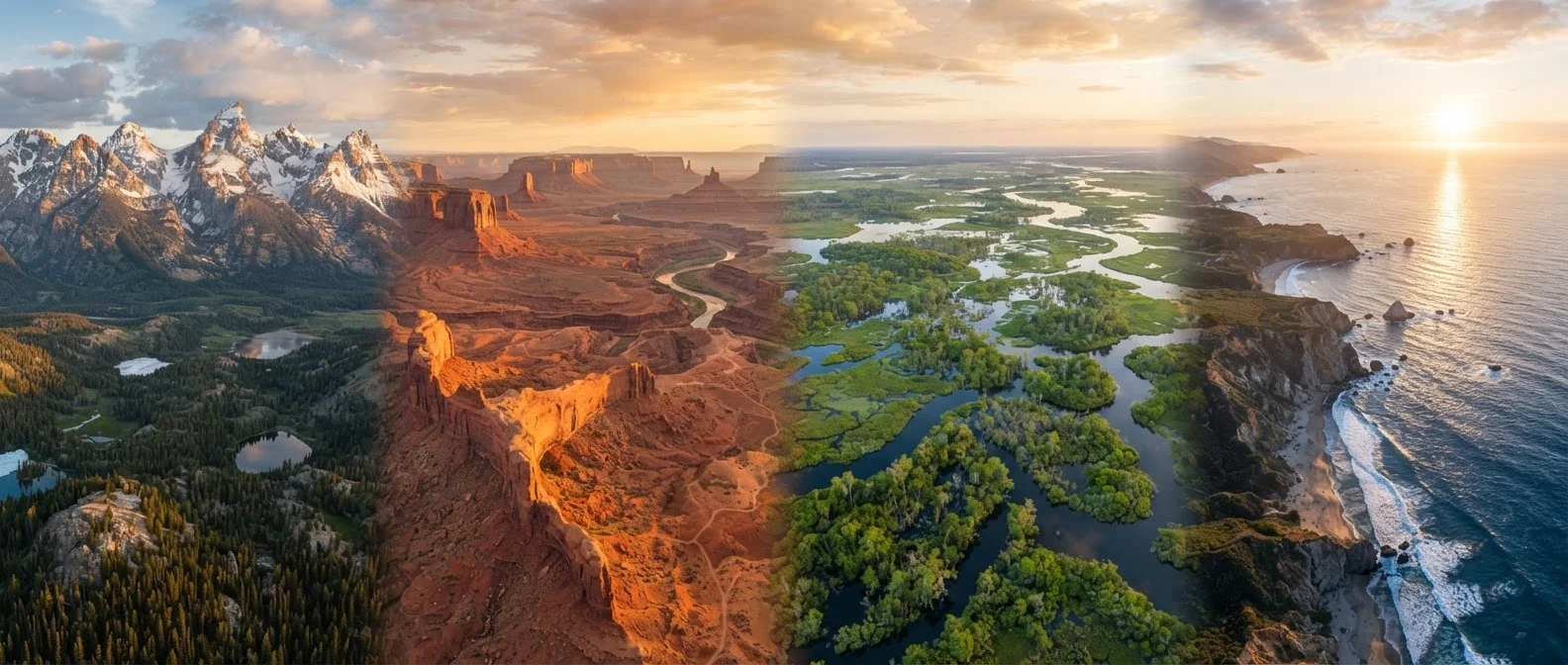
Most Americans think of national parks as a single bucket-list category — Yellowstone, the Grand Canyon, maybe Acadia. But treating all parks as interchangeable misses what makes this system so extraordinary: each geographic region offers a fundamentally different world. The geology, the wildlife, the climate, and even the cultural stories embedded in the land shift dramatically as you move across the country.
Understanding regional character before you plan helps you set realistic expectations, pack the right gear, and choose the experience that actually matches what you're looking for. A park in coastal Maine and a park in southern Utah may both charge the same entrance fee, but they'll demand completely different clothing, fitness levels, and mindsets.
For a deeper sense of how American geography shapes traveler experience, our reference guide to US regional seasons is a practical companion to this overview.
63
Designated US national parks
As of the most recent NPS designations, the US has 63 official national parks within a broader system of over 400 NPS-managed units.
325M+
Annual NPS recreation visits
The National Park Service has consistently recorded over 300 million recreation visits per year across all park units in recent years.
84M acres
Land managed by the NPS
The National Park Service manages approximately 84 million acres across the United States, spanning every major ecosystem type.
The Pacific West: Extremes at Every Turn
Stretching from Alaska and Hawaii through California and the Pacific Northwest, the Pacific West region contains some of the most extreme environments on Earth that are accessible to everyday travelers. Denali in Alaska rises over 20,000 feet. Hawaii Volcanoes National Park lets you watch lava actively reshaping the planet. Olympic National Park in Washington packs temperate rainforest, alpine meadow, and wild Pacific coastline into a single unit.
What unifies these parks is a sense of geological drama — forces still visibly at work. Visitors should expect rugged infrastructure in Alaska (many parks are fly-in only), lush humidity in Hawaii, and dense fog along the Pacific Coast. Seasonal planning is critical here more than almost anywhere else.
“National parks are the best idea we ever had. Democratic, decent, trustworthy, and ample — the one place where every American regardless of background can stand equal.”
— Wallace Stegner, American novelist and conservationist, writing on the national park idea
The Intermountain and Midwest Regions: Canyons, Geysers, and Grasslands
The Intermountain region is probably what most Americans picture when they say 'national park.' This is Grand Canyon country — red rock canyon country, geyser basin country. Parks like Zion, Bryce Canyon, Arches, and Yellowstone cluster here, offering high-drama landscapes carved by water, wind, and volcanic heat over millions of years.
The Midwest region often gets overlooked, but it earns its place. Badlands National Park in South Dakota and Cuyahoga Valley in Ohio show how profoundly different 'heartland' landscapes can be. These parks tend to be less crowded, more affordable to reach by car, and rich with Indigenous cultural history.
Cluster Your Parks by Region
When planning a multi-park trip, choosing parks within the same region dramatically reduces driving time and lets you go deeper rather than rushing between distant ecosystems. The Utah canyon country parks, for example, can be combined into a single loop that feels cohesive rather than scattered.
The Southeast and Northeast: Water, History, and Quiet Beauty
The Southeast region is defined by water and heat. Everglades National Park — America's largest subtropical wilderness — is unlike any other park in the system. It's flat, wet, and teeming with wildlife that looks almost prehistoric: alligators, roseate spoonbills, and manatees. Biscayne and Dry Tortugas extend that aquatic theme into the open ocean. The hidden waterways of the American South give further texture to how this region rewards curious travelers.
The Northeast offers a different kind of beauty — quieter, older-feeling, often wrapped in early morning fog. Acadia National Park on Maine's coast showcases rocky shorelines and granite peaks that feel ancient and intimate. The region's parks are often woven into dense cultural and historical fabric. Understanding that geography, as explored in our guide to coastal New England's geography, helps travelers get more out of every visit.
Conditions Change — Always Verify
Road closures, wildfire impacts, flooding, and seasonal facility shutdowns can affect any park at any time. Before traveling, check the official NPS website (nps.gov) and any relevant state park or forest service advisories for current conditions. Entry requirements, fees, and reservation systems also change periodically.
Wherever your regional curiosity takes you, remember that national parks exist alongside other remarkable American destinations. Our piece on why small towns often outshine big cities for travelers is a reminder that the best trip might begin just off the park's main highway.
Frequently Asked Questions
The US has 63 designated national parks, part of a broader system of over 400 NPS units that includes monuments, seashores, recreation areas, and historic sites. The distinction matters because only the 63 carry the official 'national park' title.
The Pacific West region arguably offers the most dramatic landscape diversity, spanning Alaskan tundra, Hawaiian volcanic islands, California's giant sequoia forests, and Pacific coastline. No single region contains more ecological extremes.
The Intermountain region — home to the Grand Canyon, Zion, Bryce Canyon, and Yellowstone — is often recommended for first-timers because of its concentration of iconic, well-accessible parks. Infrastructure is generally strong and the landscapes are immediately awe-inspiring.
It depends heavily on the region. Desert parks in the Southwest are most comfortable in spring and fall, while northern parks like Glacier peak in summer. See our guide on <a href="/travel-places/us-destinations/visiting-us-national-parks-in-shoulder-season">visiting national parks in shoulder season</a> for region-specific timing advice.
No. The America the Beautiful annual pass covers entrance fees at all NPS fee-charging sites for one year, making it cost-effective for travelers planning to visit multiple parks across regions. Some parks have no entry fee at all.
Most parks are technically open year-round, but seasonal road closures, extreme weather, and limited services can make some areas inaccessible in winter or monsoon season. Always verify current conditions through the official NPS website before you travel.
The content provided on our blog site traverses numerous categories, offering readers valuable and practical information. Readers can use the editorial team’s research and data to gain more insights into their topics of interest. However, they are requested not to treat the articles as conclusive. The website team cannot be held responsible for differences in data or inaccuracies found across other platforms. Please also note that the site might also miss out on various schemes and offers available that the readers may find more beneficial than the ones we cover.