

Our Verdict
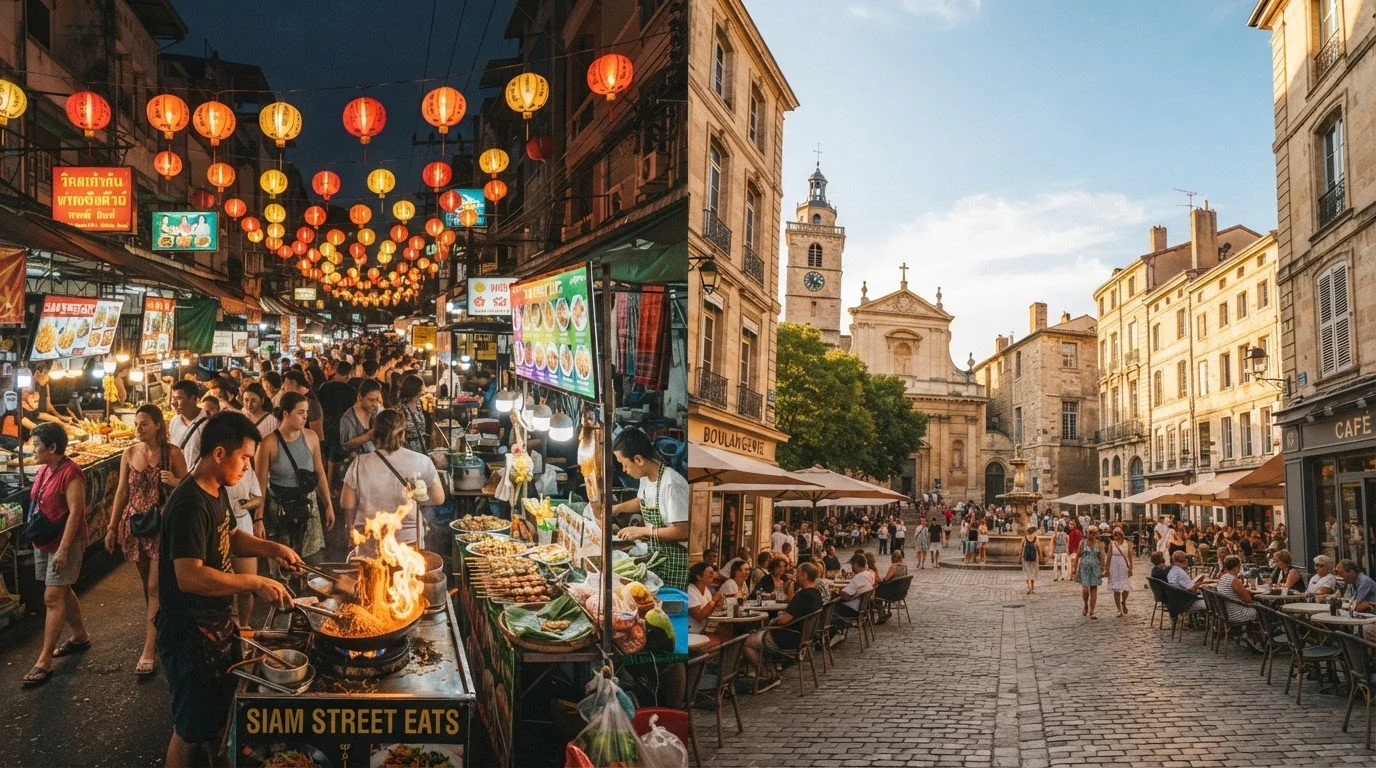
Southeast Asia wins on daily budget and raw cultural immersion, while Western Europe wins on ease of navigation and logistical predictability. Both are rewarding, deeply worthwhile destinations for American travelers — the right choice depends almost entirely on what kind of trip you want to have.
| Best for | Recommended |
|---|---|
| Budget-conscious travelers seeking maximum cultural immersion | Southeast Asia |
| First-time international travelers wanting a smoother learning curve | Western Europe |
| History and architecture enthusiasts | Western Europe |
| Adventure seekers drawn to food, nature, and off-the-beaten-path experiences | Southeast Asia |
The Core Question: What Kind of Trip Do You Actually Want?
For Americans planning their first — or fifth — major international trip, Southeast Asia and Western Europe reliably top the list. Both are genuinely extraordinary. But they offer fundamentally different experiences, and conflating them leads to mismatched expectations. Before diving into costs and logistics, start with the honest question: do you want comfort and cultural proximity, or contrast and discovery?
Western Europe feels more familiar to most Americans — shared historical roots, broadly similar urban infrastructure, widespread English, and a dining culture that isn't wildly different from back home. Southeast Asia, by contrast, delivers real culture shock in the best sense: entirely different cuisines, religious practices, urban rhythms, and ways of life. Neither is better; they're genuinely different trips. See our guide to common international travel myths for perspective on how both regions are often misunderstood.
Cost: Where Your Dollar Actually Goes Further
This is where the comparison gets interesting. Southeast Asia — particularly Thailand, Vietnam, Indonesia, and Cambodia — is dramatically cheaper on the ground. Budget travelers routinely report spending $40–$70 per day including accommodation, meals, local transport, and activities. Mid-range comfort can be had for $80–$130 per day. Western Europe, especially during peak season, runs $150–$250 per day at a moderate pace.
However, airfare can flip the equation. Transatlantic flights from major U.S. hubs to cities like London, Paris, or Lisbon are often competitively priced and frequently shorter in flight time than transpacific routes to Bangkok or Ho Chi Minh City. A 10-hour flight to Europe versus a 17–20-hour journey to Southeast Asia is a real consideration for many travelers.
| Southeast Asia | Western Europe | |
|---|---|---|
| Average daily budget (mid-range) | $60–$130/day | $150–$250/day |
| Typical flight time from U.S. East Coast | 17–22 hours | 7–10 hours |
| Visa requirements for Americans | Varies by country; e-visas common | Schengen visa-free up to 90 days |
| English language accessibility | Good in tourist hubs; limited rurally | Widespread in most tourist areas |
| Health prep required | Often yes — vaccines & prophylaxis | Minimal for most countries |
| Cultural contrast from U.S. norms | High — cuisine, religion, customs | Moderate — familiar but distinct |
| In-region transport ease | Variable; rewarding but complex | Highly reliable rail and air networks |
For trip-planning frameworks that help you budget across both regions, the Complete Framework for Planning an International Trip is a solid starting point.
Logistics, Visas, and Health Prep
Western Europe's Schengen Zone allows Americans to travel visa-free for up to 90 days across 27 countries — a major logistical advantage. Transportation is straightforward: reliable rail networks, well-signed airports, and metro systems that are easy to navigate. Getting around Europe by train vs. flying is its own strategic question worth exploring before you book.
Southeast Asia's visa landscape is patchier but manageable. Thailand offers visa-free entry for Americans for up to 60 days; Vietnam and others may require e-visas obtained in advance. In-region transport ranges from efficient (Singapore's MRT, Thailand's trains) to chaotic-but-fun (motorbike taxis, tuk-tuks, overnight buses). Health prep is a meaningful distinction: hepatitis A, typhoid, and malaria prophylaxis may be recommended for certain Southeast Asian destinations. Always consult a travel medicine clinic or your physician before departure — recommendations vary significantly by specific country and region visited.
Book a Travel Medicine Appointment Early
If you're heading to Southeast Asia, schedule a travel medicine consultation at least 6–8 weeks before departure. Some recommended vaccines require multiple doses over several weeks. Your physician or a travel clinic can advise on country-specific risks including malaria, dengue, and foodborne illness — needs vary significantly depending on your exact itinerary.
Culture, Language, and the Experience of Being a Foreigner
In Western Europe, the language barrier is real but rarely paralyzing — English is widely spoken in tourist areas across France, Germany, the Netherlands, Spain, and beyond. Cultural norms are close enough to American ones that missteps are usually minor. That said, Americans can still stand out in ways locals notice; the assumptions Americans carry abroad piece is worth a read before you go.
In Southeast Asia, the cultural gap is wider and — for many travelers — that's the whole point. Buddhist temples, wet markets, entirely different concepts of time and hospitality, and food cultures of extraordinary depth make Southeast Asia feel genuinely transformative rather than just pleasantly different. English proficiency varies; in major tourist hubs it's adequate, but rural areas can require patience, gestures, and translation apps. Most travelers report this as a feature, not a bug.
For those considering going it alone, solo international travel trade-offs for Americans covers safety, cost, and social dynamics across both styles of destination.
Which Itinerary Fits Your Travel Personality?
Think about past trips. Do you find yourself energized by navigating the unfamiliar, or do you prefer to relax into a destination without friction? Do you want to eat adventurously or occasionally want something recognizable? Are you drawn to museums, cathedrals, and wine regions — or to jungle temples, beach bungalows, and night markets?
There's no wrong answer. Western Europe rewards those who want cultural depth with an accessible wrapper. Southeast Asia rewards those who want immersion with fewer guardrails and a much lower daily price tag. Both beat staying home. You can also contrast either option against top U.S. destinations if you're weighing domestic vs. international travel altogether. For structured help choosing and planning, the trip planning hub has practical tools for both styles of journey.
The content provided on our blog site traverses numerous categories, offering readers valuable and practical information. Readers can use the editorial team’s research and data to gain more insights into their topics of interest. However, they are requested not to treat the articles as conclusive. The website team cannot be held responsible for differences in data or inaccuracies found across other platforms. Please also note that the site might also miss out on various schemes and offers available that the readers may find more beneficial than the ones we cover.