

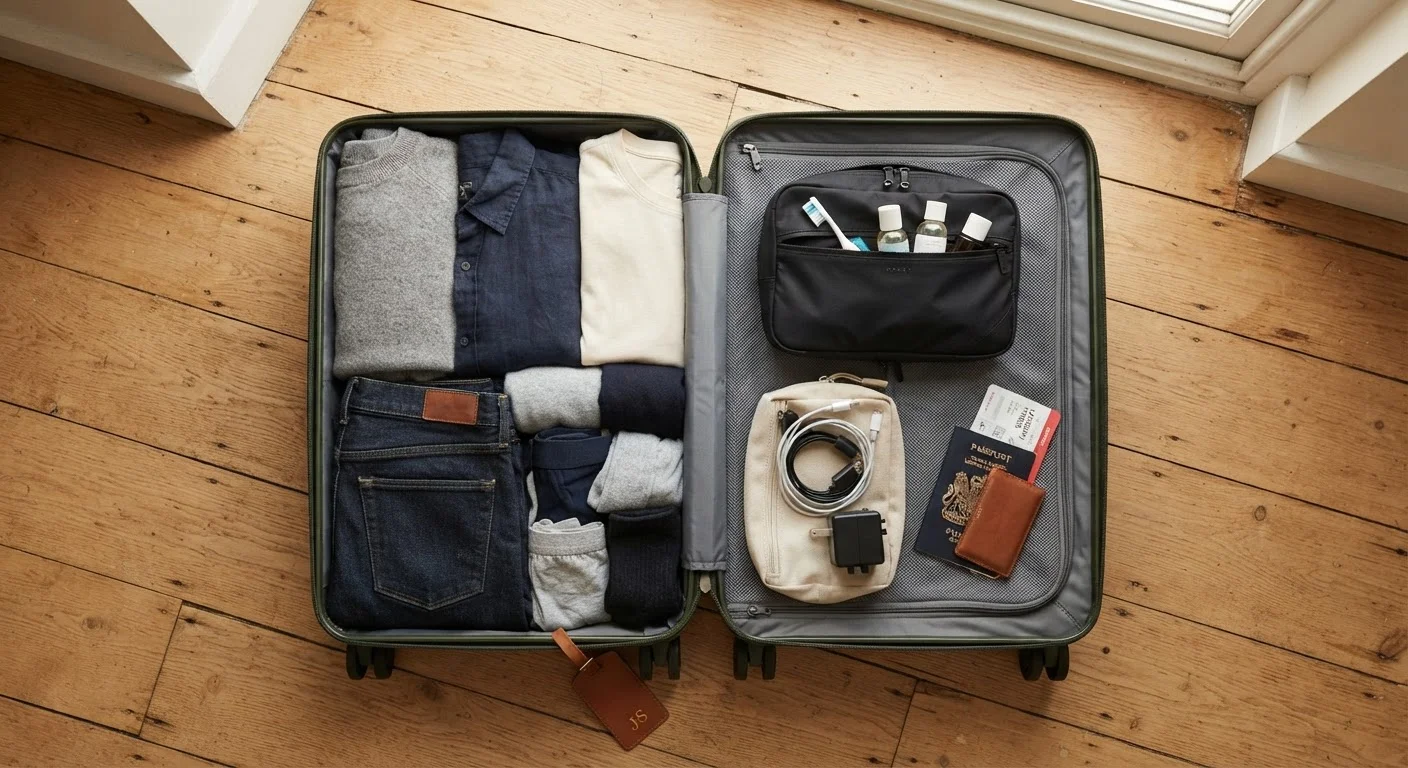
Why Long-Haul Packing Demands a Different Mindset
Packing for a weekend road trip and packing for a three-week international journey are fundamentally different puzzles. On a long-haul trip, your bag becomes your mobile home — it needs to work across climates, customs checkpoints, hotel lobbies, and cobblestone streets. The stakes are higher, the distances between fixes are greater, and every extra pound you carry will remind you of that fact somewhere around hour six of a layover.
What separates experienced international travelers from stressed-out first-timers isn't the quality of their luggage — it's the intentionality behind what's inside. They've learned, usually through hard experience, which items earn their weight and which ones get abandoned at a hostel in week two. This list distills those lessons into the categories that matter most.
For a broader look at logistics before you leave home, our pre-departure checklist for international travelers covers documents, health prep, and digital backups in detail. And if you're still deciding between carry-on and checked luggage, our guide to carry-on vs. checked luggage can help you choose the right strategy for your specific trip.
A Universal Power Adapter (Not a Converter)
Plug socket types vary dramatically across Europe, Asia, Africa, and the Americas. A universal adapter — one that physically fits multiple outlet styles — is a non-negotiable for international travel. Note the distinction: an adapter changes the plug shape, while a converter changes the voltage. Most modern electronics (laptops, phones, cameras) are dual-voltage and only need an adapter, so check your device labels before assuming you need a converter.
Experienced travelers often choose a compact multi-port adapter with built-in USB and USB-C slots, reducing the number of separate chargers needed. Keep it in your carry-on so it's accessible on the plane and during layovers.
One universal adapter with USB ports can replace half the chargers in your bag.
Document Backups — Physical and Digital
Lost or stolen passports are one of the most disruptive things that can happen abroad. Seasoned travelers carry photocopies of their passport, visa pages, travel insurance policy, and any reservation confirmations stored separately from the originals — typically in a checked bag or a hidden bag compartment.
Equally important: a secure digital backup. Scanning key documents and saving them to a password-protected cloud folder (or encrypted email to yourself) means you can access them from any internet café or hotel lobby. Our dedicated guide on organizing documents, backups, and emergency contacts walks through exactly what to copy and where to store it.
A digital backup of your passport can get you home when the physical one cannot.
Compression Packing Cubes
Packing cubes have moved from travel-nerd novelty to mainstream essential — and for good reason. They compress clothing, keep categories separated, and make repacking at each stop dramatically faster. The compression variety goes a step further, squeezing air out of soft items like sweaters and jackets to reclaim meaningful space.
A common system among long-haul travelers: one cube for tops, one for bottoms, one for underlayers and socks, and a separate waterproof pouch for anything damp (swimwear, gym clothes). This structure also speeds up customs inspections — you can unpack and repack in seconds rather than digging through a jumbled bag.
Compression packing cubes turn a chaotic bag into a system you can navigate in seconds.
Versatile Clothing Built Around Layers
The single biggest source of overpacking is clothing — specifically, planning outfits for every possible occasion rather than building a flexible capsule. Experienced international travelers gravitate toward neutral-colored, wrinkle-resistant pieces that mix and match easily. A lightweight merino wool base layer, for example, regulates temperature in both cool transit hubs and warm destinations, and resists odor well enough for multiple wears.
The rule most veteran packers follow: plan for half the outfits you think you need, and trust that laundry facilities, hand-washing, or local purchases will fill any gaps. Shoes are the heaviest offenders — limit yourself to two or three pairs maximum, worn in rotation based on activity type.
Plan half the outfits you think you need — you'll always find a way to fill the gaps.
A Carry-On Comfort Kit for the Flight Itself
Ten or fifteen hours in economy class is its own micro-adventure in endurance. The travelers who arrive feeling most human are the ones who pack a small, deliberate comfort kit in their personal item or the seat pocket in front of them. This typically includes a neck pillow (inflatable ones pack flat), a sleep mask, foam earplugs or noise-canceling earbuds, a lip balm, facial mist, and an empty reusable water bottle to fill post-security.
A change of socks and a light layer (scarf or thin hoodie) address the wildly unpredictable cabin temperature. These small items require minimal space but make an outsized difference in how rested you feel upon arrival — which matters enormously when you have a connection, a customs queue, or a train to catch immediately after landing.
A small, intentional comfort kit turns a brutal long-haul flight into something manageable.
A Portable Power Bank with High Capacity
Airports, train stations, and tourist attractions rarely offer convenient charging access when you need it most. A high-capacity portable power bank — generally 20,000 mAh or above for multi-day reliability — lets you charge a smartphone two to three times without hunting for an outlet. This matters especially during long travel days, when navigation apps, translation tools, and boarding passes are all running simultaneously.
Check airline regulations before packing: lithium-ion power banks above a certain capacity (typically 100Wh or 27,000 mAh) may be restricted or require declaration. Pack the bank in your carry-on, never your checked bag, as lithium batteries are generally required to fly in the cabin per airline and aviation safety guidelines.
A high-capacity power bank is the safety net that keeps every device alive on a travel day.
A Small First-Aid and Wellness Pouch
This isn't about packing a pharmacy — it's about covering the predictable gaps between your normal routine and what's readily available abroad. Experienced travelers typically include: adhesive bandages, blister treatment (a common long-walking-day issue), antidiarrheal tablets, pain reliever, antihistamine, any prescription medications with a copy of the prescription, and hand sanitizer.
Medications you rely on regularly should be packed in greater quantity than you expect to need, kept in original labeled containers, and split between your carry-on and checked bag if possible. For any health-specific travel preparations — vaccinations, destination-specific health precautions — consult a qualified healthcare professional well in advance of your trip, as recommendations vary by destination and individual health profile.
Pack for predictable wellness gaps, not every contingency — a focused pouch beats an overloaded kit.
Pack Once, Travel Well
The best packing list is one you've tested, adjusted, and made your own over time. Start with this framework, strip out anything you can genuinely live without, and resist the urge to add things "just in case." As many veteran travelers put it: if you can buy it at your destination for a reasonable price, leave it at home.
Test Your Bag Before You Leave
Pack everything, close the bag, and carry it for 15 minutes around your home or neighborhood. If it feels too heavy or awkward, something needs to come out — not a bigger bag. This simple test reveals what's truly manageable across a full travel day, including stairs, transit, and long terminal walks.
Overpacking is rarely a luggage problem — it's a planning problem. Our article on why overpacking happens and how to fix it digs into the psychology and practical habits that help travelers pack lighter every time. And if jet lag is a concern after those long flights, understanding how jet lag affects your body is worth a read before departure.
The content provided on our blog site traverses numerous categories, offering readers valuable and practical information. Readers can use the editorial team’s research and data to gain more insights into their topics of interest. However, they are requested not to treat the articles as conclusive. The website team cannot be held responsible for differences in data or inaccuracies found across other platforms. Please also note that the site might also miss out on various schemes and offers available that the readers may find more beneficial than the ones we cover.