

Why Your Body Clock Gets Thrown Off
Your circadian rhythm is a roughly 24-hour internal cycle that regulates sleep, wakefulness, appetite, hormone release, and body temperature. It's calibrated primarily by light — specifically, the pattern of sunlight your eyes receive throughout the day. When you board a flight from New York to Paris, your body is still operating on Eastern Time even as Paris wakes up six hours ahead of you.
The result is a biological tug-of-war. Your brain wants to sleep at 3 p.m. Paris time because, to your body, it's 9 a.m. back home. Meanwhile, local cues — bright afternoon light, busy streets, meal times — are all signaling that it's mid-afternoon. That conflict is jet lag.
The direction of travel matters significantly. When you fly east, you're shortening your perceived day. When you fly west, you're lengthening it. Human circadian rhythms are naturally slightly longer than 24 hours, which is why most people find it easier to stay up later (westward travel) than to fall asleep earlier (eastward travel). This is why a flight from Los Angeles to Tokyo hits differently than the return journey.
Jet Lag Is Not Just Tiredness
It's worth distinguishing jet lag from ordinary travel fatigue. General tiredness from a long flight — even a domestic one — is mostly about sleep deprivation and physical discomfort. True jet lag is specifically a circadian disruption caused by time-zone crossing. The two often overlap, but they have different timelines and respond differently to strategies. Understanding which you're dealing with helps you respond more effectively.
The Symptoms — and What's Actually Causing Them
Jet lag produces a cluster of overlapping symptoms that go beyond simple tiredness. Common experiences include difficulty falling or staying asleep at night, excessive daytime sleepiness, difficulty concentrating, irritability, mild digestive disruption, and a general sense of feeling "off." These symptoms stem from several biological processes happening simultaneously.
Sleep disruption is the most recognized symptom, but it's worth understanding that your immune function, digestion, and even cognitive sharpness are all governed by circadian signals. When those signals are scrambled, the effects ripple outward. Research on shift workers — who experience ongoing circadian misalignment — has helped scientists understand why even a few days of disruption can feel so disorienting.
~1 day
Adjustment time per time zone crossed
A widely cited rule of thumb in sleep medicine holds that the body adjusts to roughly one time zone per day, though individual variation is significant.
6–8 hrs
Average time difference on US-to-Europe flights
Most transatlantic routes from US East Coast cities to European destinations span a six-to-eight-hour time shift — enough to produce moderate-to-significant jet lag symptoms.
~80%
Travelers reporting jet lag on long-haul flights
Surveys of international air passengers consistently find that the large majority report meaningful sleep or alertness disruption on flights crossing five or more time zones.
Long flights also compound the problem through cabin conditions: low humidity can cause dehydration, extended sitting affects circulation, and alcohol — which many travelers use to sleep — actually fragments sleep quality. Arriving already sleep-deprived and dehydrated makes adaptation at your destination harder.
Evidence-Based Strategies Travelers Use to Adjust
There's no single cure for jet lag, but a set of general strategies is well-supported by sleep research and widely used by frequent international travelers.
Light Exposure
Light is the most powerful external signal for resetting the circadian clock. Getting bright natural light at the right times can accelerate adjustment. For eastward travelers, morning light at the destination helps advance the clock. For westward travelers, evening light helps delay it. Conversely, avoiding bright light at the wrong times — like wearing sunglasses on a morning arrival after a westward flight — can also help.
Strategic Sleep Timing
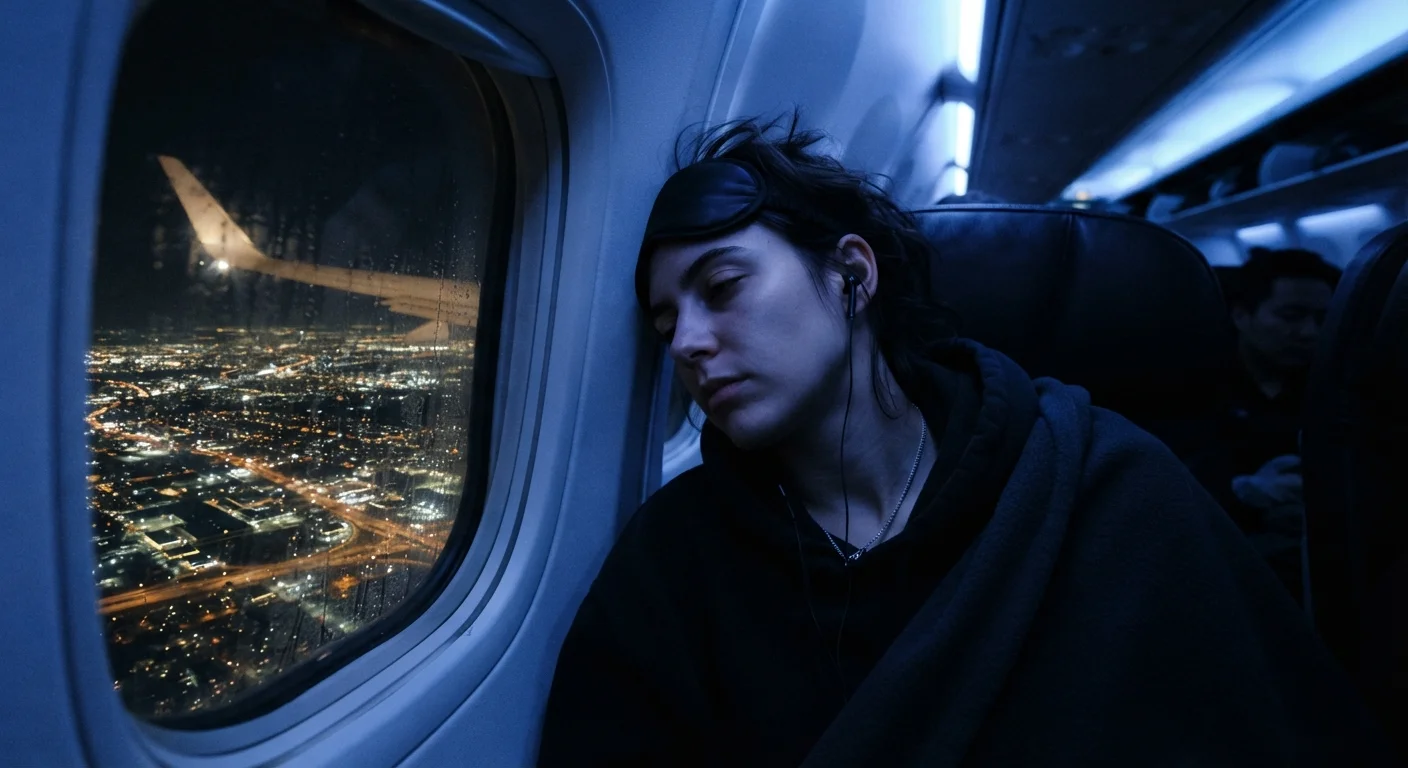
On the plane, try to sleep when it's nighttime at your destination rather than simply when you're tired. This primes your body to begin adjusting mid-flight. Many seasoned travelers reference guides like smart packing for international trips that include sleep aids like eye masks and earplugs as essentials — small tools that make a real difference.
Hydration and Meal Timing
Staying well-hydrated and limiting alcohol and caffeine during the flight reduces the physiological burden on arrival. Some travelers also shift meal times to match the destination's schedule before departure. Eating at the local meal times after arrival reinforces the new rhythm.
Arrive and Act Like a Local Immediately
One of the most practical tips frequent international travelers swear by: the moment you land, set your watch to local time and behave accordingly. Eat when locals eat, stay awake until a reasonable local bedtime, and get outside in natural daylight. Resisting the urge to nap through the afternoon — however tempting — is often the fastest route to full adjustment.
Gradual Pre-Travel Adjustment
Shifting your sleep schedule by 30–60 minutes in the direction of your destination for a few days before a long trip can shorten adjustment time. This is especially useful for important meetings or events in the first days after arrival. If you're building healthier baseline sleep habits before travel, the principles in a solid evening routine can carry over usefully on the road.
What to Keep in Mind for Specific Trips
Not all jet lag experiences are equal. A traveler crossing five time zones for a two-day business trip faces a different challenge than someone spending three weeks abroad. For short trips, some travelers choose not to fully adjust and instead manage symptoms by staying close to home-time schedules. For longer stays, full adaptation is usually the better approach to comfort and productivity.
Age can also affect recovery — older adults often find circadian adjustment takes longer, and pre-existing sleep issues can amplify symptoms. Anyone with significant sleep disorders or chronic health conditions should discuss long-haul travel with a healthcare provider before the trip. This is especially relevant if you're considering any supplements or sleep aids; consult a professional rather than relying on general guidance.
For first-time international travelers, jet lag is one of several adjustment factors. Our broader guide on international travel for first-timers covers the full arc of preparation, from customs to cultural expectations, so you can land abroad feeling informed rather than overwhelmed.
This article is for informational and educational purposes only and is not medical advice. For personal health concerns, including sleep disorders or travel-related health decisions, please consult a qualified healthcare professional.
Frequently Asked Questions
Most people start noticing jet lag symptoms after crossing three or more time zones. Fewer than three time zones usually causes only mild, short-lived tiredness that resolves quickly without intervention.
Eastward travel is generally harder because it requires advancing your internal clock, which is biologically more difficult than delaying it. Flying from the US to Europe, for example, typically produces stronger symptoms than flying the reverse route.
Some research suggests low-dose melatonin taken at the destination's target bedtime may help advance the body clock for eastward travel. However, dosage, timing, and suitability vary by individual. Always consult a healthcare provider before using any supplement, including melatonin.
A general rule of thumb is one day of adjustment per time zone crossed, though individual recovery varies widely based on age, health, sleep habits, and flight direction. Some travelers feel normal within a few days; others take longer.
Complete prevention isn't reliably possible, but strategic light exposure, hydration, sleep timing adjustments, and gradual schedule shifts before departure can meaningfully reduce severity and shorten recovery time.
It depends on your direction of travel. If flying eastward and arriving in the morning, sleeping on the plane can help you stay awake through the day. If flying westward, sleeping before arrival may not be necessary. Timing your in-flight sleep to match destination nighttime is the key principle.
The content provided on our blog site traverses numerous categories, offering readers valuable and practical information. Readers can use the editorial team’s research and data to gain more insights into their topics of interest. However, they are requested not to treat the articles as conclusive. The website team cannot be held responsible for differences in data or inaccuracies found across other platforms. Please also note that the site might also miss out on various schemes and offers available that the readers may find more beneficial than the ones we cover.