

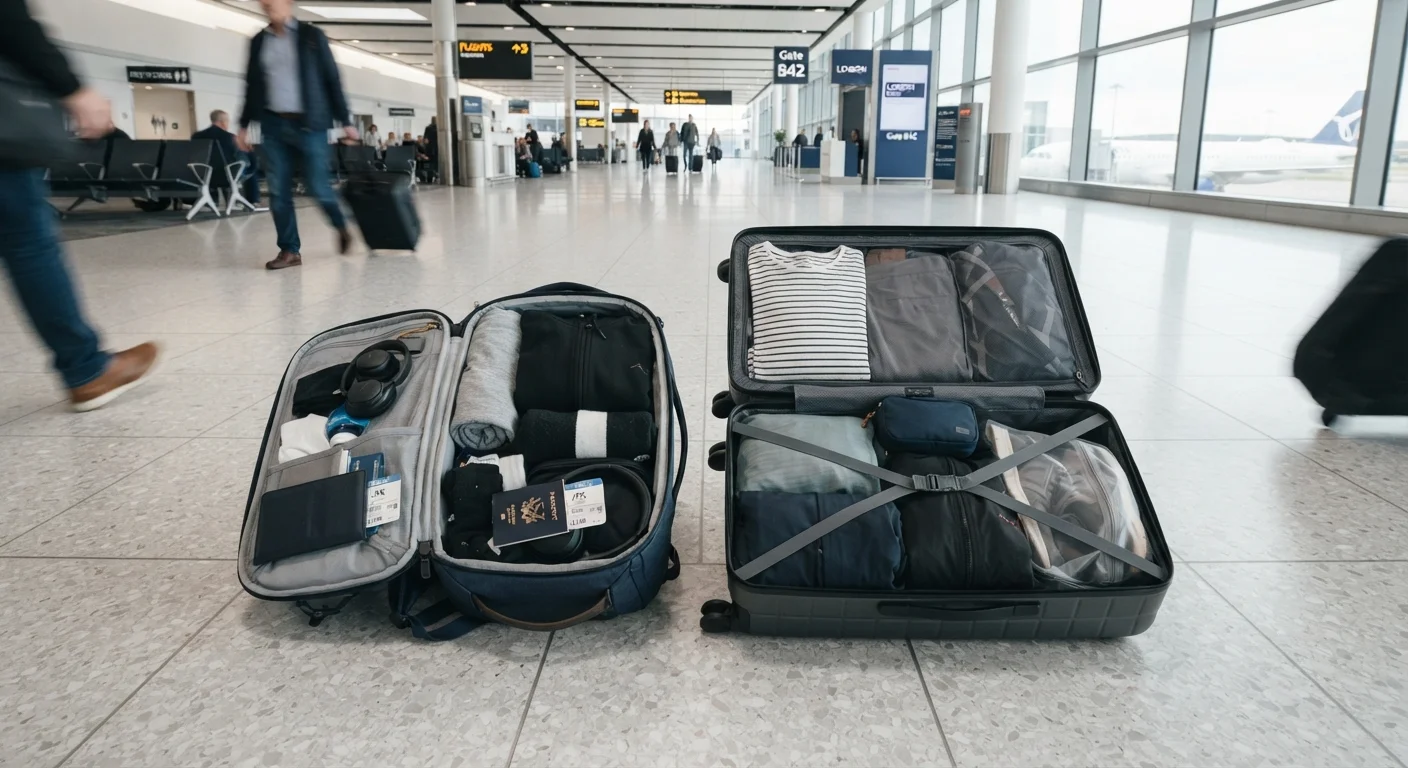
Option A
Carry-On Only
The nimble, cost-conscious traveler's best friend.
Best for: Short trips, frequent flyers, and anyone who values speed and flexibility over a full wardrobe.
Option B
Checked Luggage
The roomy, worry-free option for longer or more complex journeys.
Best for: Extended trips, family travel, destination weddings, or any journey requiring specialized gear.
The Real Cost Difference Between Carry-On and Checked
Money is often the first thing travelers think about when deciding how to pack — and rightfully so. Most major U.S. airlines charge between $30 and $40 for a first checked bag on domestic routes, with fees climbing for additional bags or overweight items. On a round trip, that adds up fast. Ultra-low-cost carriers go further, charging for carry-ons that don't fit under the seat in front of you — so always read the fine print before assuming a carry-on is free.
That said, cost isn't the whole picture. Some airlines include checked bags for elite frequent flyers, certain credit cardholders, or passengers on premium fare classes. If you've already paid for a checked bag through your fare or card benefits, the calculus shifts considerably. Before your next trip, it's worth reviewing what your ticket actually includes.
| Criterion | Carry-On Only | Checked Luggage |
|---|---|---|
| Typical added cost | Often free (varies by airline) | $30–$40+ per bag, per flight |
| Packing capacity | Limited — suits 1–5 day trips | Generous — suits any trip length |
| Airport time | Faster — no bag drop or claim | Slower — adds 20–45+ minutes |
| Risk of loss or delay | None — bag stays with you | Small but real risk |
| Liquid/item restrictions | TSA 3-1-1 rule applies | Most liquids and items allowed |
| Best for families | Challenging with young kids | Much more manageable |
| Sporting/specialty gear | Usually not possible | Accommodated (fees may apply) |
Speed, Flexibility, and the Airport Experience
Here's where carry-on travel shines brightest. Skipping the bag drop line, breezing through a security checkpoint with a well-packed bag, and walking straight out of the arrival terminal can shave 45 minutes or more off your airport experience each way. For short trips or tight connections, that time savings is genuinely meaningful.
Checked luggage, by contrast, adds touchpoints — and with them, a small but real risk of delays or misrouted bags. U.S. airlines mishandled approximately 0.5 to 0.6 bags per 100 passengers in recent reporting periods, according to Department of Transportation data. That figure is low, but it's not zero. If your checked bag contains anything essential for Day 1 of your trip, pack a backup in your personal item just in case.
~$35
Average first checked bag fee (domestic, one way)
Most major U.S. carriers charge between $30 and $40 for the first checked bag on domestic routes, based on published airline fee schedules.
0.5–0.6
Mishandled bags per 100 passengers
U.S. Department of Transportation Air Travel Consumer Reports track airline baggage handling performance across major domestic carriers.
45+ min
Time saved per trip with carry-on only
Skipping bag drop and baggage claim can save significant time at both ends of a flight, particularly on busy travel days.
Planning how your packing strategy fits into your broader travel approach? Our guide on flexible vs. structured itineraries explores how different travel styles affect the whole trip experience.
When Carry-On Only Simply Won't Work
The carry-on lifestyle has real limitations that no amount of clever packing can fully overcome. Liquids are capped at 3.4 ounces per container in a single quart-sized bag under TSA rules — a real inconvenience for travelers who rely on specific toiletries or medications in larger quantities. Sharp items like scissors over 4 inches, full-size tools, and anything that resembles a sporting implement are either prohibited or impractical in the cabin.
Destination also matters. A beach vacation requiring snorkeling gear, a ski trip with boots and helmets, or a formal wedding abroad with multiple outfit changes are all scenarios where a checked bag stops being optional and starts being sanity-saving. Likewise, travelers heading to destinations where laundry facilities are scarce or expensive may simply need more clothes than a carry-on can hold. For those planning international adventures, our long-haul packing guide walks through what seasoned travelers actually bring on extended trips abroad.
Airline Size Rules Vary More Than You Think
Not all carry-on allowances are created equal. Budget carriers often have stricter size and weight limits than major network airlines, and international routes may apply different rules than domestic ones. Always check your specific airline's current carry-on policy when booking — ideally again a day before you fly, as policies can change. Bringing an oversized bag to the gate risks a forced check-in fee, which is often steeper than the standard checked bag price.
Practical Tips for Whichever Strategy You Choose
If you're going carry-on only, invest time in a proper packing list. Rolling clothes instead of folding, using packing cubes, and choosing versatile, mix-and-match pieces are tried-and-true techniques. Wear your bulkiest items — heavy shoes, a jacket — on travel days to free up bag space. Always verify your airline's specific carry-on dimensions before you pack; a bag that fits on one carrier might be gate-checked on another.
If you're checking a bag, take a photo of its contents before closing it. Keep your travel documents, medications, a change of clothes, and any valuables in your carry-on, never in checked luggage. Consider a luggage tag with your contact information both inside and outside the bag.
Traveling with family adds another layer of complexity — see our advice on planning family trips that work for everyone for strategies that keep the whole group moving smoothly. And whatever your approach, a solid pre-departure routine helps — our pre-trip checklist covers everything to handle before you leave home.
The content provided on our blog site traverses numerous categories, offering readers valuable and practical information. Readers can use the editorial team’s research and data to gain more insights into their topics of interest. However, they are requested not to treat the articles as conclusive. The website team cannot be held responsible for differences in data or inaccuracies found across other platforms. Please also note that the site might also miss out on various schemes and offers available that the readers may find more beneficial than the ones we cover.