

Summary
22 items · 30–60 minutes to assemble
Why Every Pet Owner Needs a First-Aid Kit
Accidents rarely happen at convenient times. A dog can slice a paw on broken glass during an evening walk, or a cat may ingest something questionable on a weekend afternoon when your regular vet is closed. Having a dedicated pet first-aid kit in your home means you can take calm, informed action in those first critical minutes — reducing panic and potentially reducing harm.
This checklist is built around one central idea: first aid buys time. It helps you manage a situation safely until you can reach a veterinarian, not replace the care they provide. If you're new to pet ownership, it pairs well with our guide to your new pet's first week at home, which covers the early groundwork for keeping a pet healthy and safe.
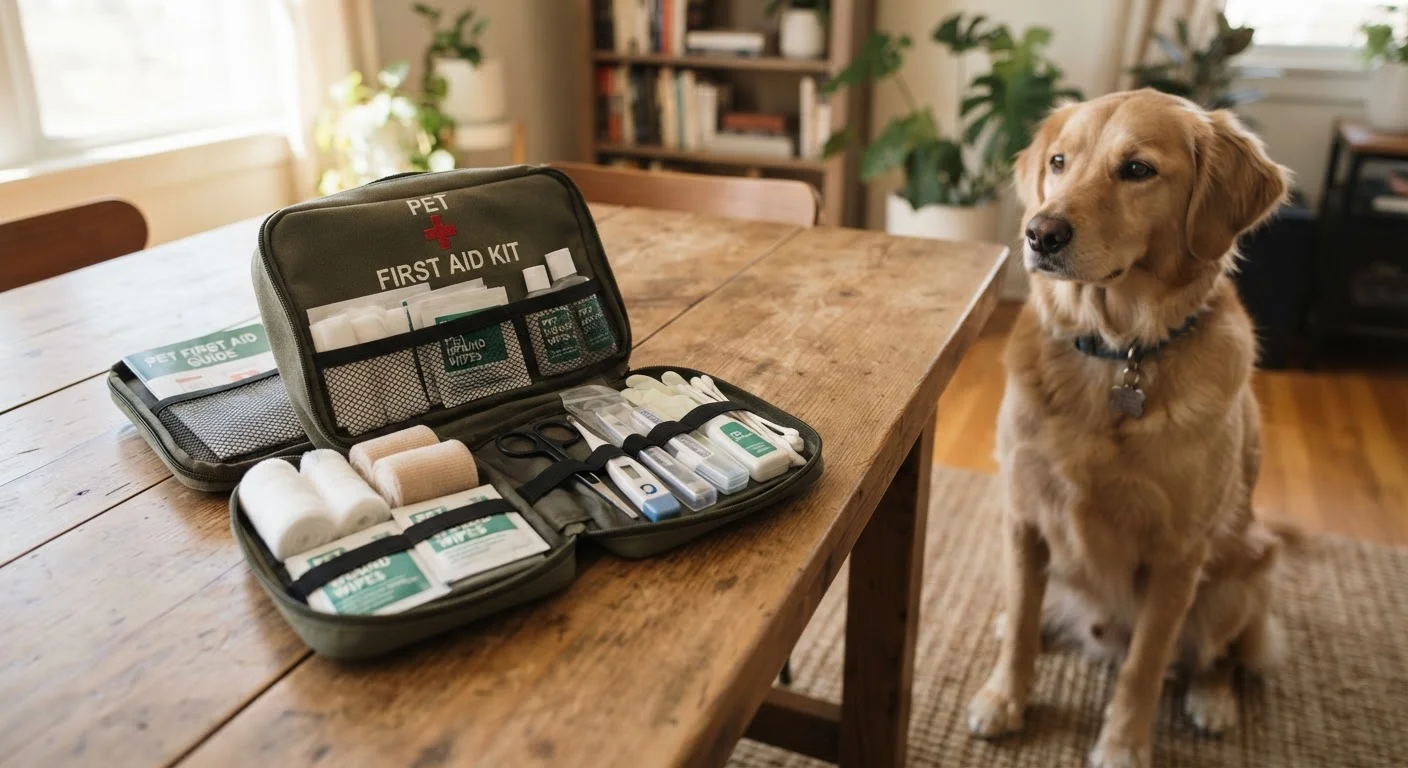
Use the checklist below to build or audit your kit. The supplies are grouped by function so you can work through each category systematically.
Rectal Thermometer
Measures your pet's core body temperature to detect fever or hypothermia before a vet visit.
Self-Adhesive Bandage Wrap
Secures gauze pads over wounds without sticking to fur or requiring tape.
Sterile Saline Solution
Safely flushes dirt and debris from minor cuts, scrapes, and eye irritation.
Soft Muzzle
Prevents biting during examination or wound care without harming a distressed animal.
Styptic Powder
Stops minor bleeding from a clipped nail quickly; consult your vet before use.
Penlight or Small Flashlight
Illuminates the mouth, ears, and eyes for a quick visual assessment in dim conditions.
What to Include — and What to Leave Out
The most common mistake pet owners make when assembling a kit is including human medications. Ibuprofen, acetaminophen, and aspirin are all toxic to cats and potentially dangerous for dogs. Stick to supplies your vet has approved, and when in doubt, call before you add anything.
Human Medications Can Be Fatal to Pets
Never administer human pain relievers, antihistamines, or other medications without explicit veterinary guidance. Common drugs like ibuprofen and acetaminophen are toxic to cats and can seriously harm dogs even in small doses. When in doubt, call your vet or the ASPCA Animal Poison Control Center before giving your pet anything.
On the other hand, many wound care supplies designed for humans work perfectly well on pets — sterile gauze, saline solution, and self-adhesive bandage wrap are all safe and effective. The key is knowing which items cross over and which do not.
The checklist groups below walk through every category, from documents and wound care to restraint tools and kit maintenance. Review your home health check routine alongside this list to stay confident about monitoring your pet's baseline health between vet visits.
Essential Documents
Wound Care Supplies
Monitoring Tools
Restraint and Safety Items
Medications and Treatments
Kit Maintenance
Storing, Maintaining, and Using Your Kit
A kit that nobody can find in an emergency is no kit at all. Choose a single, consistent location — a labeled shelf in a hall closet, a cabinet in the laundry room, or a dedicated bag near the pet's primary living space — and make sure every person in the household knows where it is.
First Aid Is Not a Substitute for Veterinary Care
Everything in this kit is designed to stabilize your pet until professional help is available — not to replace it. Even if a wound looks minor or your pet seems to recover quickly, a vet evaluation is often still warranted. Conditions like internal injuries, shock, or toxin ingestion can appear mild at first and worsen rapidly.
Do Not Induce Vomiting Without Vet Direction
Inducing vomiting is only appropriate in certain poisoning situations and can cause serious harm if done incorrectly or when a caustic substance is involved. Always contact your veterinarian or the ASPCA Animal Poison Control Center before attempting this at home.
Inspect supplies every six months and replace anything expired, opened, or depleted. After any actual use, restock immediately rather than waiting for the next scheduled check. A good time to pair this with other pet health tasks is when you schedule your pet's annual wellness visit — see our tips for preparing your pet for a vet visit to make those appointments as smooth as possible.
Finally, consider taking a basic pet first-aid course. Many humane societies and veterinary organizations offer in-person or online training that helps owners recognize signs of distress, perform rescue breathing, and respond to choking — skills no kit can substitute for on its own.
This article is for general informational purposes only and does not constitute veterinary advice. Always consult a licensed veterinarian for guidance specific to your pet's health needs.
The content provided on our blog site traverses numerous categories, offering readers valuable and practical information. Readers can use the editorial team’s research and data to gain more insights into their topics of interest. However, they are requested not to treat the articles as conclusive. The website team cannot be held responsible for differences in data or inaccuracies found across other platforms. Please also note that the site might also miss out on various schemes and offers available that the readers may find more beneficial than the ones we cover.