

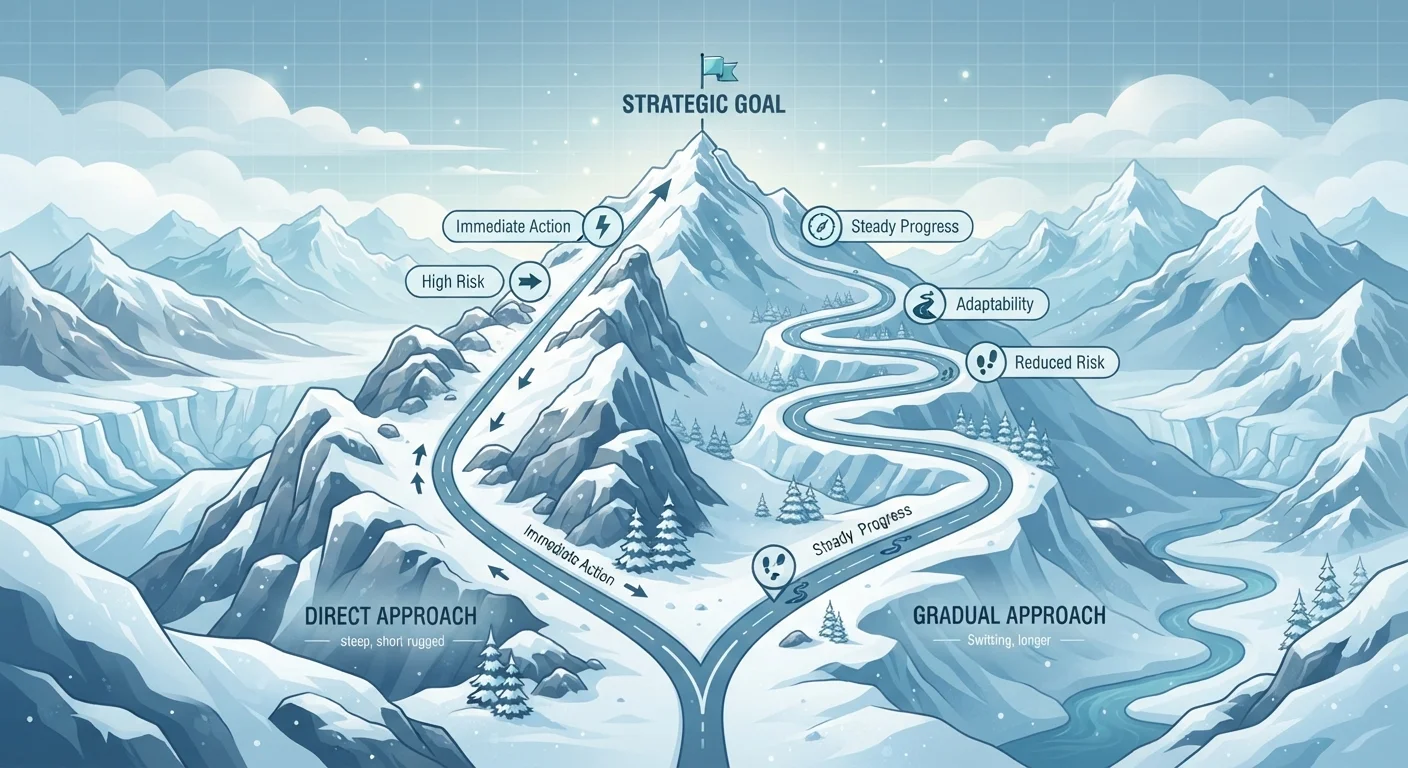
Option A
Debt Avalanche
The mathematically optimal path to debt freedom.
Best for: People who are motivated by minimizing total interest paid and can stay disciplined without quick wins.
Option B
Debt Snowball
The psychologically rewarding route to becoming debt-free.
Best for: People who need early momentum and visible progress to stay committed to a repayment plan.
How Each Method Works
Both the debt avalanche and debt snowball are structured repayment strategies designed to help you eliminate multiple debts systematically. The mechanics share a common foundation: you make minimum payments on every debt each month, then direct any extra money toward one specific target debt. What separates the two approaches is which debt gets that extra attention.
With the debt avalanche, you rank your debts by interest rate - highest to lowest. Your extra funds attack the most expensive debt first. Once that balance reaches zero, the money you were putting toward it rolls into the next highest-rate debt, and so on. Because high-interest debts cost the most over time, eliminating them first reduces the total interest you'll pay across the life of your repayment plan.
With the debt snowball, you rank debts by balance - smallest to largest, regardless of interest rate. Extra funds go toward wiping out the smallest balance first. After that account is paid off, the freed-up payment amount combines with existing minimums to accelerate progress on the next smallest debt - the "snowball" rolling and growing as it goes.
Understanding these differences is a useful starting point before building a realistic debt repayment plan that maps out your specific accounts and timeline.
| Criterion | Debt Avalanche | Debt Snowball |
|---|---|---|
| Repayment order | Highest interest rate first | Smallest balance first |
| Total interest paid | Lower (mathematically optimal) | Potentially higher |
| Time to first payoff | Longer if high-rate debt is large | Faster - small balances clear quickly |
| Motivational structure | Relies on long-term discipline | Built-in early wins boost momentum |
| Best debt profile | Wide spread of interest rates | Many accounts with varied balances |
| Complexity | Requires tracking rate comparisons | Simple ranking by balance size |
The Math vs. The Mind: Where They Differ Most
On paper, the avalanche method wins every time. Because interest accumulates daily on most consumer debts - credit cards, personal loans, and similar accounts - reducing high-rate balances quickly means less total interest accumulates. Depending on your debt mix, the savings can range from modest to substantial.
However, personal finance research consistently shows that behavior matters as much as math. Studies on debt repayment behavior have found that many people are more likely to stay committed to a plan when they experience tangible, early progress. The snowball method is engineered for exactly that. Paying off a $400 medical bill or a $600 store card provides a concrete sense of accomplishment that a partially reduced $8,000 credit card balance simply doesn't.
77%
Americans carrying some form of debt
According to Pew Research Center data, roughly 77% of American households carry at least one type of debt, making repayment strategy widely relevant.
20%+
Average credit card APR in recent years
The Federal Reserve has reported average credit card interest rates exceeding 20% APR, making high-rate debt particularly costly to carry long-term.
It's also worth considering how your debts are structured. If you carry a mix of high-interest credit card debt and lower-rate installment loans, the avalanche offers the clearest advantage. If your interest rates are clustered close together, the difference in total cost between the two methods may be relatively small - and the snowball's motivational edge could tip the scales in its favor. You can read more about how hidden costs inside your debt - including compounding and fees - affect the full picture.
Hybrid Approaches Are Possible
Some people use a hybrid strategy - starting with the snowball to eliminate one or two small balances, then switching to the avalanche once they feel confident. This isn't a formal method, but it reflects the reality that psychological needs and financial goals can both be honored. The most effective strategy is ultimately the one you'll stick with consistently.
Putting Either Strategy Into Practice
Whichever method you choose, the execution steps are similar. Start by listing all your debts with their current balances, interest rates, and minimum payments. Then determine how much extra money you can consistently direct toward debt each month - even a modest amount makes a measurable difference over time. If you haven't yet reviewed budgeting basics, that's a practical first step to identifying where extra funds might come from.
One common tension is deciding whether to pay down debt aggressively or simultaneously build an emergency fund. This is a genuine dilemma with no universal answer - saving while in debt explores the trade-offs in detail. As a general principle, most financial educators suggest keeping at least a small cash buffer (often cited as $500-$1,000) before directing every extra dollar toward debt, to avoid falling back into debt when an unexpected expense arises.
If your income drops or a financial hardship makes your current plan unworkable, the strategy may need to adapt. Resources on handling debt during a financial hardship can help you understand options like deferment or hardship programs. Not all debt is equally urgent - understanding good debt vs. bad debt can also help you prioritize which balances deserve the most urgency.
This article is for general informational and educational purposes only and does not constitute personalized financial or legal advice. Consult a qualified financial professional for guidance tailored to your specific situation.
The content provided on our blog site traverses numerous categories, offering readers valuable and practical information. Readers can use the editorial team’s research and data to gain more insights into their topics of interest. However, they are requested not to treat the articles as conclusive. The website team cannot be held responsible for differences in data or inaccuracies found across other platforms. Please also note that the site might also miss out on various schemes and offers available that the readers may find more beneficial than the ones we cover.