

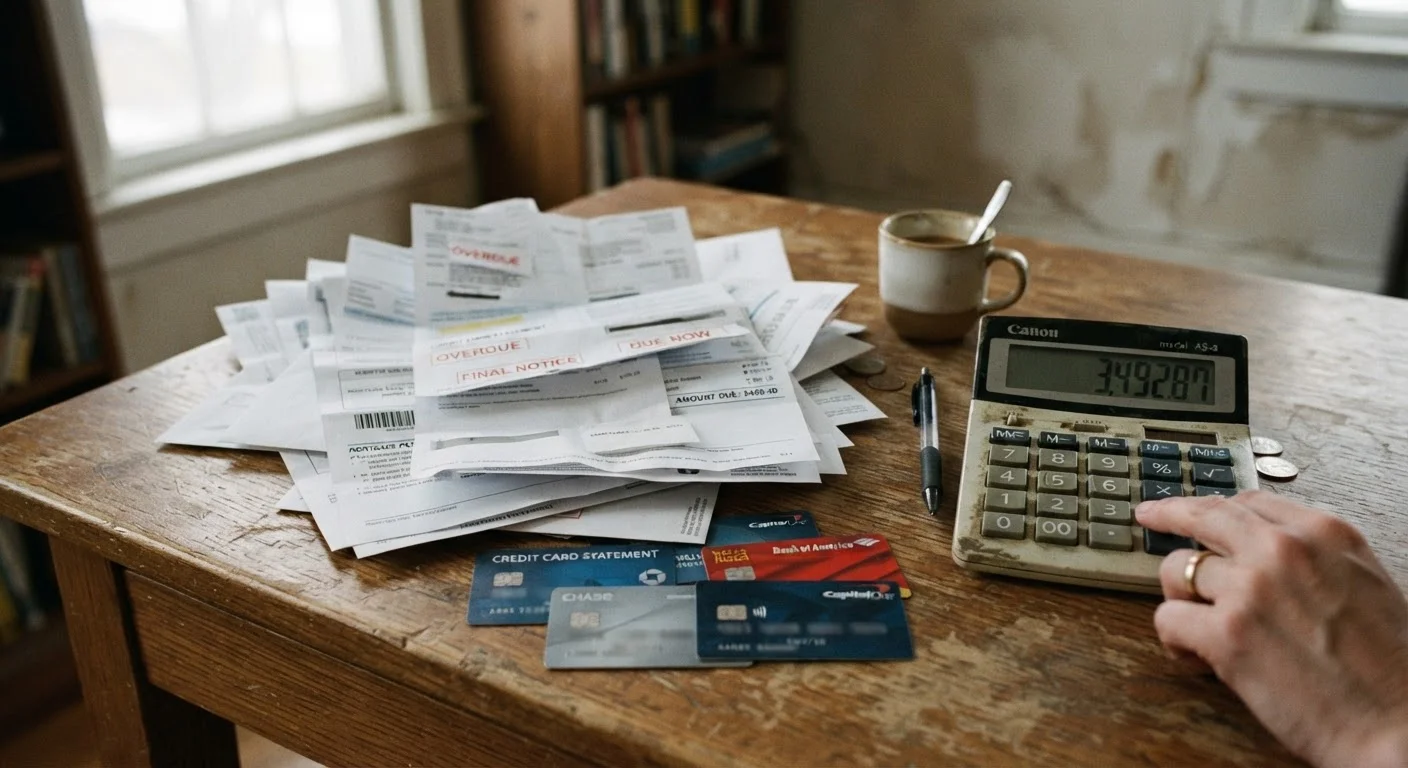
What You See Isn't What You Owe
Most people evaluate debt by its interest rate. A 22% APR on a credit card feels like one number, but the actual cost of carrying that debt — measured in dollars paid, financial flexibility lost, and stress accumulated — is a much larger figure. Understanding the full picture matters not only for managing debt strategically, but also for making progress toward goals like building an emergency fund.
The costs listed below aren't hypothetical. They're embedded in the ordinary mechanics of how debt is structured and how lenders profit. Recognizing each one puts you in a stronger position to prioritize repayment, avoid traps, and protect your long-term financial health. For a broader look at how different types of debt compare in their real-world impact, see good debt vs. bad debt.
Fees That Compound on Top of Interest
Annual fees, late payment penalties, over-limit charges, and balance transfer fees are all costs that don't show up in the headline APR but directly increase what you owe. A single missed payment can trigger a late fee of $25–$40 and, on some accounts, push your interest rate into penalty territory — often well above 29%. These fees don't just cost money upfront; when they're added to a balance you're paying interest on, they compound over time.
Reviewing your cardholder agreement or loan terms carefully reveals these fee structures before they become surprises. Understanding them is also key to comparing debt accounts accurately.
Fees added to an existing balance don't just cost once — they compound.
The Minimum Payment Trap
Credit card issuers typically set minimum payments at around 1–2% of the outstanding balance, or a small flat dollar amount. This is designed to keep accounts current while maximizing the interest you pay over time. Carrying a $5,000 balance at 22% APR and paying only the minimum each month can result in repayment timelines exceeding a decade — and total interest paid that rivals the original principal.
Common myths about paying off debt covers why minimum payments are widely misunderstood as a safe long-term strategy. They're not — they're a mechanism for extending debt and maximizing lender profit.
Minimum payments are designed to extend debt, not eliminate it.
Opportunity Cost: Wealth You Didn't Build
Every dollar directed toward interest payments is a dollar that isn't being invested, saved in an emergency fund, or put toward retirement. This is called opportunity cost — the value of the next-best alternative you forgo. If $300 per month goes toward high-interest debt service, that's $300 not benefiting from compound growth in an investment or savings account.
Over a 10-year period, the difference between investing that $300 monthly versus paying it as interest can represent a substantial wealth gap. Compound interest works powerfully in your favor when you're saving — and powerfully against you when you're in debt.
Interest paid to lenders is wealth that will never compound in your favor.
Credit Score Damage and Its Downstream Costs
High debt utilization — the ratio of credit used to credit available — is one of the largest factors in credit score calculations. Carrying balances close to your credit limits can meaningfully reduce your score, which in turn affects the interest rates you're offered on future loans, insurance premiums in some states, and even certain rental or job applications.
A lower credit score can mean paying a higher mortgage rate, which over a 30-year loan represents tens of thousands of dollars in additional cost. Tracking your debt-to-income ratio alongside your utilization gives a fuller picture of how lenders assess your financial profile.
High utilization can raise the cost of every future loan you take.
The Psychological and Behavioral Tax
Research in behavioral economics has consistently found that financial stress impairs cognitive function and decision-making — a phenomenon sometimes described as a scarcity mindset. When a significant portion of your income is committed to debt service, you may make shorter-term, higher-cost financial decisions simply because bandwidth for long-term planning is reduced.
This isn't a character flaw; it's a documented effect of financial strain. The psychological cost of debt also includes anxiety, reduced sleep quality, and relationship stress — all of which have indirect financial consequences. If debt has become unmanageable due to a change in income or circumstances, understanding your options is critical; handling debt during a financial hardship outlines general approaches including hardship programs and deferment options.
Financial stress reduces the mental bandwidth needed for smart long-term decisions.
Foregone Emergency Fund Protection
One of the most concrete hidden costs of carrying high debt is the inability to build adequate emergency savings. Without a buffer — financial educators commonly reference three to six months of essential expenses — an unexpected cost like a car repair or medical bill often means adding more debt. This creates a cycle: emergencies prevent debt repayment, and debt prevents emergency savings from growing.
Choosing a repayment method — whether the avalanche or snowball approach — while simultaneously directing even a small, consistent amount toward a savings buffer can help break this cycle over time. A modest emergency fund reduces the probability of new debt accumulation during the repayment process.
Without an emergency fund, the next unexpected expense often means new debt.
Getting a Clearer Picture of What Debt Costs You
Taken individually, any one of these costs may feel manageable. Taken together — especially across multiple debt accounts — they can quietly drain thousands of dollars per year that might otherwise go toward savings, retirement contributions, or an emergency fund. The math rarely favors carrying high-interest debt for longer than necessary.
Start Small With Emergency Savings
Even while repaying debt, financial educators generally recommend building a small emergency cushion — sometimes as little as $500 to $1,000 — before accelerating debt payoff. This reduces the likelihood that a single unexpected expense derails your repayment plan entirely. Once high-interest debt is paid down, redirect those payments toward growing the fund to a fuller three-to-six-month target.
If you're weighing whether to prioritize debt payoff or savings simultaneously, the answer depends on interest rates, your emergency buffer, and the specific structure of your debt. Saving while in debt breaks down the trade-offs in detail. And if you're ready to map out a concrete repayment path, a realistic debt repayment plan can help you structure your approach around your actual income and expenses.
This article is for general informational and educational purposes only and does not constitute personalized financial, tax, or legal advice. Consult a qualified financial professional for guidance specific to your situation.
The content provided on our blog site traverses numerous categories, offering readers valuable and practical information. Readers can use the editorial team’s research and data to gain more insights into their topics of interest. However, they are requested not to treat the articles as conclusive. The website team cannot be held responsible for differences in data or inaccuracies found across other platforms. Please also note that the site might also miss out on various schemes and offers available that the readers may find more beneficial than the ones we cover.