

Why Tracking Matters Before the Budget Does
Most budgeting advice skips straight to setting limits - but limits set without data are little more than guesswork. Spending tracking is the diagnostic step that shows you where your money actually goes, not where you think it goes. Many people discover a meaningful gap between those two things.
The goal isn't perfection or surveillance of every dollar. It's pattern recognition. Once you can see consistent habits - the daily lunch out, the streaming services you forgot you subscribed to, the irregular car costs that feel random but aren't - you have something actionable to work with. For a broader look at expenses that quietly escape most budgets, see spending categories most budgets forget.
What you will need
Choosing a Tracking Method You'll Actually Use
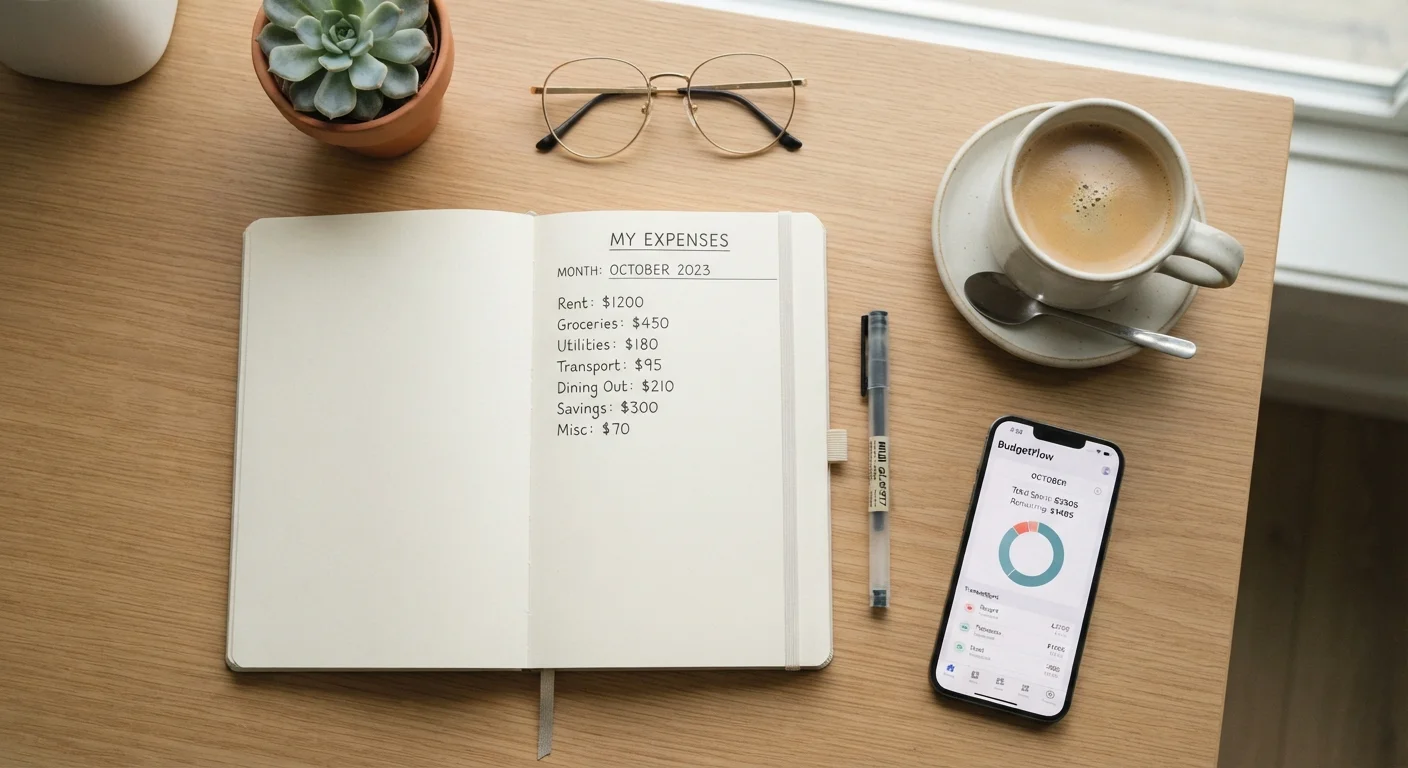
The best tracking system is the one you'll stick with. There's no universal winner - the right method depends on your habits, tech comfort level, and how much attention you want to give it.
Bank or credit card statements
Provide a reliable record of past transactions to categorize and review.
Budgeting or expense-tracking app
Automatically imports and categorizes transactions from linked accounts, reducing manual entry.
Notebook or paper ledger
Allows manual logging of cash and card purchases for those who prefer pen-and-paper tracking.
Spreadsheet (e.g., Google Sheets or Excel)
Enables customizable category tracking and month-over-month comparison without a third-party app.
Whichever method you choose, the critical factor is consistency over completeness. Missing a few transactions matters far less than abandoning the habit entirely. Once you have a few weeks of data, you can pair your findings with a structured approach - see budgeting methods compared to find a framework that fits.
Step-by-Step: Setting Up Your Tracking Habit
Follow these steps to get a working system in place. Don't try to build a perfect system on day one - start simple and refine as you go.
Gather your recent transaction history
Pull up two to four weeks of statements from every account you use - checking, savings, and credit cards. If you use cash regularly, try to recall or estimate those purchases as well. This baseline gives you real data rather than assumptions.
Build a simple category list
Create broad spending categories that reflect your actual life: housing, groceries, dining out, transportation, utilities, subscriptions, personal care, entertainment, and miscellaneous. Resist the urge to create 30 subcategories on day one - broad buckets are easier to maintain and still reveal meaningful patterns.
Assign every transaction to a category
Work through your gathered statements and label each transaction. If you're using an app, review the auto-assigned categories for accuracy - apps frequently miscategorize merchants. If you're using a spreadsheet or notebook, add a category column and fill it in manually.
Total each category and look for surprises
Add up what you spent in each category for the period. Compare the totals. Most people find at least one category where actual spending significantly exceeds what they would have guessed. Note these gaps - they're where your tracking will have the most impact going forward.
Schedule a weekly 10-minute review
Pick a consistent day and time - Sunday evening works well for many people - and block ten minutes to log or review that week's transactions. This brief habit prevents the backlog that makes monthly catch-up sessions feel overwhelming and discouraging.
Progress Over Precision
You don't need to capture 100% of your spending for tracking to be valuable. Even capturing 80-90% of transactions consistently will reveal clear patterns and help you make better decisions. Aim for regular effort, not flawless records.
Once you've completed a full month of tracking, you'll have enough data to build or reset a realistic monthly budget. The monthly budget setup checklist walks through that process in detail.
Making It a Long-Term Habit
Tracking your spending once is a snapshot. Tracking it consistently is a financial habit that compounds over time - one that supports smarter decisions around saving and debt management and even big-ticket spending like travel or annual car costs.
Don't Use Tracking to Punish Yourself
Seeing where your money went can trigger guilt, especially early on. Treat the data as information, not a verdict. The purpose of tracking is to inform future choices, not to judge past ones. If a category surprises you, that's useful - not a reason to abandon the process.
The habits that make tracking sustainable are the same ones that make any budget stick. Regularity, simplicity, and self-compassion matter more than sophisticated tools. For a deeper look at building durable financial routines, visit habits that make a budget stick.
This article is for general informational and educational purposes only and does not constitute personalised financial advice. For guidance specific to your circumstances, consider consulting a qualified financial professional.
The content provided on our blog site traverses numerous categories, offering readers valuable and practical information. Readers can use the editorial team’s research and data to gain more insights into their topics of interest. However, they are requested not to treat the articles as conclusive. The website team cannot be held responsible for differences in data or inaccuracies found across other platforms. Please also note that the site might also miss out on various schemes and offers available that the readers may find more beneficial than the ones we cover.