

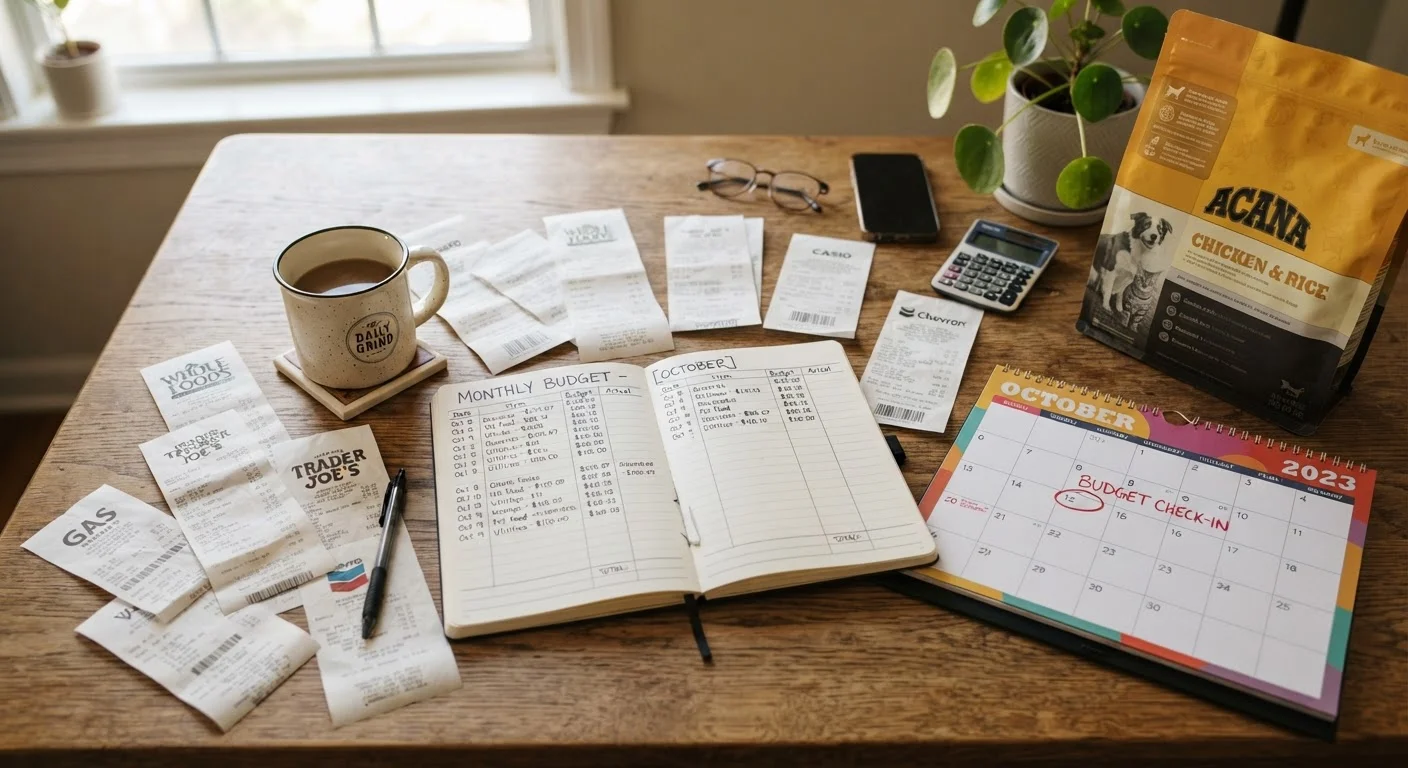
Why Budgets Have Blind Spots
Most first-time budgets account for the obvious: rent or mortgage, utilities, groceries, and a car payment. Those numbers are easy to find because they appear on the same date every month. The categories that quietly unravel a budget are the ones that show up irregularly, feel too small to track, or simply never make it onto the initial list.
The result is a budget that looks balanced on paper and then falls short in practice - often by the third month. Research consistently shows that irregular and discretionary spending is what people most frequently underestimate when building a spending plan. If you've noticed a gap between what your budget says and what your bank account shows, a missing category is usually the culprit.
Understanding fixed vs. variable expenses is a strong starting point, but variable expenses still leave room for entire categories to go unaccounted for. The list below covers the spending areas most commonly overlooked - and explains how to fold them into a working monthly plan.
Pet Care
Food and routine vet visits are the costs most pet owners mentally account for, but the fuller picture includes annual wellness exams, vaccinations, flea and tick prevention, dental cleanings, grooming, boarding or pet-sitting, and emergency veterinary care. Emergency vet bills in particular can reach into the thousands with little warning.
Pet owners are better served by setting a monthly pet line item that covers recurring costs and feeding a separate sinking fund for annual vet visits and potential emergencies. Even a modest monthly contribution to a pet emergency fund can prevent a single unexpected bill from disrupting the rest of your finances.
Emergency vet bills can reach thousands with no warning - a monthly pet fund prevents one bill from derailing everything else.
Subscriptions and Memberships
Streaming services, gym memberships, cloud storage, news sites, software licenses, and subscription boxes tend to be individually small - typically $5 to $20 per month - which is exactly why they accumulate unnoticed. A household running eight to ten active subscriptions may be spending $80 to $150 per month on services without a single line item to show for it.
A quarterly audit of your bank and credit card statements, filtering specifically for recurring charges, is the most reliable way to surface this total. Once you know the number, you can decide which subscriptions deliver real value and cancel the rest. Whatever remains belongs in your budget as a named category.
Eight to ten small subscriptions can quietly add $80-$150 per month with no single charge large enough to trigger concern.
Personal Care and Grooming
Haircuts, salon services, skincare, shaving supplies, nail care, and personal hygiene products are purchases virtually everyone makes - yet they are consistently absent from first-draft budgets. These costs are easy to absorb mentally as part of general spending, which is why they rarely receive a dedicated line.
Adding up actual spending from past statements usually produces a number that surprises people. Even modest spending in this category - two haircuts and basic product replenishment - can run $50 to $100 or more per month for an individual, and more for households with multiple people. It belongs in the budget as its own line, separate from groceries.
Personal care costs often run $50-$100 or more per person monthly but almost never appear in a first-draft budget.
Gifts and Celebrations
Birthdays, holidays, weddings, baby showers, graduations, and other celebrations are rarely distributed evenly across the calendar - they tend to cluster, and the associated costs (gifts, cards, travel, meals out, contributions to group presents) arrive in waves. Treating gift spending as an ad hoc expense means it regularly goes over whatever informal mental limit you've set.
A better approach is to think through the calendar at the start of the year, estimate what you typically spend on gifts and celebrations annually, and divide that number by 12. That monthly figure goes into a sinking fund. When a wedding or holiday season arrives, the money is already there. The sinking fund framework is purpose-built for exactly this kind of known-but-irregular expense.
Estimating your annual gift spend and dividing by 12 converts a lumpy, stressful cost into a predictable monthly line item.
Vehicle Costs Beyond the Car Payment
A car payment is easy to budget for - it's the same number every month. What catches people off guard is everything else: registration fees, emissions testing, oil changes, tire rotations, brake replacement, unexpected repairs, and insurance rate adjustments at renewal. These costs are real and recurring, but because they don't arrive monthly, they're often absent from the monthly budget.
Estimating your total annual vehicle expenses - beyond insurance and the loan - and allocating a monthly amount to a sinking fund is the standard approach. For a broader look at managing the full scope of what a car actually costs, managing annual car costs without cutting safety corners covers the key maintenance and insurance levers in detail.
Registration, repairs, and tires don't arrive monthly - but they will arrive, and they need a place in your budget before they do.
Home Maintenance and Repairs
Homeowners frequently budget for their mortgage, property taxes, and homeowner's insurance, but leave home maintenance as a category undefined. A leaky faucet, a broken appliance, an HVAC service call, or an annual gutter cleaning can each run from $100 to several hundred dollars. These are not surprises in the true sense - homes require ongoing upkeep - but without a budget line, the money has to come from somewhere unplanned.
A commonly cited general guideline suggests setting aside roughly 1% of a home's value annually for maintenance, though actual costs vary considerably by home age, condition, and location. Even renters benefit from a small household repair fund to cover items a landlord is unlikely to address, such as replacing small appliances or basic furniture repairs.
Home maintenance is not optional - budgeting for it monthly is the difference between a manageable repair and a financial disruption.
Travel and Vacation
Many people treat vacation spending as an annual event rather than a monthly budget concern, which is why it consistently causes overspending. The full cost of a trip - flights, accommodations, food, local transportation, activities, and incidentals - is rarely estimated in advance and almost never funded gradually. The result is a vacation charged to a credit card and paid off over months.
A vacation sinking fund, funded monthly, allows travel costs to be distributed across the year rather than absorbed in a single billing cycle. Estimating what a trip will actually cost - including every category, not just the flight - is a skill worth developing. The guide on estimating real travel costs breaks down how to build a realistic trip budget before you book anything.
Funding a vacation monthly in a sinking fund eliminates the post-trip credit card balance that can linger for months.
Out-of-Pocket Healthcare
Health insurance premiums often appear in a budget, but the out-of-pocket costs that accompany actual care - copays, prescription costs, vision exams, eyeglasses or contacts, dental work, and over-the-counter medications - frequently do not. For households with deductibles in the thousands, a single injury or illness can generate costs that fall entirely outside the monthly plan.
Allocating a monthly line for routine healthcare costs, and separately maintaining a health emergency reserve, reflects how healthcare actually works for most American families. If you have access to a Health Savings Account (HSA) - a tax-advantaged account available with certain high-deductible health plans - contributions to it function effectively as a healthcare sinking fund with added tax benefits. A qualified financial advisor or benefits specialist can help assess whether an HSA makes sense for your situation.
Copays, dental work, and prescription costs are predictable enough to budget for - yet most household budgets leave them out entirely.
Making Room for What You Missed
The goal is not to build a more restrictive budget - it's to build a more honest one. When a spending category exists but has no line item, the money still gets spent; it just comes from savings, credit, or another category you'd rather protect. Naming every category gives you the clarity to make real trade-offs.
Start With a Statement Review
Before adjusting your budget, pull three to six months of bank and credit card statements and categorize every charge. Look specifically for recurring charges (subscriptions), infrequent lump costs (annual fees, registration), and uncategorized personal spending. This process typically surfaces two or three significant spending areas that have no budget line - and it gives you real numbers to work with rather than estimates.
A useful first step is to pull three to six months of bank and credit card statements and categorize every transaction. Most people are surprised to find two or three significant spending areas with no assigned budget at all. From there, you can decide which categories need a dedicated monthly line and which are better handled through a sinking fund - a small amount set aside each month for expenses that arrive less frequently.
For a structured walkthrough of the full process, the monthly budget setup checklist covers income, all expense categories, and a month-end review in a single framework. And if your budget has been falling apart around the same time each quarter, understanding why budgets fail in month three may point to exactly the pattern you're experiencing.
This article is for general informational and educational purposes only and does not constitute personalized financial advice. Consult a qualified financial professional for guidance tailored to your specific circumstances.
The content provided on our blog site traverses numerous categories, offering readers valuable and practical information. Readers can use the editorial team’s research and data to gain more insights into their topics of interest. However, they are requested not to treat the articles as conclusive. The website team cannot be held responsible for differences in data or inaccuracies found across other platforms. Please also note that the site might also miss out on various schemes and offers available that the readers may find more beneficial than the ones we cover.