

Why Annual Car Costs Tend to Creep Up Unnoticed
For most American households, the car is the second-largest expense after housing - yet the full annual cost is rarely tallied in one place. Monthly loan or lease payments get attention, but fuel, insurance, registration fees, tires, and routine maintenance accumulate quietly in the background. When an unplanned repair lands on top of those ongoing costs, the total can be genuinely alarming.
The good news is that a meaningful portion of annual car spending is within a driver's control. The practices that reduce costs also tend to support vehicle reliability and safety - they are not in conflict. Understanding where your money actually goes is where control begins.
Car Costs Are Often Underestimated
AAA's annual 'Your Driving Costs' study consistently finds that drivers underestimate total ownership costs, which typically include fuel, tires, maintenance, insurance, registration, and depreciation. Building a realistic annual budget that accounts for all these categories is the first step toward controlling them. See how car costs fit into the bigger picture in our guide on spending categories budgets forget.
Core Practices That Keep Costs in Check
The following practices address the most controllable cost drivers: maintenance decisions, insurance management, fuel efficiency, and administrative habits. Each one is grounded in how vehicles actually age and how insurance markets actually work - not in cutting corners that create risk later.
Follow your owner's manual maintenance schedule - not dealership upsell prompts.
Manufacturer-recommended intervals are based on engineering data specific to your vehicle. Doing maintenance too early wastes money; skipping it risks costly damage. Many service advisors recommend shorter intervals than necessary, so the manual is your most reliable reference.
Shop your auto insurance policy every 12 to 18 months, not just when you receive a renewal notice.
Insurers regularly adjust their pricing models, and loyalty does not always translate to savings. Comparing quotes from multiple carriers - keeping coverage levels identical - is one of the most reliable ways to find rate reductions without reducing protection.
Adopt smooth, anticipatory driving to reduce mechanical wear and fuel consumption simultaneously.
Aggressive acceleration and hard braking accelerate brake pad, tire, and drivetrain wear far faster than gradual inputs. The fuel savings from gentle driving are well documented - the U.S. Department of Energy notes that aggressive driving can reduce fuel economy by 15-30% at highway speeds.
Keep tire pressure at the manufacturer-specified level and rotate tires on schedule.
Underinflated tires increase rolling resistance, reducing fuel efficiency and causing uneven, premature wear. Correct inflation and regular rotation are two of the lowest-cost maintenance actions with the highest ongoing payoff.
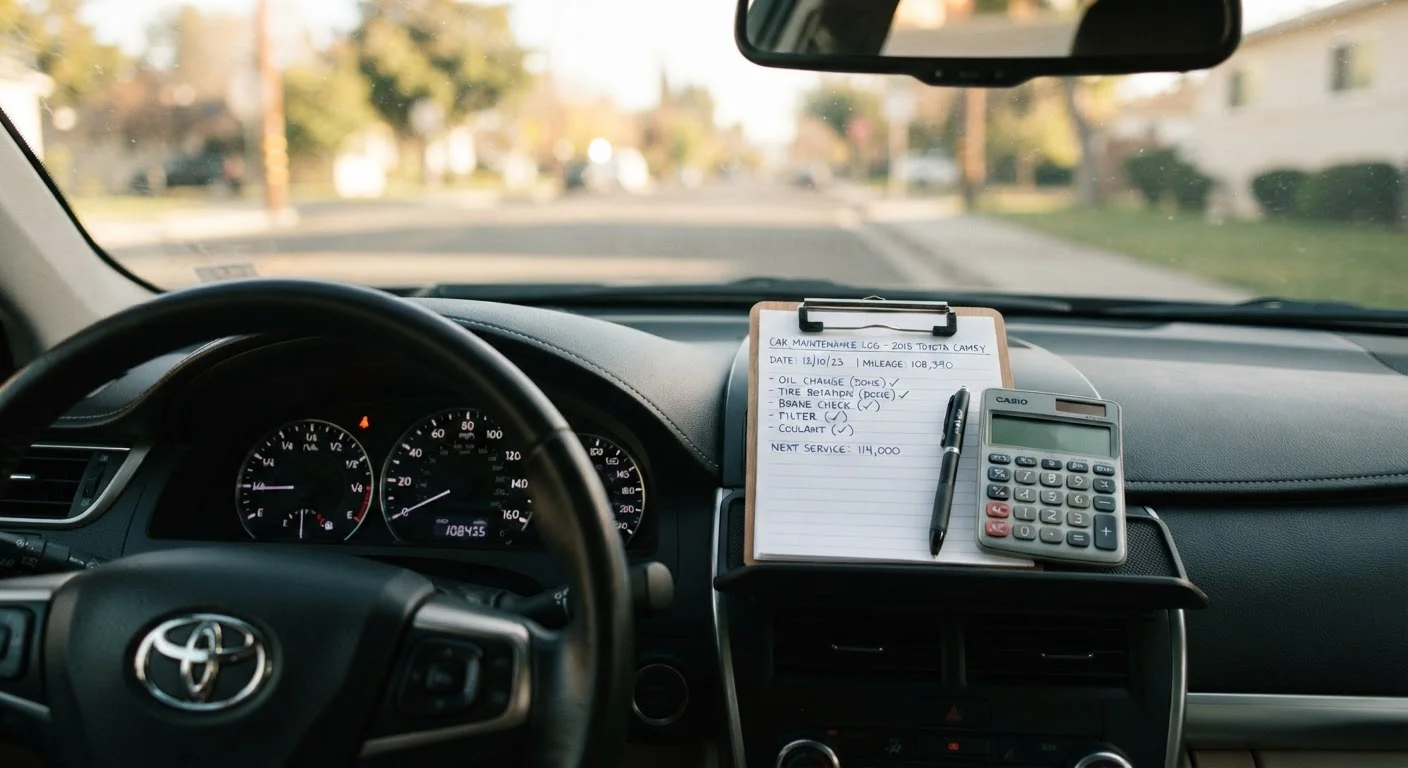
Track every car-related expense in a dedicated log or spreadsheet.
Without a clear record, it is easy to underestimate total annual spending and miss patterns - such as a vehicle that is generating repair costs that exceed its value. A car maintenance log also supports resale value and helps you stay on schedule.
Handle safe DIY tasks yourself, and know clearly when to call a professional.
Replacing cabin air filters, windshield wipers, or engine air filters are straightforward jobs that do not require mechanical expertise and cost a fraction of shop labor rates. However, brake system work, suspension components, and anything involving safety-critical systems should be handled by a qualified mechanic.
For a broader look at how car maintenance decisions affect both safety and cost, our maintenance hub covers the full range of upkeep topics organized by vehicle system.
Insurance: The Cost Lever Drivers Most Often Ignore
Auto insurance is typically one of the largest recurring car expenses, yet many drivers renew automatically without reviewing their coverage or seeking competing quotes. Your premium is influenced by factors beyond your driving record - including your credit history in most states, your ZIP code, and even the insurer's own internal pricing adjustments from year to year. Understanding factors that quietly raise your premium helps you respond proactively rather than just absorbing increases.
It also pays to revisit what level of coverage you actually need. A vehicle that has depreciated significantly may no longer justify the cost of comprehensive and collision coverage. Our overview of liability-only vs. full coverage walks through how to evaluate that trade-off based on your specific situation.
Putting It Together: Ownership as a Financial Discipline
Keeping annual car costs under control is less about finding shortcuts and more about applying consistent, informed habits across maintenance, insurance, fuel use, and record-keeping. Drivers who follow their owner's manual, review their insurance annually, drive smoothly, and track their spending tend to face fewer surprises and lower cumulative costs over the life of a vehicle.
These habits also support safer driving. Defensive driving techniques that reduce crash risk overlap directly with the smooth, anticipatory driving style that extends mechanical life and reduces fuel costs. Responsible ownership, in this sense, is a reinforcing cycle rather than a series of trade-offs.
If you are building or refining a household budget, consider reviewing the budgeting basics hub for frameworks that can help you allocate car costs realistically alongside your other financial priorities.
The content provided on our blog site traverses numerous categories, offering readers valuable and practical information. Readers can use the editorial team’s research and data to gain more insights into their topics of interest. However, they are requested not to treat the articles as conclusive. The website team cannot be held responsible for differences in data or inaccuracies found across other platforms. Please also note that the site might also miss out on various schemes and offers available that the readers may find more beneficial than the ones we cover.