

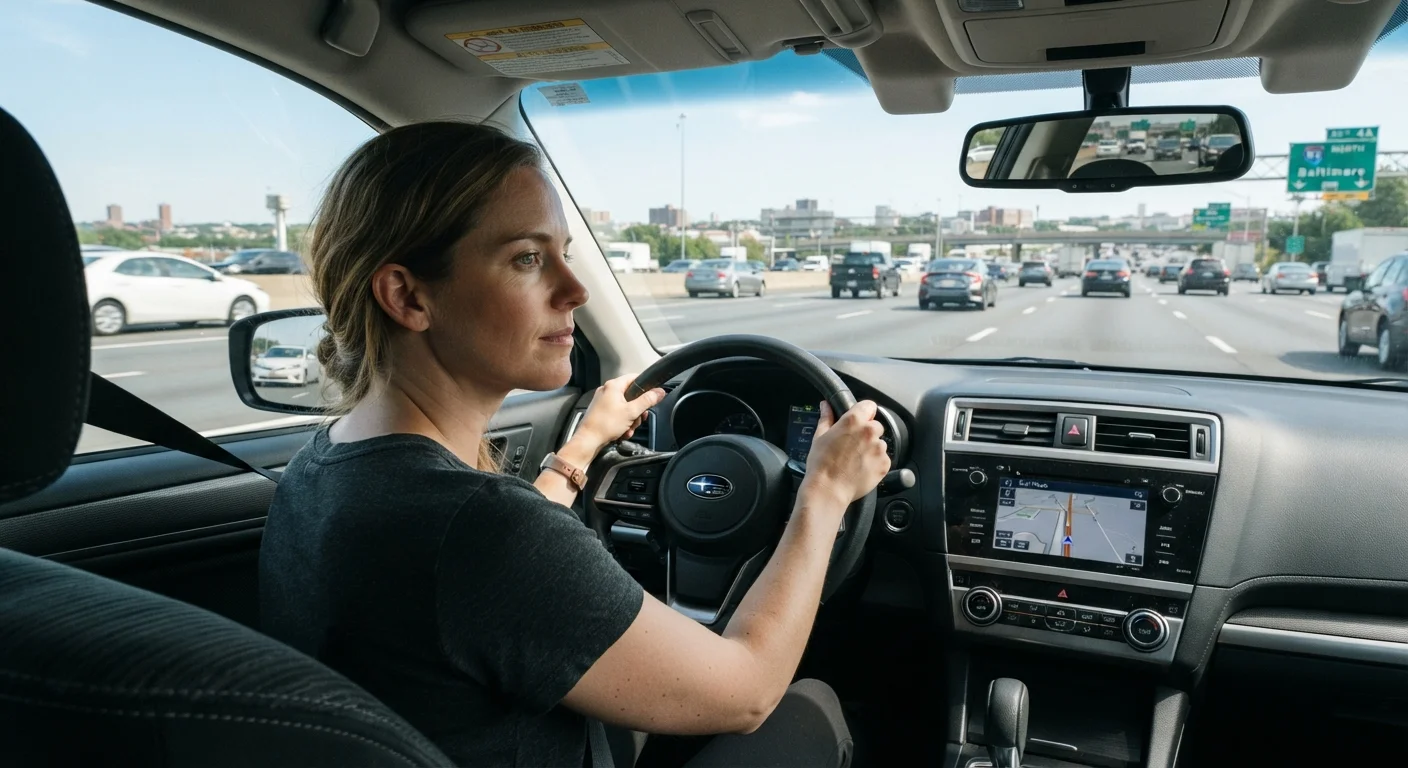
What Defensive Driving Actually Means
Most drivers think of themselves as safe because they stop at red lights and stay near the speed limit. But following rules is reactive - it assumes you'll respond correctly once a situation is already unfolding. Defensive driving is proactive: it's about reading the road continuously so you can act before a hazard becomes a crisis.
The core idea is hazard anticipation. A defensive driver notices the car drifting in the next lane, the pedestrian about to step off a curb, or the truck slowing faster than expected - and adjusts before any contact is imminent. This requires deliberate scanning habits rather than passive observation.
If you're newer to the road, The New Driver's Complete Guide to American Roads provides a solid foundation on signs, intersections, and highway basics to build from.
Defensive Driving Courses Are Widely Available
Many states offer approved defensive driving courses through licensed providers, available in-person or online. Completing one may qualify you for an insurance discount, point reduction on your license, or ticket dismissal depending on your state's rules. Check your state's DMV website or your insurer for specific eligibility requirements.
The Core Habits That Define Defensive Driving
Defensive driving isn't a single technique - it's a cluster of reinforcing habits. The most impactful include:
- Maintaining following distance. The three-second rule (keeping at least three seconds of space between you and the car ahead) gives you time to brake without collision. Increase it to four or five seconds in wet or low-visibility conditions.
- Scanning intersections before entering. Even on a green light, a brief visual check for cross traffic can catch a driver running a red.
- Checking mirrors every 5-8 seconds. Regular mirror checks keep you aware of vehicles approaching from behind and alongside.
- Managing your speed relative to conditions. The posted limit is a legal ceiling, not always the safe speed for rain, construction zones, or heavy congestion.
- Eliminating distractions. Eyes off the road for even two seconds at highway speeds means traveling the length of a basketball court effectively blind.
94%
Crashes with driver behavior as a factor
According to NHTSA data, driver choice or error is a critical factor in approximately 94% of serious crashes in the United States.
3 sec
Minimum recommended following distance
Traffic safety organizations broadly recommend a three-second gap as the baseline following distance under normal, dry road conditions.
~1 in 5
Crashes involving distracted driving
The NSC estimates distracted driving contributes to roughly one in five crashes - making it one of the top addressable risk factors for drivers.
These habits contrast sharply with aggressive driving patterns. Road rage and aggressive driving sit at the opposite end of the spectrum - and carry real legal consequences.
Why Defensive Driving Reduces Crash Risk
The value of defensive driving lies in its margin for error. Roads are shared with drivers who are distracted, impaired, or simply making mistakes. No driver can control what others do - but a defensive driver consistently creates more time and space to respond when someone else's error puts them in range.
Research from the National Safety Council and highway safety bodies consistently shows that driver behavior - not road conditions alone - is the primary contributing factor in most crashes. Rear-end collisions, lane-change incidents, and intersection crashes are among the most common types, and all are heavily influenced by following distance, scanning habits, and speed management.
Defensive techniques also carry a financial upside. Fewer at-fault incidents mean fewer claims, which affects insurance premiums over time. See how smart habits reduce annual car ownership costs without cutting corners on safety.
Conditions That Test Defensive Drivers Most
Certain scenarios demand heightened defensive attention. Night driving, for instance, reduces visibility, increases fatigue risk, and changes how drivers perceive speed and distance. Driving at night presents genuinely different challenges than daytime travel - from altered depth perception to longer brake distances on unlit roads.
Other high-demand scenarios include:
- Heavy rain or snow: Reduced traction and visibility require larger following gaps and gentler braking.
- Construction zones: Lane shifts, reduced widths, and workers near traffic require lowered speeds and heightened alertness.
- Highway merges and lane changes: These require mirror checks, blind-spot glances, and clear signaling well in advance.
Adjust Your Buffer in Poor Conditions
The three-second following distance rule applies to dry roads at normal speeds. In rain, snow, fog, or heavy traffic, extend your gap to five or more seconds. Poor conditions reduce both your reaction time and braking effectiveness, so the extra space is not optional - it's the margin that keeps a close call from becoming a crash.
The common thread is that each of these situations compresses the time available to respond. Defensive habits expand that window - which is exactly why they work.
Frequently Asked Questions
Not exactly. Traffic laws set the minimum legal standard, while defensive driving goes further by teaching hazard anticipation, space management, and proactive decision-making. A driver can be fully law-abiding yet still fail to spot a developing danger ahead.
Many insurers offer discounts to drivers who complete an approved defensive driving course, though the amount varies by provider and state. Check directly with your insurer before enrolling to confirm eligibility and potential savings.
A commonly recommended baseline is the three-second rule - pick a fixed point ahead, and make sure at least three seconds pass between when the car in front passes it and when you do. Increase that buffer in rain, fog, or heavy traffic.
Defensive driving applies everywhere. In cities, the focus is on pedestrians, cyclists, and sudden stops. On highways, it shifts to speed management, lane changes, and maintaining longer sight lines. The core principles - scan, space, and anticipate - hold on every road type.
Any driver can benefit, but courses are especially valuable for new drivers, those returning after a gap, or anyone who has received a moving violation. Some states allow ticket dismissal or point reduction after completing an approved course.
The content provided on our blog site traverses numerous categories, offering readers valuable and practical information. Readers can use the editorial team’s research and data to gain more insights into their topics of interest. However, they are requested not to treat the articles as conclusive. The website team cannot be held responsible for differences in data or inaccuracies found across other platforms. Please also note that the site might also miss out on various schemes and offers available that the readers may find more beneficial than the ones we cover.