

Our Verdict
Trade school and college are both credible, established pathways that lead to different but equally valid outcomes. Trade school suits learners who want focused, hands-on training and faster entry into a specific field, while college fits those seeking broader academic development or careers that require a bachelor's degree. The strongest choice is the one aligned with your actual goals, not cultural assumptions about prestige.
| Best for | Recommended |
|---|---|
| Those who want fast, career-focused training with lower tuition costs | Trade School |
| Those pursuing careers requiring a four-year degree or graduate education | College |
| Those undecided or wanting flexibility before committing | Community College (as a starting point) |
What Each Path Actually Looks Like
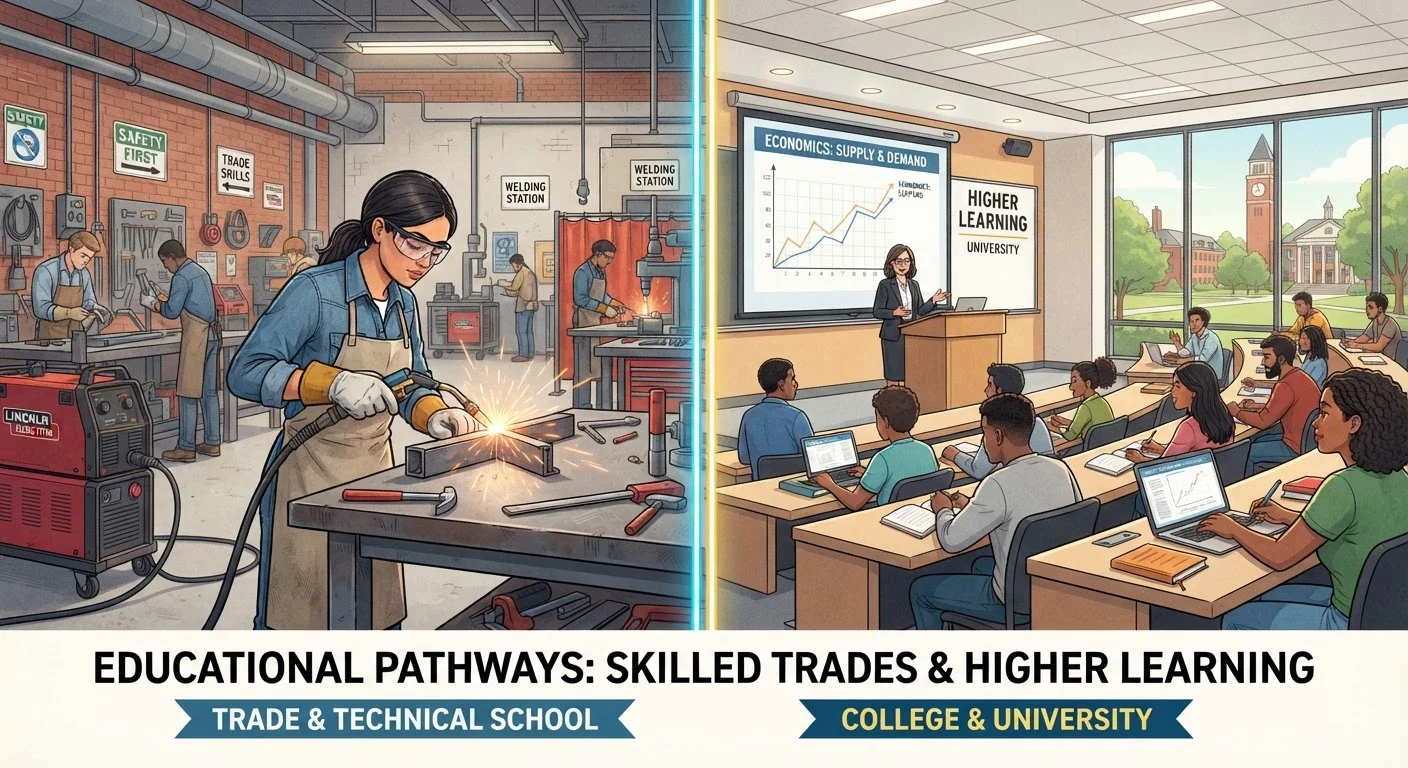
After high school, two well-established options exist for continuing your education: trade school (also called vocational or career-technical school) and a traditional college leading to an associate or bachelor's degree.
Trade school programs are narrowly focused. Students train in a specific skill - such as electrical work, automotive technology, dental assisting, welding, or HVAC - through a mix of classroom instruction and hands-on lab time. Most programs run between six months and two years, and many connect students directly to apprenticeships or employer pipelines before graduation.
College - whether a two-year community college or a four-year university - offers a broader curriculum. Students complete general education requirements alongside major coursework. A bachelor's degree typically takes four years full-time, though many students take longer. For comparison, you might also consider the real trade-offs between community college and a four-year university before deciding.
Cost and Time: A Direct Comparison
These two paths differ substantially in both duration and price - two factors that matter enormously for most students and families.
| Trade School | College (Bachelor's Degree) | |
|---|---|---|
| Typical Duration | 6 months - 2 years | 4 years (often longer) |
| Average Cost | $5,000 - $15,000 total | $30,000 - $120,000+ total |
| Focus | Narrow, career-specific | Broad, with major specialization |
| Hands-On Training | Central to curriculum | Varies by program |
| Entry-Level Employment Speed | Typically faster | After 4+ years |
| Graduate School Eligibility | Generally no | Yes, with bachelor's degree |
Costs and timelines vary by institution, program, and state, so it's worth researching specific schools rather than relying solely on national averages. Financial aid, including federal Pell Grants, is available for eligible students at both accredited trade schools and colleges.
If you're weighing an entirely different starting point, such as taking time off before enrolling, see what to consider before taking a gap year for a balanced look at that option.
Career Outcomes and Earning Potential
A common misconception is that college graduates always out-earn trade school graduates. The reality is more nuanced.
$59,880
Median annual wage for electricians (U.S.)
According to the U.S. Bureau of Labor Statistics Occupational Outlook Handbook, electricians earned a median annual wage of approximately $59,880, with no bachelor's degree required.
~$1.6M
Lifetime earnings advantage often cited for bachelor's degrees
Research from the Georgetown Center on Education and the Workforce suggests bachelor's degree holders earn more on average over a lifetime, though this varies significantly by field and occupation.
600,000+
Unfilled skilled trade jobs in the U.S.
Industry groups and workforce analysts have consistently cited a persistent shortage of skilled trade workers across construction, manufacturing, and utilities sectors.
Skilled trades are in high demand across the United States, partly due to decades of emphasis on college over vocational training. According to the U.S. Bureau of Labor Statistics, roles such as electricians, plumbers, and elevator installers typically require apprenticeship or postsecondary vocational training - not a bachelor's degree - and command median wages that surpass many jobs requiring a college diploma.
College degrees, on the other hand, are required entry points for professions including teaching, engineering, nursing (at the bachelor's level), law, and medicine. The degree's value depends heavily on field of study and job market conditions at the time of graduation.
Consider Apprenticeships as a Middle Ground
Registered apprenticeships combine paid on-the-job training with classroom instruction, often sponsored by employers or unions. They're available in trades like plumbing, electrical work, and healthcare support. Apprentices earn a wage while learning - making them a financially low-risk path. The U.S. Department of Labor's apprenticeship portal is a good place to explore registered programs by state and trade.
Flexibility, Transferability, and Long-Term Options
One consideration that often goes underdiscussed is what each path allows you to do later.
A college degree - especially a bachelor's - provides relatively broad transferability. It can serve as a foundation for graduate school, career changes, or roles in management. Liberal arts and general business degrees, while sometimes criticized for vagueness, do develop research, writing, and critical thinking skills that transfer across industries.
Trade credentials are more narrowly applicable, though many journeyperson-level tradespeople go on to start their own businesses or move into supervisory and estimating roles. Some states and trades also have continuing education or licensing upgrade requirements that keep workers learning throughout their careers.
It's also worth understanding how other credential types - such as certificates and certifications - fit into this picture. See how online certificates, certifications, and degrees differ for a clear breakdown.
How to Decide: Questions Worth Asking
Rather than defaulting to cultural pressure or family expectation, grounding your decision in honest self-assessment tends to produce better outcomes.
- Do you already know what you want to do? If you're certain you want to work in a skilled trade, trade school is the more direct, cost-efficient route. If you're undecided, college's broader exploration may serve you better.
- What's your financial situation? Student loan debt is a real and lasting burden. If college would require significant borrowing for an uncertain career outcome, trade school may carry meaningfully lower financial risk.
- How do you learn? Some people thrive in hands-on, applied environments. Others prefer reading, research, and discussion. Your honest answer matters. For a related perspective, see how different learning formats suit different styles.
- What does the job market look like in your area? Local labor demand varies considerably. Researching regional employer needs before choosing is time well spent.
There is no universally correct answer. What matters is that your choice reflects your actual goals - not assumptions about which path carries more prestige.
The content provided on our blog site traverses numerous categories, offering readers valuable and practical information. Readers can use the editorial team’s research and data to gain more insights into their topics of interest. However, they are requested not to treat the articles as conclusive. The website team cannot be held responsible for differences in data or inaccuracies found across other platforms. Please also note that the site might also miss out on various schemes and offers available that the readers may find more beneficial than the ones we cover.