

Why Good Intentions Aren't Enough
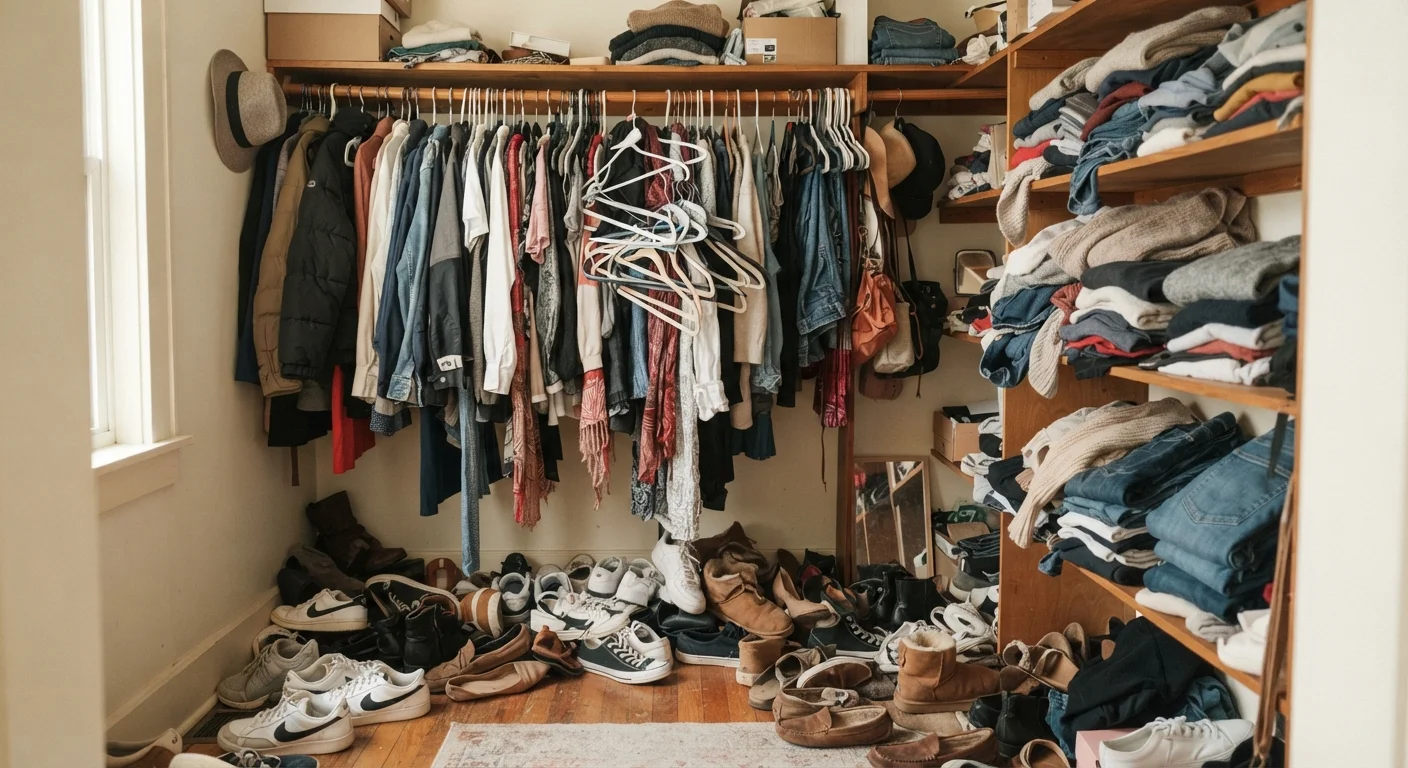
You spent a Saturday reorganizing your closet - folding, sorting, maybe even labeling. By Thursday it looked like the whole effort never happened. Sound familiar? This cycle frustrates nearly every homeowner and renter who experiences it, and the near-universal conclusion is I just can't stay organized. That conclusion is almost always wrong.
A closet that unravels fast has a structural problem. Either it holds more than it can comfortably contain, its layout doesn't match how you actually live, or putting things away requires too many steps to do consistently. Willpower can't compensate for a broken system - and it shouldn't have to. For a broader look at why one-time purges often fall short, see decluttering once vs. maintaining order daily.
The Real Problem Is Almost Never Laziness
If your closet becomes chaotic within days of organizing it, resist the urge to blame yourself. A closet that collapses quickly has a design flaw - too much stuff, too little structure, or too many steps between you and putting something away. Addressing the root cause is the only fix that lasts.
The Most Common Mistakes - and How to Fix Them
Below are the five structural errors that cause most closets to relapse. Recognizing which ones apply to your space is the first step toward a system that actually holds.
Organizing Without Decluttering First Backfires
Buying bins and hangers before reducing the number of items is a common and costly mistake. You'll simply be rearranging too much stuff in a space that can't hold it comfortably. Always pare down before you organize - otherwise the system collapses under its own volume within days.
Organizing without first reducing the volume of items in the closet.
Why it happens: People focus on arranging what they own rather than questioning whether they should own it. The assumption is that better organization will make any amount of stuff fit.
Assigning items a 'zone' rather than a specific, consistent spot.
Why it happens: Vague categories like 'tops shelf' or 'left side' feel organized during setup but offer no guidance when you're putting something away quickly.
Creating a system that requires too many steps to use.
Why it happens: High-friction systems look elegant but collapse in real life. Folded stacks in deep bins, items stored behind other items, or lids on every container all add friction that people skip when they're tired or rushed.
Organizing for appearance rather than your actual daily habits.
Why it happens: Inspiration photos show pristine, matched containers and color-sorted wardrobes - systems built for aesthetics, not for how a real person gets dressed at 7 a.m.
Skipping a regular reset habit once the initial organizing is done.
Why it happens: Most people treat organizing as a one-time event. Once it looks good, there's no plan to maintain it, so small deviations accumulate unnoticed until the whole system has collapsed.
If clutter has spread beyond the closet and the whole home feels overwhelming, a room-by-room approach to chronic clutter can help you work through it systematically.
Building a System That Stays Put
Durable closet organization rests on three principles: right-sized inventory, frictionless return paths, and scheduled resets. Get those three elements working together and the system becomes self-reinforcing rather than self-defeating.
80%
Items rarely or never used
Professional organizers commonly report that most people regularly use only about 20% of what they own, with the rest occupying prime closet real estate.
~5 min
Time lost daily to disorganization
Research on household time use suggests people spend several minutes each day searching for misplaced clothing and accessories in disorganized closets.
Start by cutting the closet's contents to something the space can hold with obvious room to spare. Then assign precise spots - not zones - for everything that stays. Finally, commit to a short weekly reset so small deviations never compound into full collapses. For a structured annual audit that keeps any room from backsliding, the annual home declutter checklist walks you through the process room by room. If you share the closet with a partner or family member who has different tidiness habits, organizing a shared home with different habits covers how to build systems that work for everyone.
The content provided on our blog site traverses numerous categories, offering readers valuable and practical information. Readers can use the editorial team’s research and data to gain more insights into their topics of interest. However, they are requested not to treat the articles as conclusive. The website team cannot be held responsible for differences in data or inaccuracies found across other platforms. Please also note that the site might also miss out on various schemes and offers available that the readers may find more beneficial than the ones we cover.