

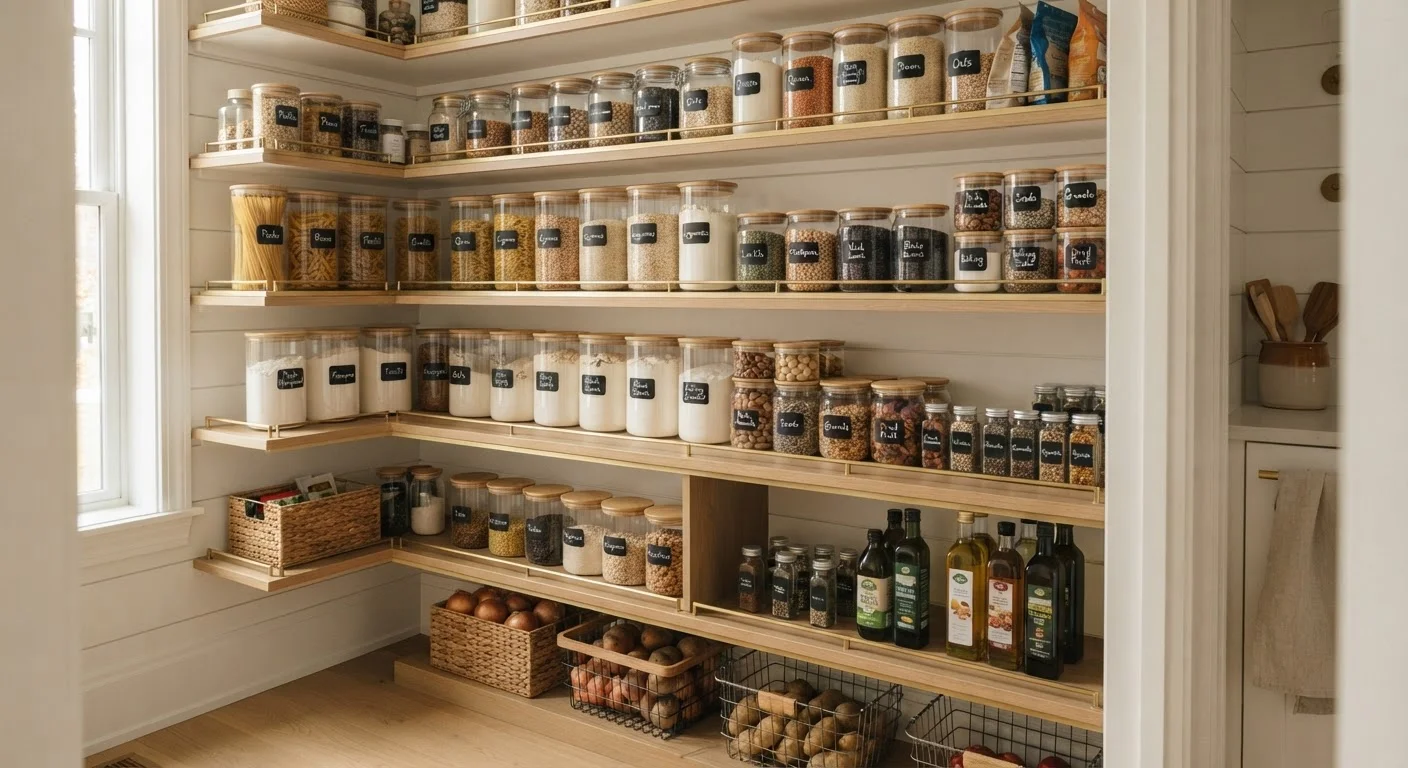
Pantry Zone Types at a Glance
A well-organized pantry is built around zones - dedicated areas where similar items live together. Zones reduce search time, prevent overbuying, and make it easier for everyone in the household to maintain order. For a broader approach to organizing every room, see our full home organization playbook.
Most pantries can be organized around five core zone types, regardless of size or layout:
- Dry Goods Zone: Grains, pasta, rice, flour, and cereals. Usually occupies middle shelves at eye level for easy daily access.
- Canned & Jarred Zone: Canned vegetables, beans, broths, and preserved goods. Heavier items placed on lower or reinforced shelves.
- Snack & Grab Zone: Ready-to-eat items like crackers, nuts, dried fruit, and individually packaged snacks. Positioned at accessible heights, especially useful in shared households.
- Baking Zone: Flour, sugar, leavening agents, chocolate chips, and extracts grouped together to streamline baking prep.
- Overflow & Backup Zone: Bulk purchases, backup stock, and rarely used specialty items. Typically stored on top shelves or in a separate cabinet.
Labeling Conventions and Systems
Labels are the backbone of any lasting pantry system. Without them, zones collapse as items drift and household members guess where things belong. When multiple people share a kitchen, consistent labeling is especially critical.
Zone
A defined section of pantry space dedicated to a specific category of items. Zones reduce clutter by giving every type of item a predictable home.
Decanting
Transferring food from its original packaging into a separate container - typically one that's airtight, uniform, or easier to label.
FIFO
First In, First Out - a stocking method where newer items go behind older ones so older stock gets used first, reducing waste.
Overflow stock
Backup quantities of pantry staples purchased in bulk or ahead of need. Typically stored separately from the main pantry zone to avoid clutter.
Turntable (lazy Susan)
A rotating circular tray placed on a shelf that allows easy access to items stored at the back of a deep cabinet or pantry.
Common Label Types
- Category Labels: Identify the zone or group (e.g., "Baking," "Grains," "Snacks"). Applied to shelf edges, bin fronts, or baskets.
- Content Labels: Identify exactly what's inside a container (e.g., "All-Purpose Flour," "Brown Rice"). Most useful on opaque containers.
- Expiration/Date Labels: Track when a product was opened or when it expires. Particularly helpful for bulk-decanted items.
- Quantity Labels: Some systems include minimum stock markers (e.g., "Reorder at 1") to prompt restocking before running out.
Label Format Options
| Format | Best For | Durability |
|---|---|---|
| Chalkboard labels | Reusable containers with changing contents | Moderate - fades over time |
| Printed adhesive labels | Permanent, dedicated containers | High - waterproof options available |
| Handwritten washi tape | Flexible, low-commitment systems | Low - not moisture-resistant |
| Label maker tape | Uniform, readable text for any container | High - resists moisture and wear |
Container Groupings and When to Use Them
Not every pantry item needs a dedicated container. The decision to decant - transfer items from original packaging into a new vessel - depends on frequency of use, humidity sensitivity, and available space. For storage trade-offs worth considering, see open shelving vs. closed cabinets.
When Not to Decant
Decanting works best for staples you use regularly and buy in consistent quantities. Items with important safety, allergen, or preparation information printed on the original packaging - such as baby formula, specialty flours, or prescription-diet foods - should generally stay in their original containers. If you do decant, photograph or save the original label for reference.
Standard Container Groupings
- Airtight canisters
- Used for flour, sugar, rice, oats, and other dry goods prone to pests or moisture. Typically glass or BPA-free plastic with a sealed lid.
- Stackable bins or baskets
- Used to corral loose packages - snack pouches, sauce packets, seasoning envelopes - that don't fit neatly in canisters.
- Turntables (lazy Susans)
- Useful for deep shelves where items at the back become invisible. Commonly used for oils, vinegars, condiments, and spice jars.
- Tiered shelf risers
- Create vertical visibility in short cabinets or on flat shelving. Ideal for canned goods and spice organization.
- Door-mounted racks
- Maximize pantry door space for spices, foil boxes, wraps, and small condiment packets.
If you find traditional organization systems overwhelming, low-friction approaches can help you build habits without overhauling everything at once.
The content provided on our blog site traverses numerous categories, offering readers valuable and practical information. Readers can use the editorial team’s research and data to gain more insights into their topics of interest. However, they are requested not to treat the articles as conclusive. The website team cannot be held responsible for differences in data or inaccuracies found across other platforms. Please also note that the site might also miss out on various schemes and offers available that the readers may find more beneficial than the ones we cover.