

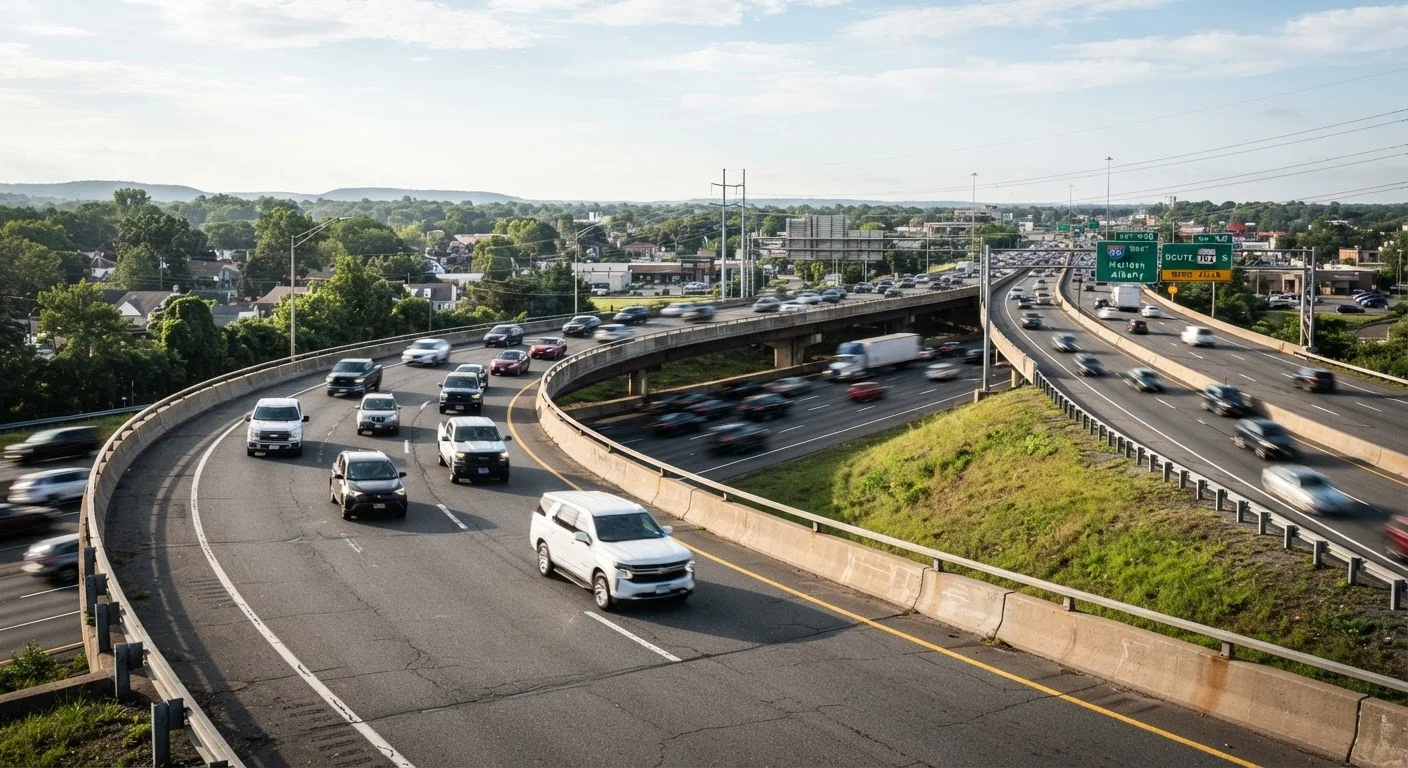
The Engineering Logic Behind the On-Ramp
Highway on-ramps weren't designed by accident. Traffic engineers built them with one specific goal: to give drivers a buffer zone to transition from low-speed surface roads to high-speed highway travel without creating a dangerous speed mismatch.
A typical freeway on-ramp consists of two connected segments. The first is the entrance curve - the section that leaves the surface street and begins climbing or curving toward the highway. The second is the acceleration lane, which runs parallel to the highway itself and is where drivers should be reaching near-highway speeds. This lane physically narrows at the far end, marking the point where the merge must happen.
The design assumes that by the time you reach the end of the acceleration lane, you are already traveling at approximately the speed of highway traffic. When that assumption breaks down - when drivers treat the ramp as a place to slow down or wait - the engineering fails and risk rises sharply.
Highway Drivers Don't Have to Move Over for You
In nearly every U.S. state, the legal right of way on a highway belongs to vehicles already in the lane, not those merging onto it. While many experienced drivers will courtesy-shift to create room, they are not required to do so. Merging drivers bear the responsibility of finding and entering a safe gap.
Common Mistakes That Make Merging Dangerous
The most frequent and dangerous error drivers make is arriving at the merge point too slowly. Whether caused by hesitation, distraction, or a misunderstanding of right-of-way, entering highway traffic 20-30 mph below surrounding speed creates a sudden, unpredictable obstacle for everyone behind and beside you.
A related mistake is stopping at the end of the ramp. Some drivers, unable to find a gap, come to a complete stop. This leaves the car stationary on what is essentially the shoulder of a 70-mph road. Drivers behind on the ramp - who are accelerating - may not expect a stopped vehicle and have very little room to react.
A third common error is failing to use mirrors and blind-spot checks progressively during acceleration. Effective merging requires scanning highway traffic early and often, not just at the last moment. By the time you're at the merge point, you should already know where your gap is.
For a broader look at where American drivers misread traffic law, see our guide to right-of-way rules drivers most commonly get wrong.
Start Scanning Before You Need To
Begin checking your mirrors for highway traffic gaps as soon as you enter the acceleration lane - not just at the end of it. Early awareness lets you time your acceleration to arrive at the merge point already aligned with an open gap, eliminating last-second steering corrections.
How to Merge Correctly: Speed, Timing, and Gap Selection
Effective merging is a skill built on three elements: speed matching, gap identification, and smooth lane entry.
As soon as you enter the acceleration lane, begin building speed. Use the full length of the ramp - don't save your acceleration for the final 100 feet. Your target is to be traveling at or very near highway speed before the lane ends.
While accelerating, use your mirrors continuously to assess traffic in the lane you're joining. Identify a gap - a space in traffic large enough to fit your vehicle with a comfortable buffer in front and behind. Adjust your acceleration slightly to position yourself relative to that gap as you approach the merge point.
At the merge point, check your mirror and blind spot one final time, then smoothly steer into the lane. Avoid abrupt steering inputs. Once you're in the lane, match the speed of surrounding traffic and continue accelerating to a safe following distance.
~6%
Share of fatal crashes involving merging or weaving
Federal Highway Administration research identifies merge zones as a consistent contributing factor in freeway fatalities, often linked to speed differentials at entry points.
1,500+ ft
Typical acceleration lane length on U.S. interstates
AASHTO geometric design standards recommend acceleration lane lengths of roughly 1,500 feet or more for 70-mph highways, providing ample runway when used correctly.
Special Situations: Short Ramps, Ramp Meters, and Heavy Traffic
Not all on-ramps give you the ideal runway. Short ramps - common in older urban areas - compress the acceleration window significantly. On a short ramp, you must begin accelerating more aggressively earlier and be prepared to merge at a slightly lower speed than ideal. Awareness of these limitations before you enter the ramp is essential.
Ramp meters are traffic signals installed on on-ramps in many metro areas. They release one vehicle at a time onto the highway to prevent congestion. When a ramp meter is active, stop at the signal, then accelerate briskly when it turns green. You'll have limited ramp length after the meter, so prompt, decisive acceleration matters.
In heavy stop-and-go traffic, the conventional advice changes somewhat. Highway traffic may itself be moving slowly, and finding a gap becomes a matter of making eye contact, using your signal clearly, and easing in when a driver creates space. Courtesy is not legally required, but it is widely practiced.
Merging is just one of several intersection and lane-change situations where the rules catch drivers off guard. If navigating circular intersections is also on your mind, our roundabout driving guide covers the yield rules and signaling clearly.
Frequently Asked Questions
Highway traffic already traveling in the lane has the right of way. The merging driver must yield and find a safe gap before entering. However, many states also encourage - though don't legally require - highway drivers to move over or adjust speed when it's safe to do so.
Stopping at the end of a ramp is not explicitly illegal in most states, but it is extremely dangerous and is generally considered a failure to use the ramp as designed. It puts you and following drivers at serious risk of a rear-end collision.
You should aim to match the speed of highway traffic - typically the posted speed limit - before you complete the merge. Entering significantly slower than surrounding traffic increases collision risk and disrupts the flow of vehicles behind you.
Slow down slightly within the acceleration lane to time a gap, but avoid stopping if possible. If traffic is extremely heavy, some drivers must slow significantly - in that case, use your mirrors and signal clearly, and merge as smoothly as conditions allow.
Yes. Ramp meters are traffic signals on on-ramps that release vehicles one at a time to reduce congestion. You must stop at the meter light, then accelerate briskly once it turns green to reach merging speed before the ramp ends.
The content provided on our blog site traverses numerous categories, offering readers valuable and practical information. Readers can use the editorial team’s research and data to gain more insights into their topics of interest. However, they are requested not to treat the articles as conclusive. The website team cannot be held responsible for differences in data or inaccuracies found across other platforms. Please also note that the site might also miss out on various schemes and offers available that the readers may find more beneficial than the ones we cover.