

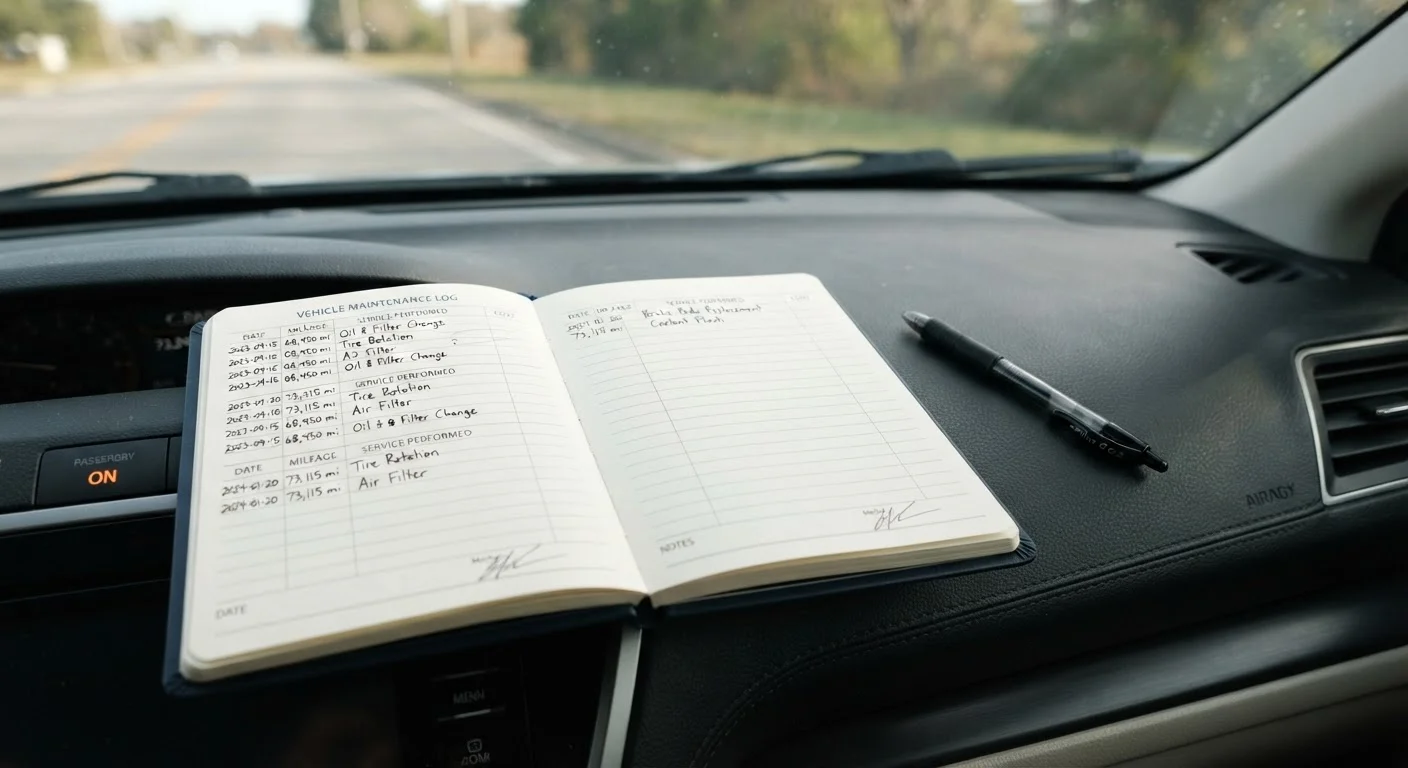
Why a Maintenance Log Is Worth Your Time
Most drivers rely on memory or dashboard warning lights to manage car care - both of which are unreliable. A maintenance log fills that gap by creating a reliable, running record of everything done to your vehicle. It takes only minutes to update but can save you hundreds of dollars over the life of the car.
When you keep organized records, patterns become visible. If your tires are wearing unevenly, your log will show how often you've rotated them - or confirm you haven't. If a mechanic suggests a service, you can quickly verify whether it's already been done. And when it's time to sell, a documented history signals to buyers that the vehicle has been properly cared for. This connects directly to long-term ownership value - something covered in depth in our article on how vehicle depreciation works.
What Exactly to Record
The most useful logs capture four core data points for every service event: the date, the current odometer reading, what was done, and the cost. Beyond those basics, note the name of the shop or mechanic, any parts replaced by brand and part number, and any observations about how the vehicle was performing at the time.
Services worth tracking include oil and filter changes, tire rotations and replacements, brake inspections and pad replacements, air and cabin filter swaps, fluid top-offs or flushes (coolant, transmission, brake fluid), belt and hose inspections, battery tests and replacements, and any warning light diagnoses. Don't forget to log alignments, scheduled tune-ups, and any body or windshield repairs.
For seasonal maintenance - such as switching to winter tires or checking your cooling system before summer - a log makes it easy to confirm you completed last year's prep. Our seasonal car care guide outlines what to check and when throughout the year.
Choosing a Format That You'll Actually Use
There's no single right format. A small spiral notebook stored in your glove box works fine. So does a spreadsheet on your phone or a dedicated app. Several free mobile apps let you log services, set mileage-based reminders, and store photos of receipts. The most important factor is whether you'll actually keep it updated.
Whatever format you choose, keep it simple enough that entering a new record takes under two minutes. The more friction you remove, the more likely the habit will stick. Cross-reference your log against your owner's manual maintenance schedule periodically - if you're unsure which intervals apply to your specific vehicle, the manual is the authoritative source.
Staying on top of your log also feeds into the broader goal of keeping annual car costs manageable - catching small issues early consistently costs less than addressing deferred maintenance later.
Maintenance Logs and Resale Value
A well-maintained service history is one of the few things in your control that can genuinely support a vehicle's resale price. Private buyers and dealerships alike place more confidence in a car backed by organized records. It removes uncertainty - a key barrier to closing a sale at a fair price.
Even if your records aren't perfect from day one, starting now adds value. Gather old receipts from your email, your glove box, or the shop's records, and reconstruct what you can. Going forward, log everything consistently. It's also worth being aware of common maintenance myths that might lead you to over-service or under-service your vehicle - either of which can skew your log and your costs.
For a broader view of what ownership entails beyond just maintenance, the Car Ownership Basics hub covers insurance, registration, and the full cost picture.
The content provided on our blog site traverses numerous categories, offering readers valuable and practical information. Readers can use the editorial team’s research and data to gain more insights into their topics of interest. However, they are requested not to treat the articles as conclusive. The website team cannot be held responsible for differences in data or inaccuracies found across other platforms. Please also note that the site might also miss out on various schemes and offers available that the readers may find more beneficial than the ones we cover.