

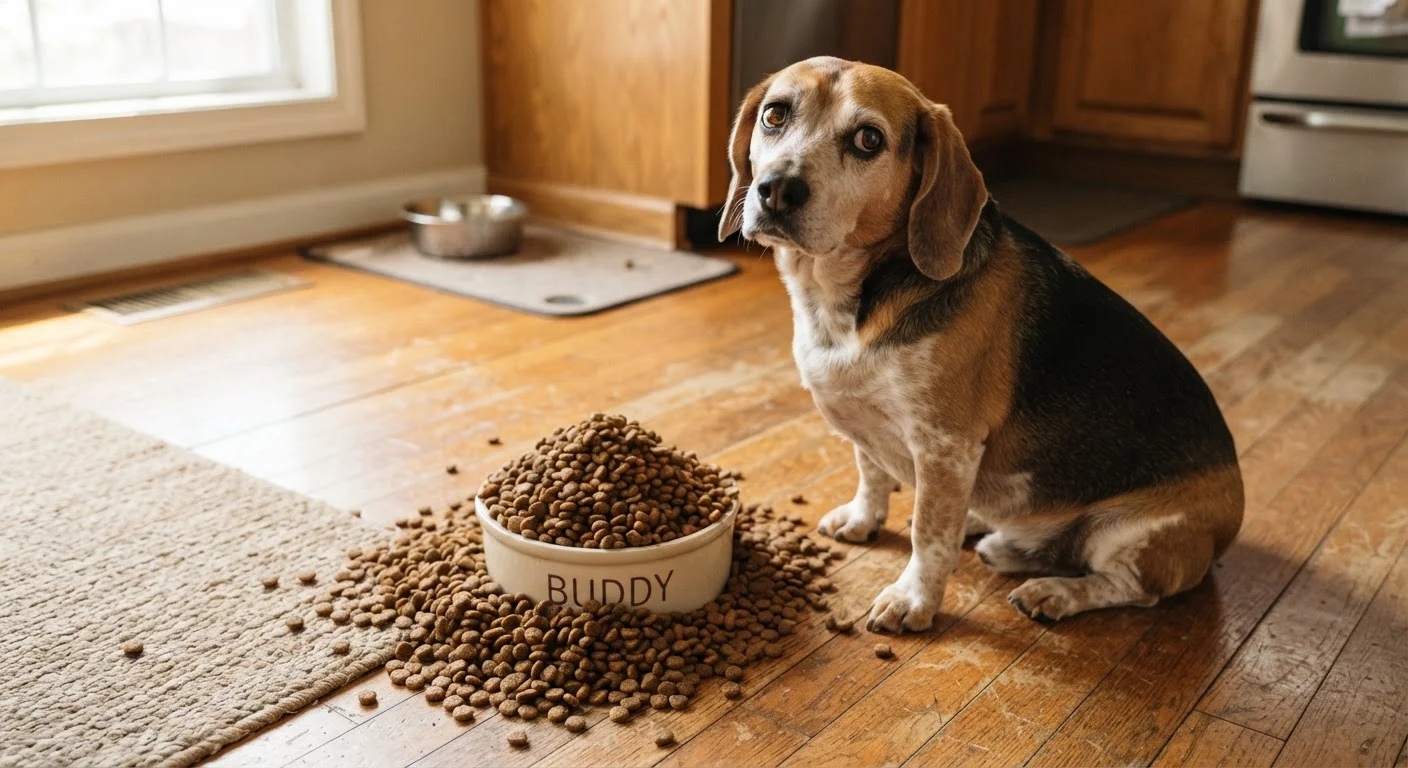
The Quiet Accumulation Problem
Overfeeding rarely looks dramatic. It doesn't happen because an owner dumps a full extra can into the bowl. It happens through dozens of small, well-meaning choices — a slightly generous scoop, a few extra treats, a bit of last night's chicken — repeated day after day until weight gain becomes visible. By the time most owners notice, a pet may have been in caloric surplus for months or years.
This matters clinically. Excess body fat in pets is linked to inflammation, insulin resistance, orthopedic strain, and reduced life expectancy. Understanding how nutrition shapes your pet's overall health helps put portion discipline in context — it's not about being restrictive; it's about consistency over time.
~60%
U.S. cats and dogs estimated to be overweight or obese
The Association for Pet Obesity Prevention has consistently reported that a majority of American pets are carrying excess weight based on annual clinical surveys.
10%
Maximum recommended daily calories from treats
Most veterinary nutrition guidelines suggest treats should make up no more than 10% of a pet's total daily caloric intake to avoid unbalancing the diet.
Common Portion Mistakes and How to Correct Them
Most portion errors aren't careless — they stem from reasonable but mistaken assumptions about how feeding guidelines work, how pets signal hunger, and how much the "extras" actually add up. Identifying these patterns is the first step toward correcting them.
Treating the feeding guide on the bag as a precise prescription for your specific pet.
Why it happens: Feeding guidelines are printed for the average animal at a given weight, but they don't account for your pet's age, activity level, metabolic rate, or whether they're spayed or neutered — all factors that significantly affect caloric need.
Forgetting that treats, toppers, and table scraps are part of the daily caloric total.
Why it happens: Owners tend to mentally separate "meals" from "extras," but calories don't work that way. Even small, frequent treat rewards can add up to a meaningful percentage of a small pet's daily energy needs.
Feeding the same portion indefinitely without reassessing as the pet ages or changes.
Why it happens: Many owners establish a feeding routine when a pet is young and simply continue it for years, not realizing that metabolic needs shift with age, activity changes, and health status.
Using cup size or bowl fullness as a proxy for a measured portion.
Why it happens: "One cup" means very different things depending on the kibble's density and shape, and bowls vary widely in volume. Owners often scoop by habit rather than measurement.
Interpreting a pet's continued begging as evidence they haven't had enough to eat.
Why it happens: Many pets — dogs especially — are highly food-motivated and will solicit food even when nutritionally satisfied. Owners naturally interpret persistent begging as hunger.
Don't Adjust Portions Without Guidance
Significantly reducing a pet's food intake without veterinary oversight can be just as harmful as overfeeding, particularly in cats, where rapid weight loss can cause a dangerous liver condition called hepatic lipidosis. Always work with your veterinarian before making major changes to your pet's diet or portion sizes.
Reading Guidelines and Labels More Effectively
Feeding guidelines on packaging are population-level estimates. They're a reasonable starting point, but understanding what they don't tell you is equally important. Variables like neuter status, indoor-versus-outdoor lifestyle, and breed-specific metabolism can shift an individual pet's actual need considerably from the printed range.
For a deeper look at interpreting what pet food packaging actually communicates, see our guide to reading pet food labels without getting lost in the fine print. Being a more informed label reader directly supports better portioning decisions. You can also explore common pet nutrition myths that may be shaping how you currently feed your pet.
Obesity Is a Clinical Health Risk
Pet obesity is associated with serious conditions including diabetes, joint disease, heart problems, and shortened lifespan. It isn't a cosmetic issue. If you're unsure whether your pet is at a healthy weight, schedule a veterinary assessment — don't rely solely on how your pet looks or feels to you.
Body condition scoring — a standardized visual and tactile assessment used by veterinarians — is a practical tool owners can learn to use between appointments. A pet at an ideal weight should have ribs that are easily felt but not visibly prominent, and a visible waist when viewed from above. Ask your veterinarian to walk you through the scale for your species.
Incorporating thoughtful portion habits into daily routines is part of the broader picture of everyday habits that support a long, healthy pet life.
This article is for general informational purposes and is not a substitute for professional veterinary advice. Always consult a licensed veterinarian for guidance specific to your pet's health, weight, and nutritional needs.
The content provided on our blog site traverses numerous categories, offering readers valuable and practical information. Readers can use the editorial team’s research and data to gain more insights into their topics of interest. However, they are requested not to treat the articles as conclusive. The website team cannot be held responsible for differences in data or inaccuracies found across other platforms. Please also note that the site might also miss out on various schemes and offers available that the readers may find more beneficial than the ones we cover.