

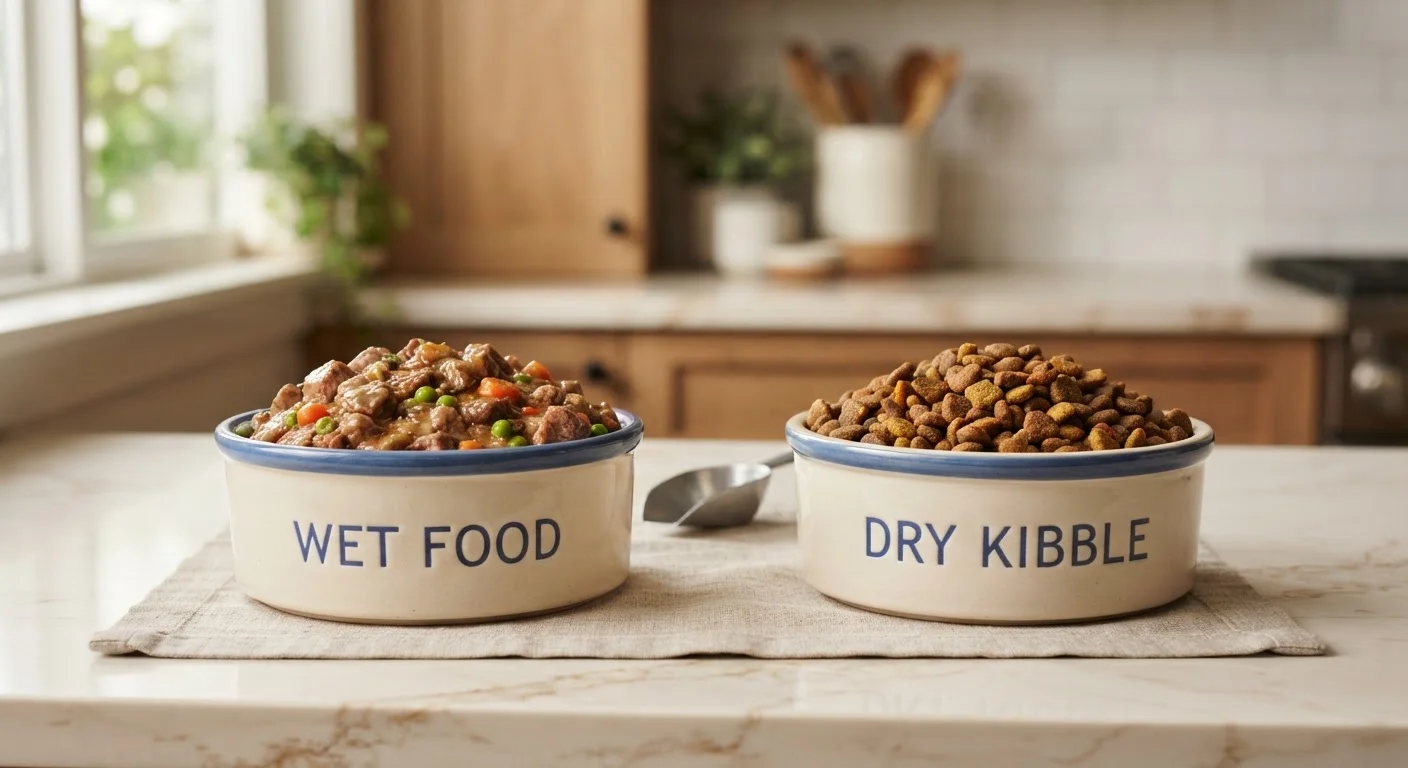
Option A
Wet Pet Food
High-moisture, palatable, and easier to eat.
Best for: Pets needing extra hydration, picky eaters, or animals with dental pain or chewing difficulties.
Option B
Dry Pet Food (Kibble)
Convenient, shelf-stable, and broadly available.
Best for: Owners seeking cost-efficiency, easy storage, and pets that do well with consistent, measured meals.
The Core Difference: Moisture Content
The most fundamental distinction between wet and dry pet food is water. Wet food — whether sold in cans, pouches, or trays — typically contains between 70% and 80% moisture. Dry kibble, by contrast, usually contains just 10% or less. That gap has real consequences for how pets digest food, maintain hydration, and even how much they eat by volume.
For cats especially, this matters. Cats evolved in arid environments and have a naturally low thirst drive, meaning they often don't drink enough water on their own. A diet built primarily on dry kibble can leave some cats chronically under-hydrated, which veterinary nutritionists associate with increased risk of urinary tract issues over time. Dogs are generally more willing drinkers, but pets with kidney concerns or urinary conditions may also benefit from the additional moisture wet food provides.
Understanding what goes into your pet's food beyond moisture is equally important. Our guide to reading pet food labels breaks down ingredient lists and nutritional claims in plain language.
| Criterion | Wet Food | Dry Food (Kibble) |
|---|---|---|
| Moisture Content | 70–80% | ~10% or less |
| Hydration Support | High — contributes meaningfully | Low — relies on water bowl |
| Typical Cost Per Calorie | Higher | Lower |
| Shelf Life After Opening | 1–3 days (refrigerated) | Weeks in sealed container |
| Palatability | Generally higher aroma/appeal | Variable; less aromatic |
| Dental Benefit | Minimal | Modest at best |
| Ease of Measuring/Dispensing | Less convenient | Easy to measure and store |
| Best Suited For | Hydration needs, picky eaters | Cost control, convenience |
Nutrition, Palatability, and Practical Trade-Offs
Both wet and dry foods can meet complete nutritional standards when formulated correctly — look for the AAFCO (Association of American Feed Control Officials) statement on the label, which indicates the food has been formulated or tested to meet established nutrient profiles. The format itself doesn't determine quality; the formulation does.
Palatability is where wet food often wins. The higher fat and moisture content produces stronger aromas that appeal to most pets, making it a useful tool for picky eaters, aging animals whose sense of smell has diminished, or pets recovering from illness. Dry food, meanwhile, offers practical advantages: it's easier to measure, store, and use in puzzle feeders or timed dispensers that support slower eating and mental enrichment.
Cost is another tangible difference. Wet food typically costs more per calorie than kibble. For owners feeding larger dogs, this adds up quickly. One common approach is mixing: offering a base of dry food supplemented with a small portion of wet food at mealtimes. This can improve palatability and hydration without dramatically increasing feeding costs.
70–80%
Moisture in typical wet pet food
Compared to roughly 10% in dry kibble, this difference significantly affects a pet's total daily fluid intake from food alone.
~3×
Higher cost per calorie for wet food
Wet food generally costs considerably more per calorie delivered than dry kibble, a gap that compounds for larger pets or multi-pet households.
For a broader look at how feeding choices interact with your pet's overall health across life stages, see our comparison of puppy and kitten care vs. senior pet care.
Dental Health: A More Nuanced Story
One persistent belief is that dry kibble significantly benefits dental health by scrubbing teeth during chewing. The reality is more complicated. While the mechanical action of crunching kibble may offer some minor plaque reduction, most kibble shatters before it has meaningful contact with the gum line where plaque accumulates. Wet food doesn't provide this mechanical action at all, and its higher moisture can leave residue on teeth if oral hygiene is otherwise neglected.
Veterinary dental organizations generally agree that tooth brushing remains the gold standard for pet dental health, and that food format alone shouldn't be your primary dental health strategy. If dental hygiene is a concern, discuss appropriate dental chews, water additives, or brushing routines with your veterinarian rather than relying on food type as a proxy.
When to Ask Your Vet About Food Format
Pets with kidney disease, urinary tract issues, diabetes, or significant dental problems may have specific dietary format needs that go beyond general guidelines. If your pet has a chronic condition or has recently had surgery, your veterinarian or a board-certified veterinary nutritionist is the right resource for personalized feeding recommendations. General guidance on wet vs. dry food is a useful starting point, but individual health circumstances can shift the calculus significantly.
Nutrition myths around pet food are common — our article on common pet nutrition myths addresses several widespread misconceptions that owners frequently encounter.
This article is for general informational purposes only and does not constitute veterinary advice. Consult a licensed veterinarian for guidance specific to your pet's health and dietary needs.
The content provided on our blog site traverses numerous categories, offering readers valuable and practical information. Readers can use the editorial team’s research and data to gain more insights into their topics of interest. However, they are requested not to treat the articles as conclusive. The website team cannot be held responsible for differences in data or inaccuracies found across other platforms. Please also note that the site might also miss out on various schemes and offers available that the readers may find more beneficial than the ones we cover.