

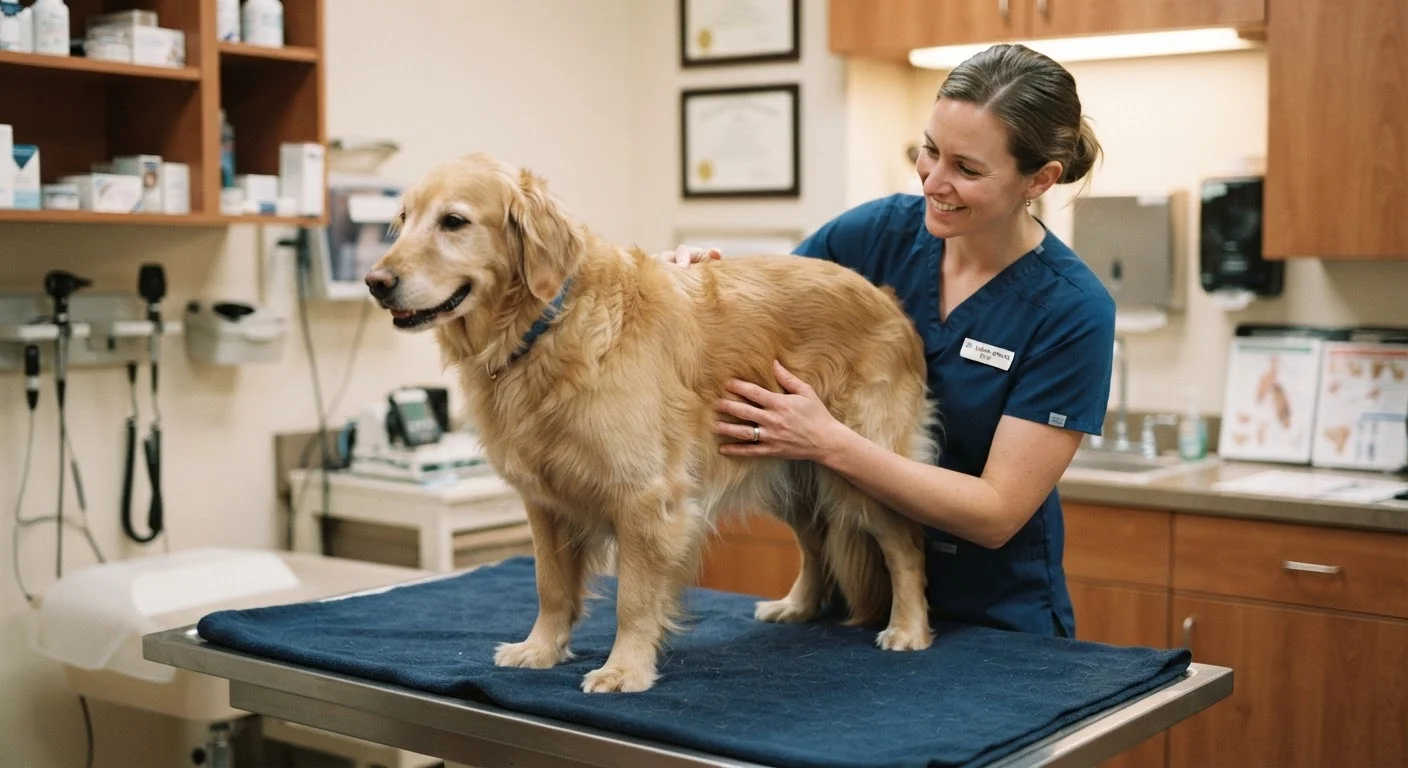
Why the Scale Alone Isn't Enough
Most pet owners reach for the scale when wondering whether their pet is a healthy weight — and while tracking weight trends is genuinely useful, a number in isolation tells an incomplete story. A muscular Border Collie and a fluffy Maine Coon cat might weigh exactly the same as a less fit animal of similar size, yet be in very different physical condition. That's where body condition scoring comes in.
Body condition scoring (BCS) is a practical, hands-on method that veterinarians and veterinary technicians use to assess a pet's weight relative to their body structure. It combines what you see with what you feel, giving a much more accurate picture than weight alone. The good news: with a little guidance, you can do a basic version at home between vet visits. See our home health check guide for a broader checklist of what to monitor regularly.
59%
U.S. dogs classified as overweight or obese
According to the Association for Pet Obesity Prevention's annual survey of veterinary practices across the United States.
61%
U.S. cats classified as overweight or obese
Also reported by the Association for Pet Obesity Prevention, reflecting a long-term upward trend in feline weight issues.
1.8 years
Estimated reduction in lifespan for obese dogs
Based on a long-term study of Labrador Retrievers published in the Journal of Veterinary Internal Medicine, finding that lean dogs lived nearly two years longer than overweight counterparts.
How to Assess Your Pet's Body Condition at Home
The three core checkpoints used in body condition scoring are the ribs, the waist, and the abdomen. Here's how to evaluate each:
- Rib check: Place both hands on your pet's chest, thumbs on the spine, fingers spread along the ribcage. You should be able to feel each rib distinctly without pressing hard — like feeling knuckles through a thin layer of skin. If ribs are difficult to feel through a thick fat layer, the pet is likely overweight. If they're sharp and immediately visible, they may be underweight.
- Waist check: Look at your pet from above. Behind the ribs, there should be a visible narrowing — a defined waist. An hourglass silhouette (from above) is healthy; a straight or barrel-shaped outline often signals excess weight.
- Abdominal tuck: View your pet from the side. The belly should tuck upward slightly behind the ribcage rather than hanging level or drooping down.
On the standard 9-point BCS scale used by most North American veterinarians, a score of 4 or 5 is considered ideal for most dogs and cats. Scores of 6–7 indicate overweight, and 8–9 indicate obesity. Scores of 1–3 suggest the animal is underweight.
Make Monthly Checks a Habit
Set a recurring reminder — once a month works well for most healthy adult pets — to run through the three checkpoints: ribs, waist, and abdominal tuck. Pair it with a weigh-in if you have a scale, and note any changes. Catching a gradual drift in body condition early is far easier to address than a significant weight problem that has built up over months or years.
What Unhealthy Weight Actually Risks
Both ends of the spectrum carry real health consequences. Overweight and obese pets face elevated risks of diabetes, joint disease, heart and respiratory problems, and reduced lifespan. Research published in veterinary literature has consistently found that even modest excess weight — as little as 10–20% above ideal — accelerates wear on joints and increases organ stress.
Underweight pets are at risk too, often signaling inadequate nutrition, underlying illness, or parasites. Unexplained weight loss in a previously healthy pet is one of the early warning signs of illness worth acting on promptly.
Nutrition plays a central role in managing weight in either direction. Understanding how diet quality affects your pet goes well beyond calories — as explored in our article on the role of nutrition in pet health. Integrating weight monitoring into your pet's everyday care routine is one of the most impactful things you can do for their long-term wellbeing.
This article is for general informational purposes only and is not a substitute for professional veterinary advice. Always consult a licensed veterinarian for guidance specific to your pet's health and nutritional needs.
Frequently Asked Questions
Run your hands along your pet's ribcage — you should be able to feel the ribs without pressing hard, but they shouldn't be visibly prominent. From above, your pet should show a slight waist behind the ribs. If you can't feel the ribs at all or the waist is absent, your pet may be carrying excess weight. A vet can confirm with a formal body condition score.
Minor fluctuations can occur with changes in diet, activity level, or season, but significant or sudden weight changes are worth investigating. Unexplained weight loss in particular can be an early sign of illness. Regular weigh-ins combined with a body condition check help you notice trends early.
Feeding guidelines on packaging are general starting points, not personalized prescriptions. They don't account for your pet's individual metabolism, activity level, age, or current body condition. Use them as a baseline and adjust based on your pet's condition score and veterinary guidance.
Overweight pets face elevated risks of diabetes, joint disease (including osteoarthritis), heart and respiratory problems, and certain cancers. Excess weight also puts additional stress on organs and can shorten a pet's lifespan. Even modest weight reduction in overweight pets has been shown to improve mobility and quality of life.
Many vets recommend a formal weigh-in at least once or twice a year for healthy adult pets, and more frequently for puppies, kittens, seniors, or pets managing a health condition. At home, a monthly hands-on body condition check is a practical habit.
Absolutely. A greyhound's visible spine and prominent hip bones are normal for the breed, while the same appearance in a Labrador would signal underweight. Similarly, some breeds naturally carry more muscle or fat in certain areas. Always interpret body condition in the context of your pet's breed and individual build.
The content provided on our blog site traverses numerous categories, offering readers valuable and practical information. Readers can use the editorial team’s research and data to gain more insights into their topics of interest. However, they are requested not to treat the articles as conclusive. The website team cannot be held responsible for differences in data or inaccuracies found across other platforms. Please also note that the site might also miss out on various schemes and offers available that the readers may find more beneficial than the ones we cover.