

How Compound Interest Actually Works
At its core, compound interest is deceptively simple: you earn (or owe) interest not just on your original amount, but on the interest that has already built up. Over short periods, this difference is barely noticeable. Over years or decades, it becomes dramatic.
Consider a basic example: $1,000 in a savings account earning 5% annual interest. With simple interest, you'd earn $50 each year - always based on that original $1,000. With compound interest, you'd earn $50 in year one, but in year two you'd earn interest on $1,050, and so on. That gap compounds continuously, and after 20 years the difference between simple and compound growth is substantial.
The mathematical formula behind this is often written as A = P(1 + r/n)nt, where P is the principal, r is the annual interest rate, n is the number of compounding periods per year, and t is time in years. You don't need to memorize the formula - the key takeaway is that time and frequency are just as important as the interest rate itself.
$33,000+
Growth of $10,000 over 30 years at 4% compounded annually
Illustrates how compound interest more than triples a principal with no additional contributions over three decades.
~20%
Typical APR on credit card balances in the U.S.
According to Federal Reserve data, average credit card interest rates have reached historically high levels in recent years, amplifying compounding costs for cardholders carrying balances.
Daily
How often most credit card interest compounds
Most major U.S. credit card issuers compound interest daily based on the daily periodic rate applied to the average daily balance.
Compound Interest as a Savings Tool
When you deposit money in a savings account, the bank pays you interest for the use of your funds. In a compounding account, that interest is periodically added to your balance, and your next interest calculation is based on the new, larger total. The longer you leave money untouched, the more powerful this cycle becomes - a concept sometimes called the snowball effect.
This is why financial educators consistently emphasize starting to save early, even in modest amounts. A person who begins contributing to a savings or retirement account in their mid-20s will generally accumulate significantly more than someone who starts in their late 30s with larger contributions, simply because of the additional years of compounding.
If you're comparing savings options, account type matters. High-yield savings accounts typically offer higher interest rates than traditional savings accounts and use the same compounding mechanics - meaning more interest on the same balance over time.
Reinvest Your Earnings to Maximize Compounding
The compounding effect only works fully when you leave your interest in the account rather than withdrawing it. Even small amounts of earned interest, when reinvested, form the foundation for future compounding cycles. Automating your savings contributions and resisting the urge to withdraw can dramatically improve your long-term results.
When Compound Interest Works Against You
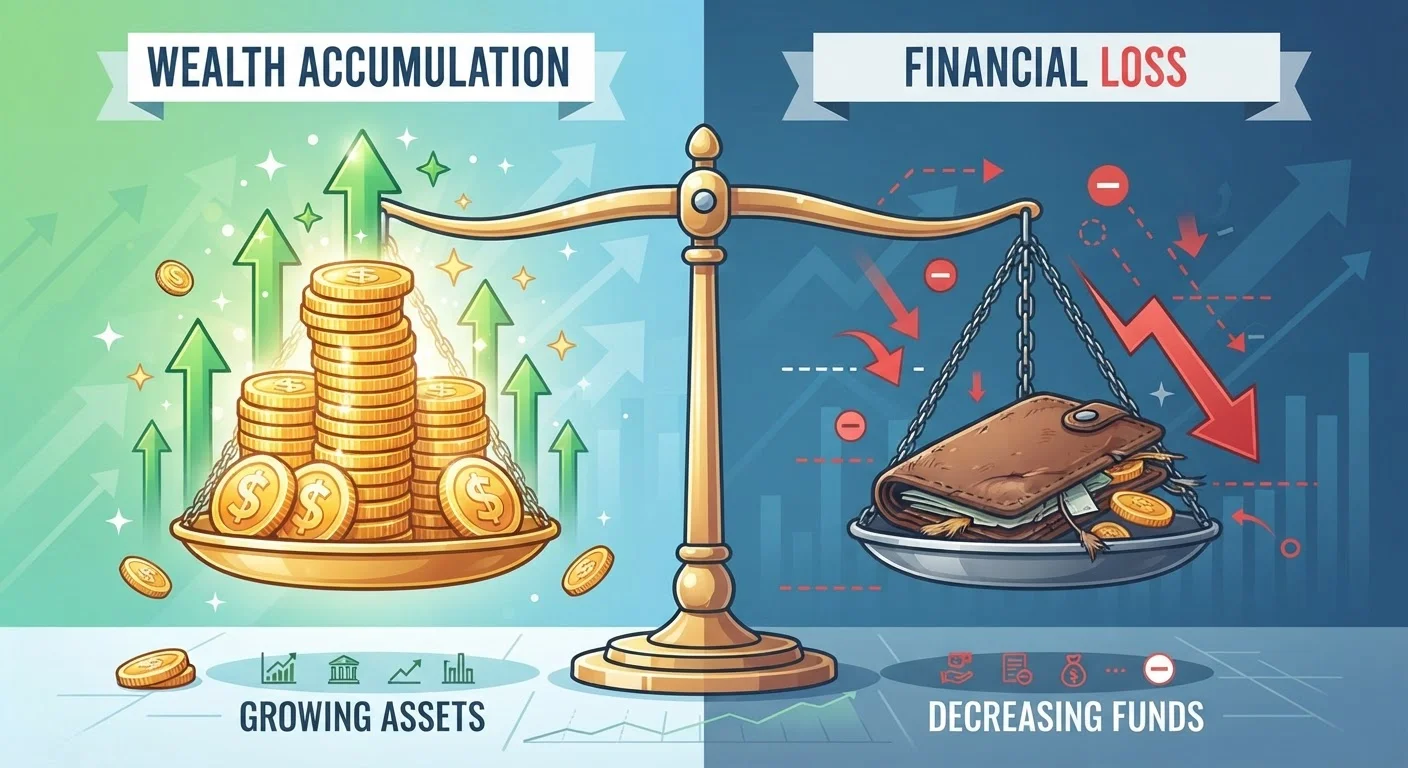
The exact same mechanism that builds wealth for savers can erode financial stability for borrowers. With most consumer debt - credit cards, personal loans, and some student loans - interest compounds on your outstanding balance. When you carry a balance forward without paying it in full, the accrued interest is added to what you owe, and next month's interest is calculated on that higher amount.
This is especially punishing with high-interest debt. A credit card balance left unpaid compounds quickly, and minimum payments often barely outpace the interest being added each cycle. Over time, the borrower may pay far more than the original amount charged. For a deeper look at how these costs stack up, see the hidden costs inside your debt.
The direction compound interest flows - toward you or away from you - is what separates financially healthy households from those that feel perpetually stuck. Understanding this dynamic is the first step toward taking control.
Balancing Debt Repayment and Savings
One of the most common dilemmas in personal finance is deciding whether to pay down debt aggressively or simultaneously build savings - particularly an emergency fund. The answer isn't one-size-fits-all, but compound interest plays a central role in the math.
In general, if your debt carries an interest rate higher than what your savings account earns, every dollar you keep in savings rather than applying to debt is effectively costing you the difference. However, having no emergency fund at all can be financially dangerous - an unexpected expense could force you back into higher-interest borrowing. Saving while in debt explores this trade-off in detail.
A practical middle ground for many people is to maintain a small liquid emergency fund while directing additional resources toward high-interest debt. Once high-rate debt is resolved, the same dollars that were going toward debt payments can be redirected into savings and investments - where compound interest finally starts working in your favor.
Compound Interest and Retirement Accounts
Retirement accounts such as 401(k)s and IRAs benefit from compounding as well - though the mechanism involves investment returns rather than a fixed savings rate. The underlying principle is the same: reinvested returns generate their own returns over time. For foundational concepts on putting compounding to work through investing, explore Investing Essentials.
This article is for general informational and educational purposes only and does not constitute personalized financial, investment, tax, or legal advice. Consult a qualified financial professional before making decisions based on your individual circumstances.
Frequently Asked Questions
Simple interest is calculated only on the original principal. Compound interest is calculated on the principal plus all previously earned interest. Over time, compound interest causes balances to grow significantly faster than simple interest.
Compounding frequency varies by account or loan type. Common periods include daily, monthly, and annually. The more frequently interest compounds, the faster a balance grows - whether that's in your favor as a saver or against you as a borrower.
Yes. Credit card debt typically compounds daily or monthly on your outstanding balance, meaning unpaid interest is added to the principal and itself begins accruing interest. This is why high-interest credit card balances can grow rapidly if only minimum payments are made.
Most savings accounts - including traditional savings, high-yield savings, and money market accounts - use compound interest. The rate and compounding frequency vary by institution and account type, which affects how much your balance grows over time.
Generally, high-interest debt compounds faster than savings accounts earn, making debt payoff a financial priority for most people. However, the right approach depends on individual circumstances including interest rates, emergency savings needs, and employer retirement matching. A qualified financial adviser can help you evaluate your situation.
Start saving and investing as early as possible, reinvest earnings rather than withdrawing them, and avoid high-interest debt that compounds against you. Even small, consistent contributions to a savings or investment account can grow substantially over years due to compounding.
The content provided on our blog site traverses numerous categories, offering readers valuable and practical information. Readers can use the editorial team’s research and data to gain more insights into their topics of interest. However, they are requested not to treat the articles as conclusive. The website team cannot be held responsible for differences in data or inaccuracies found across other platforms. Please also note that the site might also miss out on various schemes and offers available that the readers may find more beneficial than the ones we cover.