

Why Your Brokerage Statement Deserves More Than a Quick Glance
Most investors open their brokerage statement, scan for the total value, and close it. That habit leaves a lot of useful information on the table. Your statement is a structured financial report - and once you know what each section does, reading it takes only a few minutes and gives you a much clearer view of how your money is working.
Before diving in, it helps to have a basic grasp of what you actually own. If terms like ETF, mutual fund, or bond still feel unfamiliar, our field guide to investment types is a good place to start. Likewise, if abbreviations on your statement leave you puzzled, the beginner investing glossary defines the terms that come up most often.
What you will need
How to Work Through Your Statement Section by Section
Most brokerage statements follow a similar structure, regardless of which firm holds your account. The steps below walk through the standard sections in the order they typically appear. Pull up your most recent statement and follow along.
Locate the Account Summary
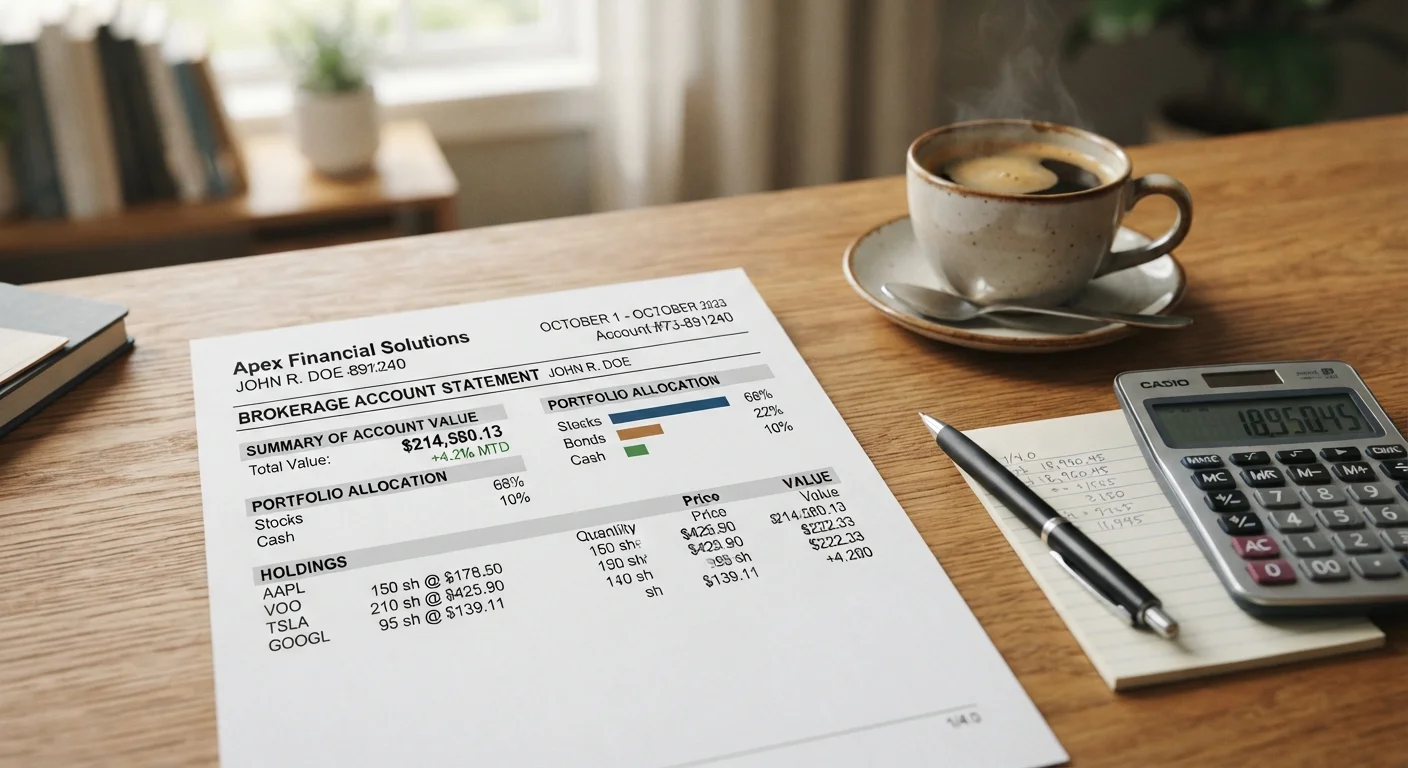
The account summary appears on the first page and gives you a snapshot of the entire period. Look for three key figures: beginning account value (what you had at the start), ending account value (what you have now), and the net change. Some statements also show a percentage return for the period. This section tells you - at a glance - whether your portfolio grew or shrank and by roughly how much.
Review Your Holdings Detail
The holdings section lists every security you own. For each position, you'll typically see: ticker symbol (the abbreviated name), number of shares or units, current price per share, and total market value. This section also usually shows your cost basis - what you originally paid - and your unrealized gain or loss, which is the difference between cost basis and current market value. Unrealized means you haven't sold yet, so this gain or loss exists only on paper.
Check the Income and Dividends Summary
This section records any dividends, interest, or capital gains distributions credited to your account during the statement period. Each line will show the security that paid it, the payment date, and the dollar amount. Reinvested dividends - where the payout was used to buy more shares automatically - will appear here as income and again in the transaction history as a purchase.
Scan the Transaction History
Transaction history is a chronological log of every activity in your account: purchases, sales, dividend payments, transfers in or out, and any fees or commissions charged. Match this list against your own records - any trade confirmation emails, scheduled contributions, or withdrawals you initiated. This is your primary tool for catching unauthorized activity or billing errors.
Note Any Fees or Expenses
Fees may appear as a separate section or as line items within the transaction history. Look for advisory fees, account maintenance fees, or fund-level expense ratios (sometimes listed as a footnote rather than a line item). Understanding what you're paying - even in small percentages - matters because fees compound over time just as returns do, reducing long-term growth.
Review Asset Allocation or Portfolio Breakdown
Many statements include a pie chart or table showing how your portfolio is divided among asset classes - domestic stocks, international stocks, bonds, cash equivalents, and so on. Compare this breakdown to your intended allocation. If one category has grown much larger or smaller than you planned, your portfolio may have drifted and could warrant rebalancing - a conversation best had with a licensed financial adviser who knows your full situation.
Set a Regular Statement Review Habit
Reading your statement once a quarter is generally enough for long-term, buy-and-hold investors. Put a recurring calendar reminder on the day statements are typically issued. Consistency matters more than frequency - an annual deep-read beats sporadic panic-driven checks every time.
Common Errors and Red Flags to Watch For
Your statement is also a verification tool. Mistakes do happen - duplicate transactions, incorrect dividend amounts, or fees you didn't agree to. Review your transaction history against your own records at least quarterly. If something looks wrong, contact your brokerage's customer service promptly; most firms have a limited window for disputing errors.
Unauthorized Activity Requires Immediate Action
If you see trades, transfers, or withdrawals you did not authorize, contact your brokerage immediately using the number on the back of your account card or the firm's official website. Do not delay. Most regulatory frameworks require disputes to be filed within a defined window, and early reporting protects your ability to recover funds.
Finally, if you haven't yet set up an account and are still weighing whether you're ready to invest, our pre-investment checklist walks through practical steps to take before putting your first dollar into the market.
This article is for general informational and educational purposes only and does not constitute personalized financial, investment, tax, or legal advice. Please consult a licensed financial professional before making decisions based on your individual circumstances.
The content provided on our blog site traverses numerous categories, offering readers valuable and practical information. Readers can use the editorial team’s research and data to gain more insights into their topics of interest. However, they are requested not to treat the articles as conclusive. The website team cannot be held responsible for differences in data or inaccuracies found across other platforms. Please also note that the site might also miss out on various schemes and offers available that the readers may find more beneficial than the ones we cover.