

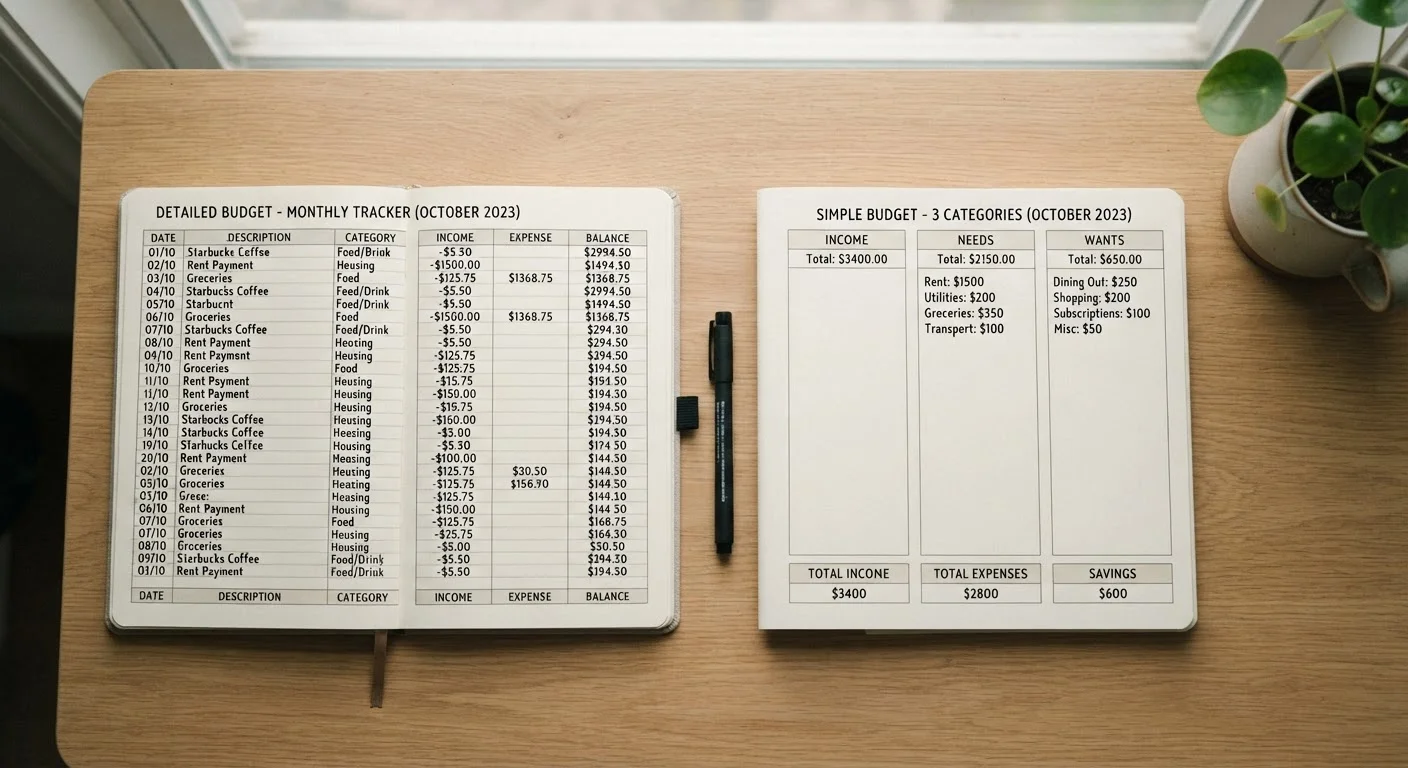
Option A
Zero-Based Budgeting
The detailed, hands-on approach to complete spending control.
Best for: People who want full accountability over every dollar and are willing to invest time each month in the process.
Option B
50/30/20 Method
The streamlined framework for straightforward money management.
Best for: People who want a simple, flexible structure without tracking every individual expense category.
How Each Method Works
Understanding the mechanics of each approach is the foundation for choosing wisely. Both methods start with your after-tax monthly income - the number that actually hits your account - but they diverge immediately after that.
Zero-based budgeting requires you to assign every dollar a job until your income minus your planned expenses equals zero. That doesn't mean you spend everything - savings and debt payments count as assigned categories. The discipline comes from justifying each line item from scratch every month rather than rolling over last month's budget automatically.
The 50/30/20 method divides income into three percentage-based categories: roughly 50% toward needs (housing, utilities, groceries, minimum debt payments), 30% toward wants (dining out, entertainment, travel), and 20% toward savings and additional debt repayment. For a deeper look at how those categories are defined in practice, see our explanation of the 50/30/20 rule.
| Criterion | Zero-Based Budgeting | 50/30/20 Method |
|---|---|---|
| Core concept | Every dollar assigned a category | Income split into three buckets |
| Monthly setup time | 30-60+ minutes | Minimal after initial setup |
| Flexibility | Highly customizable by category | Flexible within broad buckets |
| Best income type | Variable or irregular income | Stable, predictable income |
| Spending visibility | Granular, line-by-line detail | Broad category overview |
| Learning curve | Steeper, requires practice | Gentle, beginner-friendly |
| Savings structure | Explicitly allocated each month | Fixed at ~20% of income |
The structural difference matters: zero-based budgeting is rebuilt monthly; the 50/30/20 framework is set once and adjusted only as income or major expenses change.
Time Investment and Complexity
One of the most practical differences between these methods is how much ongoing effort each one demands.
Zero-based budgeting is labor-intensive by design. Before each month begins, you list all anticipated income sources, then allocate dollars across every category - rent, groceries, gas, subscriptions, clothing, entertainment, savings, debt minimums, and more. Mid-month, you track spending against each line to stay on target. For many people, this means 30-60 minutes of setup time plus regular check-ins throughout the month.
The 50/30/20 method requires significantly less maintenance. Once you calculate your income-based targets for each bucket, your primary task is monitoring whether total spending in each broad category stays within its threshold. Apps and bank categorization tools can do much of this automatically.
Budgeting Apps Can Help Either Method
Many personal finance apps support both zero-based and percentage-based approaches. Some are purpose-built for zero-based budgeting with per-category envelopes, while others automate percentage tracking with bank-linked categorization. The tool you use matters less than building the habit of reviewing your spending regularly. Always check an app's data privacy policy before linking financial accounts.
For couples sharing finances, the level of detail in zero-based budgeting can be a collaboration tool - or a source of friction. Our article on budgeting as a couple explores how shared money management dynamics affect method choice.
Which Method Fits Your Financial Situation
The most effective budget is the one you'll actually use consistently. A few considerations can help narrow the choice.
Income type matters. Salaried workers with predictable paychecks can apply 50/30/20 percentages reliably each month. Freelancers, gig workers, or anyone with variable income often find zero-based budgeting more practical because it lets them calibrate spending to what they actually earned - not what they expect to earn.
Financial goals shape the fit. If your priority is building savings or eliminating debt aggressively, zero-based budgeting's category-level control gives you specific levers to pull. If your finances are stable and your goal is maintaining healthy habits without micromanagement, the 50/30/20 framework may be sufficient. Both methods, when followed, direct money toward savings - a foundation that connects to broader saving and debt management goals.
You don't have to choose permanently. Many people start with 50/30/20 to build the budgeting habit, then transition to zero-based when they want more granular control. If you're starting from scratch, our seven-step guide to your first budget walks through the basics in plain language before you commit to either method. You can also compare these alongside other frameworks in our overview of popular budgeting methods.
~33%
Americans who follow a budget
According to Gallup polling data, roughly one in three American adults reports preparing a detailed household budget - suggesting significant room for more people to benefit from structured spending plans.
65%
People who feel financially stressed
A report from the American Psychological Association found that a substantial majority of adults cite money as a significant source of stress, underscoring the potential value of structured budgeting habits.
This article is for general informational and educational purposes only and does not constitute personalized financial advice. Consult a qualified financial professional for guidance tailored to your individual circumstances.
The content provided on our blog site traverses numerous categories, offering readers valuable and practical information. Readers can use the editorial team’s research and data to gain more insights into their topics of interest. However, they are requested not to treat the articles as conclusive. The website team cannot be held responsible for differences in data or inaccuracies found across other platforms. Please also note that the site might also miss out on various schemes and offers available that the readers may find more beneficial than the ones we cover.